Virtual Course Launch: Clubfoot can be treated: A course for healthcare workers - Pan American Health Organization (PAHO)
This story deserves to be shared
Send it to someone who'd care, or post it on your networks.
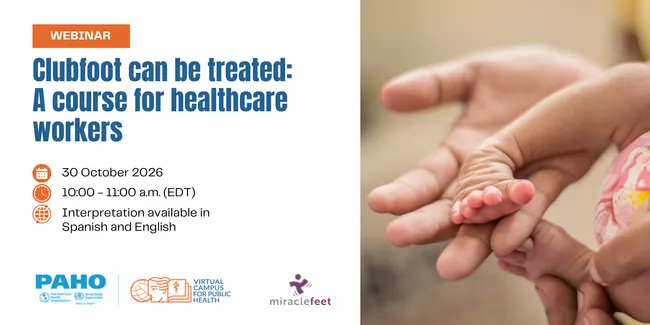
Join us on Friday, October 30, at 10:00 a.m. (Washington, D. C. time) for the "Virtual Course Launch: Clubfoot can be treated: A course for healthcare workers". BackgroundClubfoot is one of the most common congenital musculoskeletal disorders and is a preventable cause of disability when not identified and treated in a timely manner. However, through early detection, appropriate referral and access to appropriate treatment, it is possible to achieve favorable functional outcomes and avoid the consequences associated with lack of treatment. In this context, the training of health workers plays a key role. Timely recognition of clubfoot from birth, appropriate guidance to families, and early referral to trained services for its treatment are essential components for improving access to and outcomes of care. In 2023, the Pan American Health Organization (PAHO), in conjunction with MiracleFeet, launched the virtual course "Clubfoot is treatable: a course for Health Workers", available through PAHO's Virtual Campus of Public Health. The initiative sought to strengthen the knowledge of health teams and promote the timely detection and referral of children with clubfoot.
This article is an excerpt. To read the full content, visit the original source. Pan American Health Organization (PAHO)
Related articles

Why screen time should be treated as a public health issue: Dr. Peter Lin explains - CBC
Skip to Main ContentAccessibility HelpMenuCBC GemCBC ListenSearchQuick LinksNewsSportsRadioMusicListen LiveTVWatchradioTop StoriesShowsPodcastsSchedulesFrequencyListen LiveVideoWhy screen time should be treated as a public health issue: Dr. Peter Lin explains | CBC.ca LoadedThe Morning Edition - K-W7:49Why screen time should be treated as a public health issue: Dr. Peter Lin explainsOctober 8RadioDuration 7:49Dopamine on demand. Dr. Peter Lin explains how tech companies exploit our brain chemistry, and discusses a new study that calls for government action. More from RadioVideoDuration 1:18‘She’s trying to change the culture of Cornell,’ says Jane Doe’s lawyerOctober 14VideoDuration 1:04Jane Doe’s home was swatted, says lawyer in Cornell gang-rape caseOctober 14VideoDuration 1:40How menopause shook Olympian Clara HughesOctober 12VideoDuration 1:53Will Carney's plan to 'Build Canada Strong' hurt the environment?
Tech analyst Carmi Levy on Lancet study saying social media must be treated as public health concern - CBC
Skip to Main ContentAccessibility HelpMenuCBC GemCBC ListenSearchQuick LinksNewsSportsRadioMusicListen LiveTVWatchnewsTop StoriesLocalClimateWorldCanadaPoliticsIndigenousBusinessThe NationalHealthEntertainmentScienceCBC News InvestigatesDisability LifeGo PublicAbout CBC NewsBeing Black in CanadaVideoTech analyst Carmi Levy on Lancet study saying social media must be treated as public health concern | CBC.ca LoadedTech analyst Carmi Levy on Lancet study saying social media must be treated as public health concernOctober 4|Duration 8:13October 4NewsDuration 8:13closed captionGet the latest on CBCNews.ca, the CBC News App, and CBC News Network for breaking news and analysis. Related StoriesNaomi Klein on Carney, trade war and 'end times' - TranscriptIs AI inevitable?
European Medical Journal | HIV linked to early signs of heart dysfunction - European AIDS Treatment Group
Patient-centered financial navigation assistance helps reduce financial toxicity among cancer patients - Medical Xpress
Among cancer patients, the high financial cost of cancer care is a prevalent problem. This financial burden is also associated with potentially harmful behavioral strategies that patients might use to cope with costs, such as delaying or forgoing treatment and skipping medications. Collectively, researchers refer to this impact as financial toxicity.
0 comments
No comments yet. Be the first to share your thoughts!