Vanilla could help heal wounds - Popular Science
This story deserves to be shared
Send it to someone who'd care, or post it on your networks.
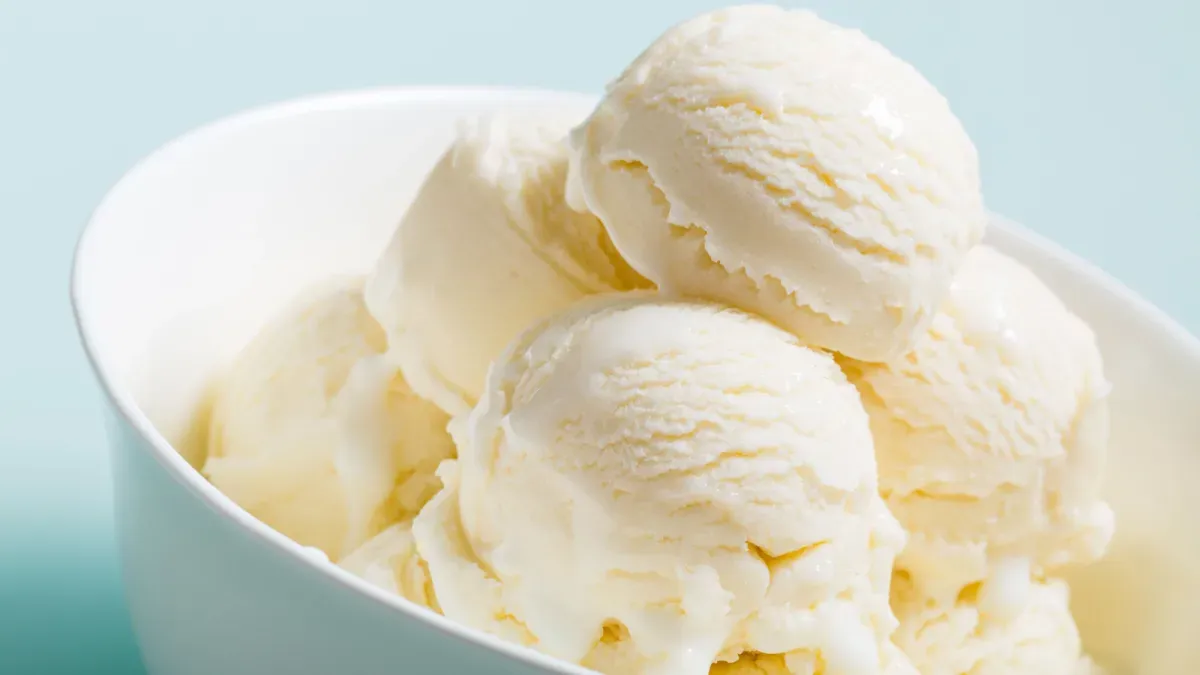
Vanilla is one of the most commonly used flavors in the world.
A common baking ingredient could help heal wounds—and it’s pretty sweet. Vanillin (which comes from vanilla pods) has anti-inflammatory, antibacterial, and antioxidant properties that could be used in wound-healing treatments. A study recently published in the International Journal of Pharmaceutics details this food-to-function framework.
This article is an excerpt. To read the full content, visit the original source. Popular Science
Related articles

Scientists discover vanilla’s hidden healing potential - Science Daily
The compound responsible for vanilla's familiar sweet flavor and aroma could have an unexpected future in medicine. Scientists at Flinders University have identified properties in vanillin that could make it a promising ingredient in treatments for chronic wounds, infections, and damaged tissue. Researchers from the university's Biomedical Nanoengineering Laboratory found that vanillin has notable antioxidant, anti-inflammatory, and antibacterial properties. Together, these effects could make the compound useful in developing wound care products that address several challenges associated with healing.

Technology, Heal Thyself and … - Secrets of OPM | Substack
My former a16z partner Chris Dixon wrote a now-famous post talking about how the next big things in technology often start out being dismissed as “toys” – they look silly, immature relative to the current state of the art, are limited in utility, and full of security concerns or other bugs. Chris was writing about why market incumbents often get surprised – and ultimately lapped or completely wiped out – by innovations in technology (often developed by much smaller and earlier-stage technology startups). The cardinal mistake, according to Chris, is to over-train on the limitations of the technology today – it’s too slow, it’s buggy, it lacks enterprise security features or application integration capabilities, it consumes too much energy, compute power, etc. I could go on. For example, when the telephone first arrived in the late 1870s, it could carry a voice call a very short distance (about a mile or two). Western Union, then the dominant communications company in America, passed on the chance to buy it. Its customers were businesses and railroads, and the phone didn’t seem useful to either. By the standards of the day, the telephone was perceived as a toy.

Simulations explore nuclear mitigation of asteroid threats - Phys.org
Lawrence Livermore National Laboratory researcher Isaiah Santistevan led the development of three-dimensional simulations exploring how a nuclear device could deflect or disrupt an asteroid threatening Earth. Credit: Blaise Douros/LLNL Lawrence Livermore National Laboratory (LLNL) researchers are developing three-dimensional simulations to examine how a nuclear device could be used to deflect or potentially disrupt an asteroid threatening Earth.

A Black Hole 12,000 Light-Years Away Is Firing a Plasma Jet Toward Earth - Gadget Review
Milky Way’s first microblazar candidate sits 12,000 light-years away, offering a rare ground-level lab for studying relativistic jetsA black hole 12,000 light-years away is firing a jet of plasma almost directly toward Earth. At that distance, no known or expected danger to Earth has been identified by the researchers or the institutions involved. What astronomers have actually found is rarer and more interesting than a threat. Researchers have identified IRAS 18293-0941 as a compelling candidate for the Milky Way’s first microblazar, a class of object that gives astrophysicists a close-up laboratory for studying some of the most violent physics in the galaxy. What Astronomers FoundThe discovery centers on a binary system whose black hole expels plasma jets at close to three-quarters the speed of light, pointed almost directly toward Earth. The system pairs a hot, massive star with a black hole that completes a full orbit roughly every 11.38 days. Material drawn from the companion star feeds the black hole, and some of that matter gets expelled outward as opposing jets traveling at approximately three-quarters the speed of light. Terminology matters here.
0 comments
No comments yet. Be the first to share your thoughts!