Toronto-based VPN provider plans to quit Canada over lawful-access bill - The Globe and Mail
This story deserves to be shared
Send it to someone who'd care, or post it on your networks.
This article is an excerpt. To read the full content, visit the original source. The Globe and Mail
Related articles

Toronto-Based VPN Provider Plans to Quit Canada Over Lawful-Access Bill - The Citizen Lab
Psiphon, a software company spun out of the Citizen Lab that helps internet users living under oppressive regimes evade online censorship, plans to leave Canada if the federal government’s lawful-access bill passes in its current form, reports The Globe and Mail. If passed, Bill C-22 would require electronic service providers to make secret changes to their systems to provide police services and the Canadian Security Intelligence Service (CSIS) with surveillance and monitoring capabilities.

Lawful-access bill puts Canadian business at disadvantage with U.S., EU, Chamber of Commerce says - The Globe and Mail
The Canadian Chamber of Commerce is urging the Prime Minister to split in two his government’s lawful-access bill, warning that the current version of the legislation would put Canadian businesses at a competitive disadvantage with the U. S. and EU – and could even drive them to leave the country. In a letter to Mark Carney this week, the chamber warns that the bill risks undermining growth and economic progress. Considering the U. S. trade war with Canada, the letter says, “the timing couldn’t be worse.”The lawful-access bill, known as Bill C-22, would require telecoms, internet companies and other electronic service providers to make changes to their systems to give surveillance and monitoring capabilities to police services and the Canadian Security Intelligence Service. CSIS and law enforcement have long argued that Canada is lagging behind its Five Eyes intelligence partners – the U. S., Britain, Australia and New Zealand – in not having such a lawful-access regime to aid investigations.

What If the U.S. Demanded This? The Cloud Provider Conditions Behind Canada’s EU Digital Pivot - Michael Geist -
EP Plenary session - September 2026 - Formal sitting with Mark CARNEY, Canadian Prime Minister © European Union, European Parliament , via Wikimedia Commons Given concerns about what the U. S. envisioned for “digital trade alignment,” consider the possibility that the package required Canada to keep its cloud market open to U. S. companies, gave them equivalent access to government procurement, and restricted the implementation of a “Buy Canadian” approach to sovereign cloud. The U. S. would also set the standard for Canadian privacy law, Canadian law enforcement and security agencies would not wield powers over cloud providers that conflict with U. S. rules on government access to data, and the U. S. could suspend or revoke the deal if it concluded that Canada no longer met its standards. In return, the deal would allow Canadian companies to compete for sensitive U. S. government cloud contracts on the condition that the data centres, the data and the staff were U. S. based, staff were U. S. citizens, and the Canadian government was restricted from accessing the data in the U. S.
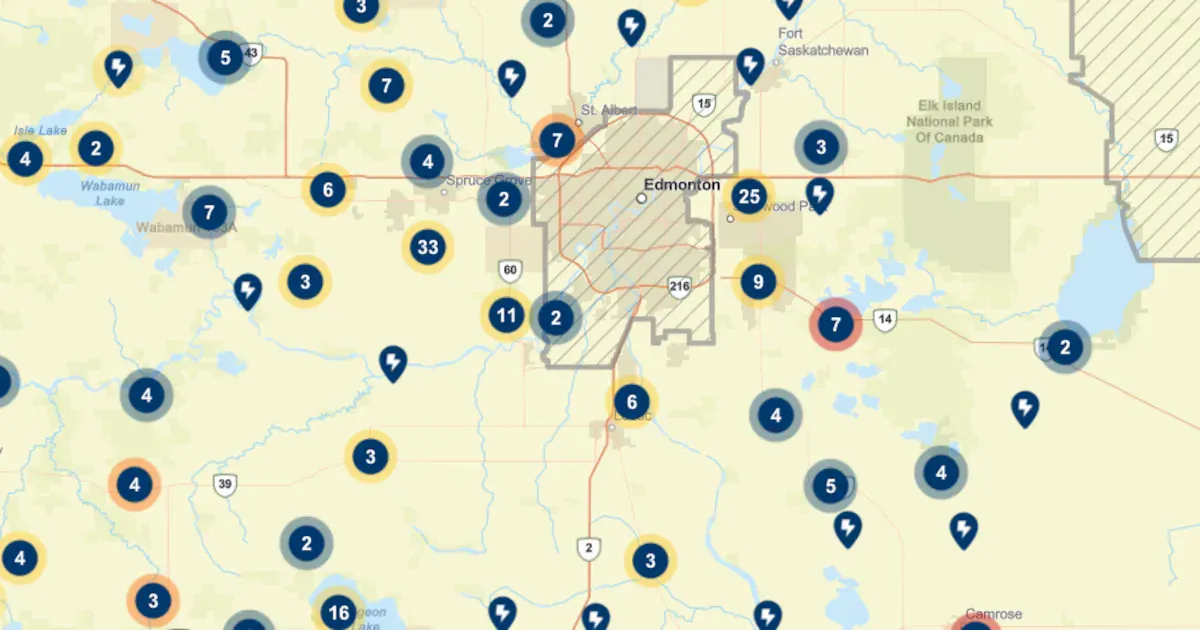
Power outages ramp up as windstorm sweeps through Edmonton and area - CTV News
AtlanticNova ScotiaNew BrunswickPrince Edward Island Newfoundland and LabradorCalgaryLethbridgeKitchenerGuelphNorthern OntarioSudburyNorth BaySault Ste. MarieTimminsOttawaKingstonBrockvillePembrokeReginaYorktonSaskatoonPrince AlbertTorontoWatchWeatherPeelHamiltonDurhamYorkHaltonNiagaraQueen's ParkToronto City HallIn PicturesVancouverVancouver IslandCanadaLocal SpotlightRoyal FamilyPoliticsNanosPower PlayQuestion PeriodFederal Election 2025WorldMideast ConflictRussia-Ukraine WarWatchLatestCaptured on CameraPoliticsLifestyleConsumerHealthExplainedEntertainmentTechnologyDeception DecodedAutosEnvironmentBusinessInflationReal EstateAutos
0 comments
No comments yet. Be the first to share your thoughts!