Top Science Photography Award Winner Stripped For AI Use - PCMag Middle East
This story deserves to be shared
Send it to someone who'd care, or post it on your networks.
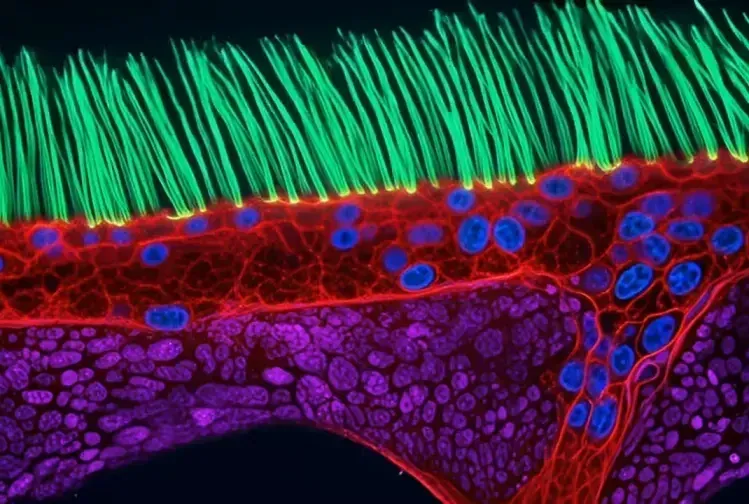
The winner of one of the world’s most prestigious scientific photography awards has been stripped of the top prize after their entry was outed as using generative AI.
Dr Ning Xu, from Tsinghua University in China, grabbed the top spot in Nikon’s 16th annual Small World in Motion contest, which looks to reward the best microscopic videography. Dr Xu had submitted a short video showing tiny, hair-like structures called cilia moving through the airway of a child suffering from primary ciliary dyskinesia, a rare respiratory condition that can lead to chronic lung, sinus, and ear infections.
This article is an excerpt. To read the full content, visit the original source. PCMag Middle East
Related articles
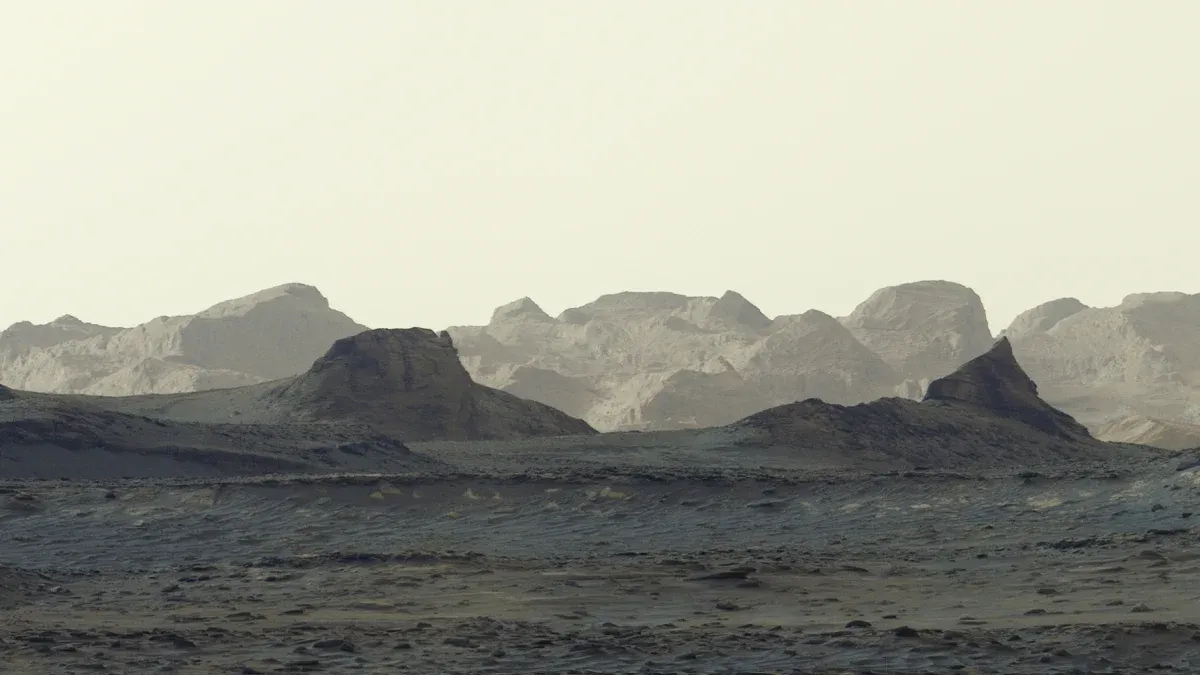
What color is Mars really? NASA Curiosity photo shows Mars stripped down. - Mashable
Your mental picture of Mars could be wrong. Elisha Sauers writes about space for Mashable, taking deep dives into NASA's moon and Mars missions, chatting up astronauts and history-making discoverers, and jetting above the clouds. Through 17 years of reporting, she's covered a variety of topics, including health, business, and government, with a penchant for public records requests. She previously worked for The Virginian-Pilot in Norfolk, Virginia, and The Capital in Annapolis, Maryland. Her work has earned numerous state awards, including the Virginia Press Association's top honor, Best in Show, and national recognition for narrative storytelling. For each year she has covered space, Sauers has won National Headliner Awards, including first place for her Sex in Space series. Send space tips and story ideas to [email protected] or text 443-684-2489. Follow her on X at @elishasauers.

SpaceX Sent 6,300 Pounds to the Space Station. The Strangest Cargo Was Grown in a Lab - Inc.com
The spacecraft delivered materials and equipment for new research studies to the station.

Ancient mud reveals a surprising secret about Greenland’s ice - Earth.com
Mud from a fjord shows an Atlantic air pattern brought wetter, colder spells to southern Greenland, a clue to how its ice may fare. Greenland’s ice is shrinking as the planet warms. But in the island’s southwest, rainfall and snowfall have been influenced by the same North Atlantic air-pressure pattern for at least 5,000 years. When that pattern tipped one way, the region turned wetter and colder. The record comes from mud on the floor of a Greenland fjord, and it suggests snowfall, not only temperature, shaped how the area’s ice grew and shrank. It doesn’t yet show how glaciers there will respond to the warming ahead. Johan Faust, a researcher at MARUM, the Center for Marine Environmental Sciences at the University of Bremen in Germany, led the work with colleagues in Germany, Norway, Denmark and Canada. A seesaw in the airThe pattern is called the North Atlantic Oscillation. It’s the difference in air pressure between a low that sits near Iceland and a high near the Azores, and it’s strongest in winter. When that difference is large, the pattern is in its positive phase. Northwestern Europe and southwestern Greenland both get more rain and snow.

Simulations explore nuclear mitigation of asteroid threats - Phys.org
Lawrence Livermore National Laboratory researcher Isaiah Santistevan led the development of three-dimensional simulations exploring how a nuclear device could deflect or disrupt an asteroid threatening Earth. Credit: Blaise Douros/LLNL Lawrence Livermore National Laboratory (LLNL) researchers are developing three-dimensional simulations to examine how a nuclear device could be used to deflect or potentially disrupt an asteroid threatening Earth.
0 comments
No comments yet. Be the first to share your thoughts!