To predict tree death, scientists tapped gamma rays to peer underground - Science | AAAS
This story deserves to be shared
Send it to someone who'd care, or post it on your networks.
This article is an excerpt. To read the full content, visit the original source. Science | AAAS
Related articles

Jonathan Mummolo Tapped to Lead Center for Data-Driven Social Science - Princeton School of Public and International Affairs
As artificial intelligence continues to provide unparalleled and unprecedented access to information and analytic tools, Jonathan Mummolo believes the work of Princeton University’s Data-Driven Social Science (DDSS) initiative is more important than ever. “As with any transformative research technology, AI presents great opportunities, but also great risks,” Mummolo said. “DDSS is focused on providing resources to Princeton researchers to help harness these tools in social science research while maintaining care and rigor.”Mummolo, an associate professor of politics and public affairs whose research studies bureaucratic politics and political behavior, was named the interim director of DDSS in August. Under his leadership, Mummolo is positioning DDSS and its team of research software engineers to help Princeton’s social science community harness AI to answer important social questions with attention to the unique challenges social science presents, including data privacy, replicability, and computational obstacles associated with massive data sets such as video archives.
Mysterious 'space waves' could help scientists predict dangerous solar storm impacts on Earth - Yahoo News Canada
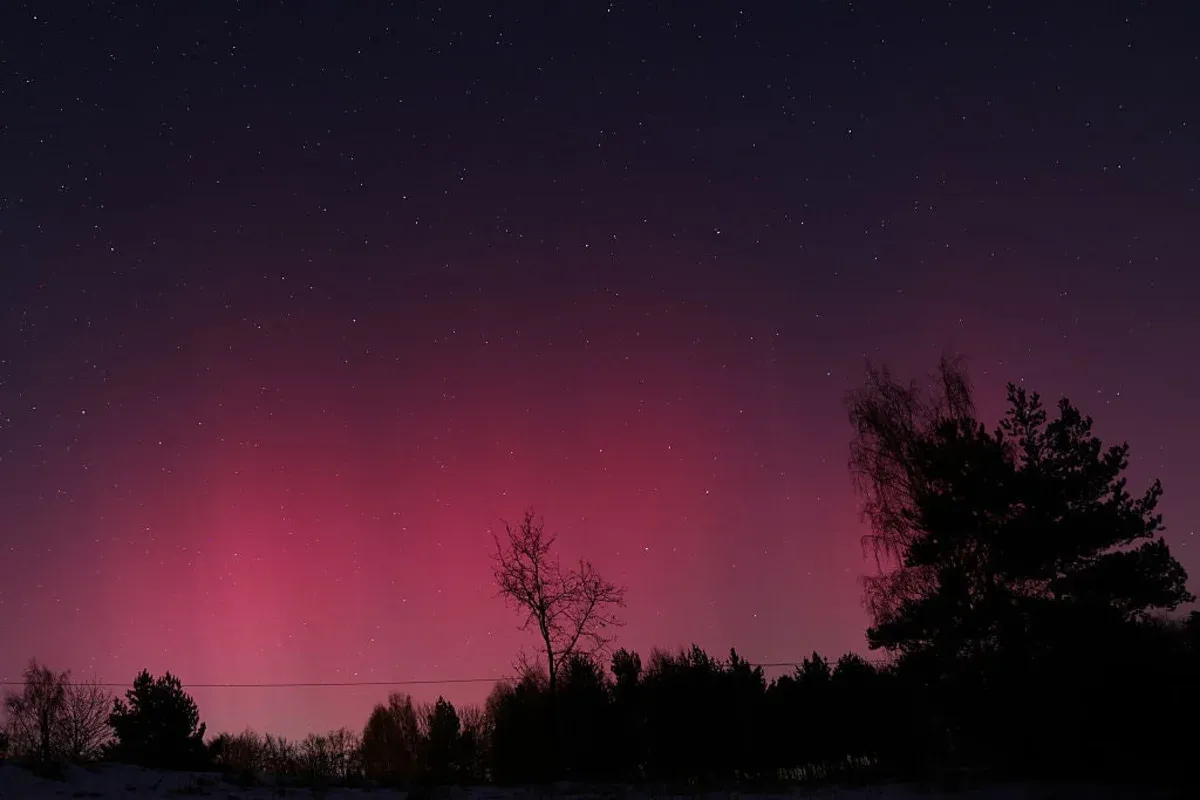
THE TAKEAWAYScientists found "space tsunamis" forming along the edge of Earth's magnetic shield. The waves shift location depending on the direction of the solar wind. The discovery could help scientists better understand and predict space weather threats to satellites, communications and power grids. Scientists say "space waves" rolling along the edge of Earth's magnetic shield could help researchers better understand where solar storms transfer energy into near-Earth space. The waves, known as Kelvin–Helmholtz waves, form where the fast-moving solar wind brushes past the outer boundary of Earth's magnetosphere. Northern lights are seen in Rudno, Poland on January 20, 2026. A new study led by researchers at the University of Oulu in Finland found that the waves do not form evenly around Earth. Instead, their strength and location depend on how the solar wind's magnetic field drapes around Earth's own magnetic field. Archaeologists In Turkey May Have Found The World's Oldest ShipwreckSimilar wave patterns can be seen in clouds and other cosmic environments, including the Sun's atmosphere and around other planets.
0 comments
No comments yet. Be the first to share your thoughts!