The Science Enabling a Steady Supply of Critical Minerals - Berkeley Lab News Center (.gov)
This story deserves to be shared
Send it to someone who'd care, or post it on your networks.
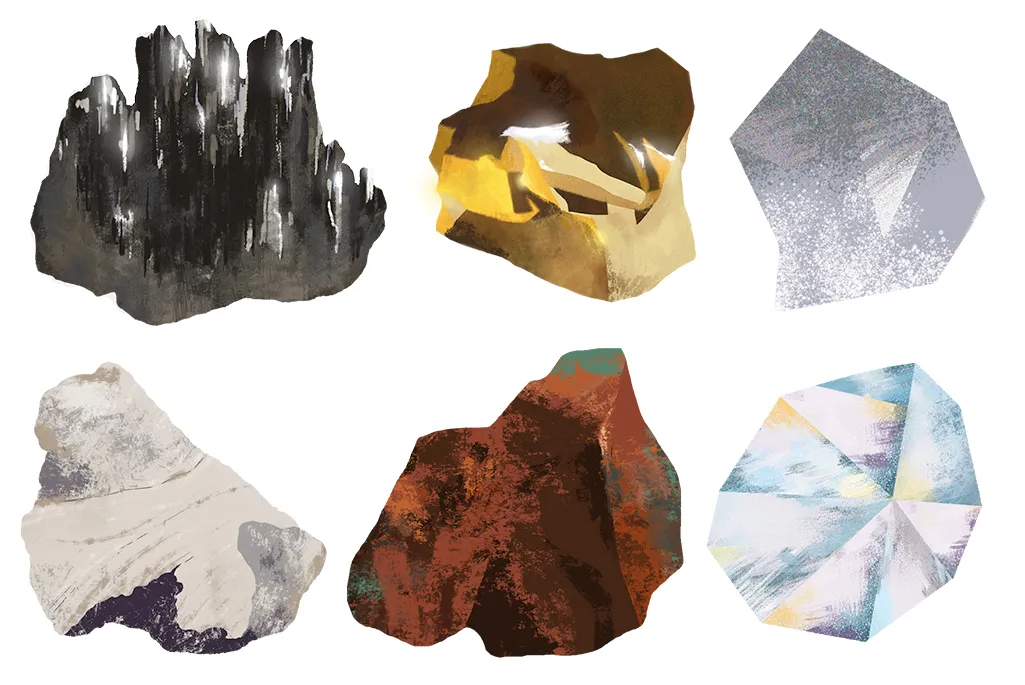
Modern life is built on critical minerals and materials. These elements are key ingredients in the technologies that enable a high quality of life, such as the chips and batteries powering our electronics, the medical devices that diagnose and treat diseases, and the infrastructure of the nation’s power grid. The materials are also used to manufacture defense technologies, fuels and chemicals, aerospace vehicles, and automotives.
Although the U. S. has geological resources of many critical minerals and materials (CMMs), some key commodities are only found in challenging forms, either scattered in trace amounts, chemically mixed with other elements, or both. The extraction, separation, and refining processes needed to convert these raw materials into purified products ready for manufacturing are expensive, complex, and energy intensive.
This article is an excerpt. To read the full content, visit the original source. Berkeley Lab News Center (.gov)
Related articles
Correction to C.4 Planetary Science Enabling Facilities - NASA Science (.gov)
Steady and Consistent Growth: The Real Story of ID - Science and Culture Today
The Business Case for Responsible AI: Enabling Growth by Going Beyond Compliance - The World Business Council for Sustainable Development (WBCSD)

SpaceX Sent 6,300 Pounds to the Space Station. The Strangest Cargo Was Grown in a Lab - Inc.com
The spacecraft delivered materials and equipment for new research studies to the station.

Ancient mud reveals a surprising secret about Greenland’s ice - Earth.com
Mud from a fjord shows an Atlantic air pattern brought wetter, colder spells to southern Greenland, a clue to how its ice may fare. Greenland’s ice is shrinking as the planet warms. But in the island’s southwest, rainfall and snowfall have been influenced by the same North Atlantic air-pressure pattern for at least 5,000 years. When that pattern tipped one way, the region turned wetter and colder. The record comes from mud on the floor of a Greenland fjord, and it suggests snowfall, not only temperature, shaped how the area’s ice grew and shrank. It doesn’t yet show how glaciers there will respond to the warming ahead. Johan Faust, a researcher at MARUM, the Center for Marine Environmental Sciences at the University of Bremen in Germany, led the work with colleagues in Germany, Norway, Denmark and Canada. A seesaw in the airThe pattern is called the North Atlantic Oscillation. It’s the difference in air pressure between a low that sits near Iceland and a high near the Azores, and it’s strongest in winter. When that difference is large, the pattern is in its positive phase. Northwestern Europe and southwestern Greenland both get more rain and snow.
0 comments
No comments yet. Be the first to share your thoughts!