The leap second is on the chopping block — and timekeeping could change forever - WPSD Local 6
This story deserves to be shared
Send it to someone who'd care, or post it on your networks.
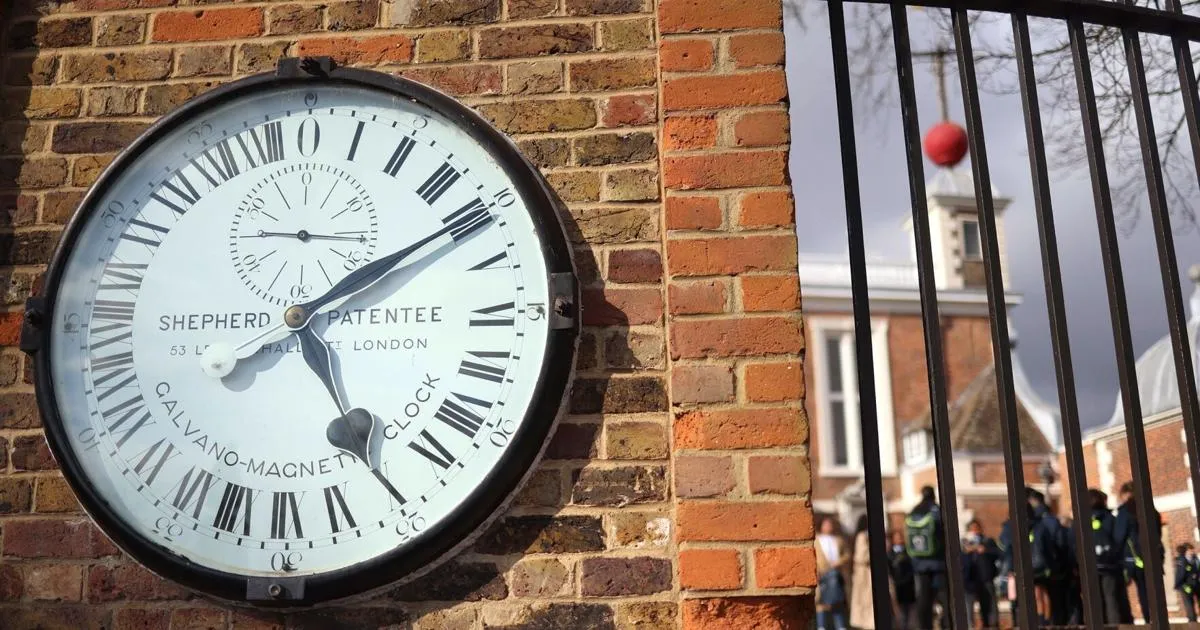
(CNN) — When the sun hits its highest point over the meridian line that travels north and south from the 351-year-old Royal Observatory Greenwich in London, it’s noon Greenwich Mean Time, a tangible and physical reference point that helped establish the world’s time zone system. Timekeeping has long relied on Earth’s spin and location of the sun or moon in the sky. Before observatories such as Greenwich, humans used sundials — essentially a stick in the ground that casts shadows as the sun moves overhead. But this ancient link between Mother Earth and today’s clocks looks set to be severed. International timekeepers are on track to vote Thursday on a proposal to eliminate what’s known as a leap second — a tiny, but many say important, link between Earth’s rotation and the world’s time standard used in critical infrastructure such as telecommunications, power grids and computers.
Inserted into global clocks 27 times since 1972, the leap second essentially allows two time systems to run in sync: astronomical time, long anchored by Earth’s rotation and measured by observatories, and Coordinated Universal Time, or UTC, the global standard that’s set by ultraprecise atomic clocks
This article is an excerpt. To read the full content, visit the original source. WPSD Local 6
Related articles
Global timekeeping rules change: leap second scrapped from 2027 - Yahoo News Canada
The world's official time standard will stop adding leap seconds from 20 May 2027. The General Conference on Weights and Measures (CGPM) decided to end the practice on Thursday 15 October 2026. The resolution was adopted at the conference's 28th meeting in Versailles, where delegates discussed the future of world time. Until now, leap seconds have been added from time to time to keep atomic time in line with the Earth's rotation. But from 20 May 2027, Coordinated Universal Time (UTC) will run continuously, with no interruptions. Why the leap second is being scrappedThe old rules were meant to keep two different ways of measuring time in step. UTC is based on extremely precise atomic clocks. Astronomical time depends on the Earth's rotation, and that rotation speed varies slightly. To keep the gap between the two time scales small, 27 leap seconds have been added since 1972. The most recent was at the end of 2016. As a result, one minute could exceptionally last 61 seconds. RelatedThese corrections are barely noticeable for people, but they can cause technical problems.
0 comments
No comments yet. Be the first to share your thoughts!