The ’leap second’ could disappear. How a minor time adjustment became a major problem - Radio-Canada
This story deserves to be shared
Send it to someone who'd care, or post it on your networks.
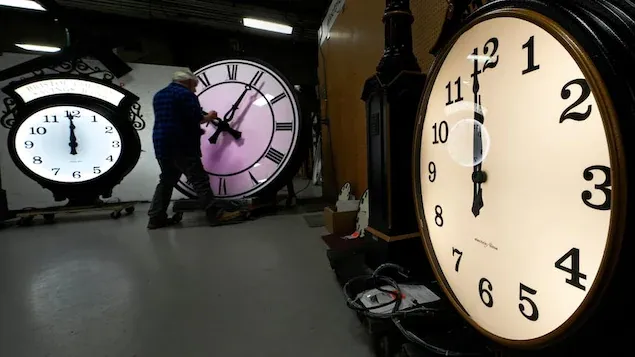
RCIPosted: October 15, 2026 11:10 AMKevin Maimann (new window) · CBC News ·For more than 50 years, humanity has used « leap seconds » to keep our clocks aligned with the rotation of the Earth. On Thursday, an international timekeeping body in France is expected to do away with leap seconds and let the clocks slip until they're out of alignment by a full hour, which could take centuries or even millennia.
The precise atomic time we use to track our days — developed in the 1950s and measured by tracking the natural vibrations of atoms — is slightly out of sync with solar time, which is based on the position of the sun in the sky relative to a specific location on Earth, because the planet's rotation has been gradually slowing.
This article is an excerpt. To read the full content, visit the original source. Radio-Canada
Related articles

The AI boom is making the world’s cheapest smartphones disappear - Rest of World
The world’s cheapest smartphones are disappearing because AI infrastructure is absorbing the components. Prices of existing smartphone models have risen by about 15% globally this year, while newly launched models are roughly 25% more expensive than last year. A global memory chip shortage, driven by demand from AI data centers, is pushing up the cost of making smartphones.
The 'leap second' is no more. How a minor time adjustment became a major problem - Yahoo News Canada
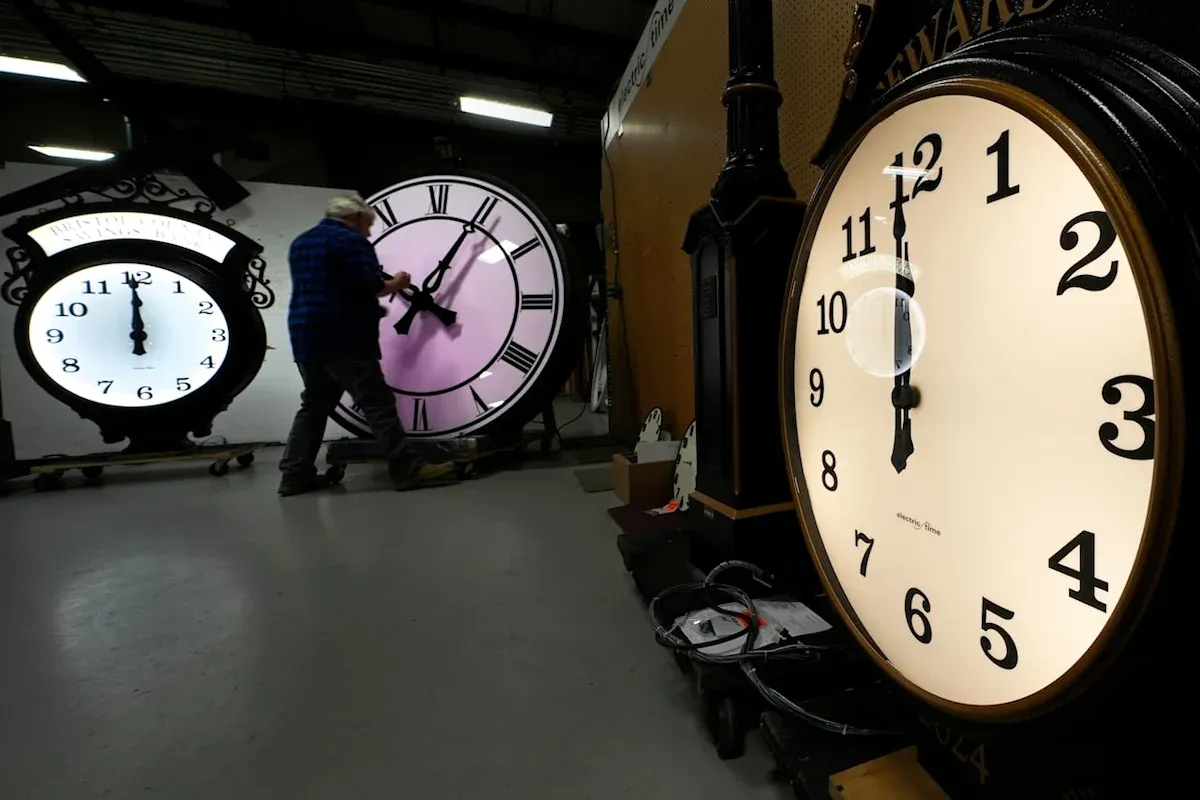
For more than 50 years, humanity has used "leap seconds" to keep our clocks aligned with the rotation of the Earth. On Thursday, an international timekeeping body in France voted to do away with leap seconds and let the clocks slip until they're out of alignment by a full hour, which could take centuries or even millennia. The precise atomic time we use to track our days — developed in the 1950s and measured by tracking the natural vibrations of atoms — is slightly out of sync with solar time, which is based on the position of the sun in the sky relative to a specific location on Earth, because the planet's rotation has been gradually slowing. The leap second was introduced in 1972 as a way to correct the discrepancy. Ten seconds were added immediately, says Scott Beattie, lead of the frequency and time team at the National Research Council of Canada's Metrology Research Centre. Since then, the International Earth Rotation and Reference Systems Service, which tracks the difference between the solar day and atomic time, has monitored the discrepancy to determine when an extra second is needed.

Senators 'attitude adjustment' paying off in successful start to season - Yahoo
Story bySenators 'attitude adjustment' paying off in successful start to seasonOttawa Senators' Drake Batherson (19) tips the puck past Nashville Predators goaltender Matt Murray (32) to score during third period NHL action in Ottawa, on Saturday, Oct. 10, 2026. THE CANADIAN PRESS/Keito Newman - The Canadian PressLisa WallaceSun, October 11, 2026 at 3:52 a.m. UTC·4 min read
0 comments
No comments yet. Be the first to share your thoughts!