Staying the course, shaping the future: WHO's commitment to sexual health and reproductive rights - World Health Organization (WHO)
This story deserves to be shared
Send it to someone who'd care, or post it on your networks.
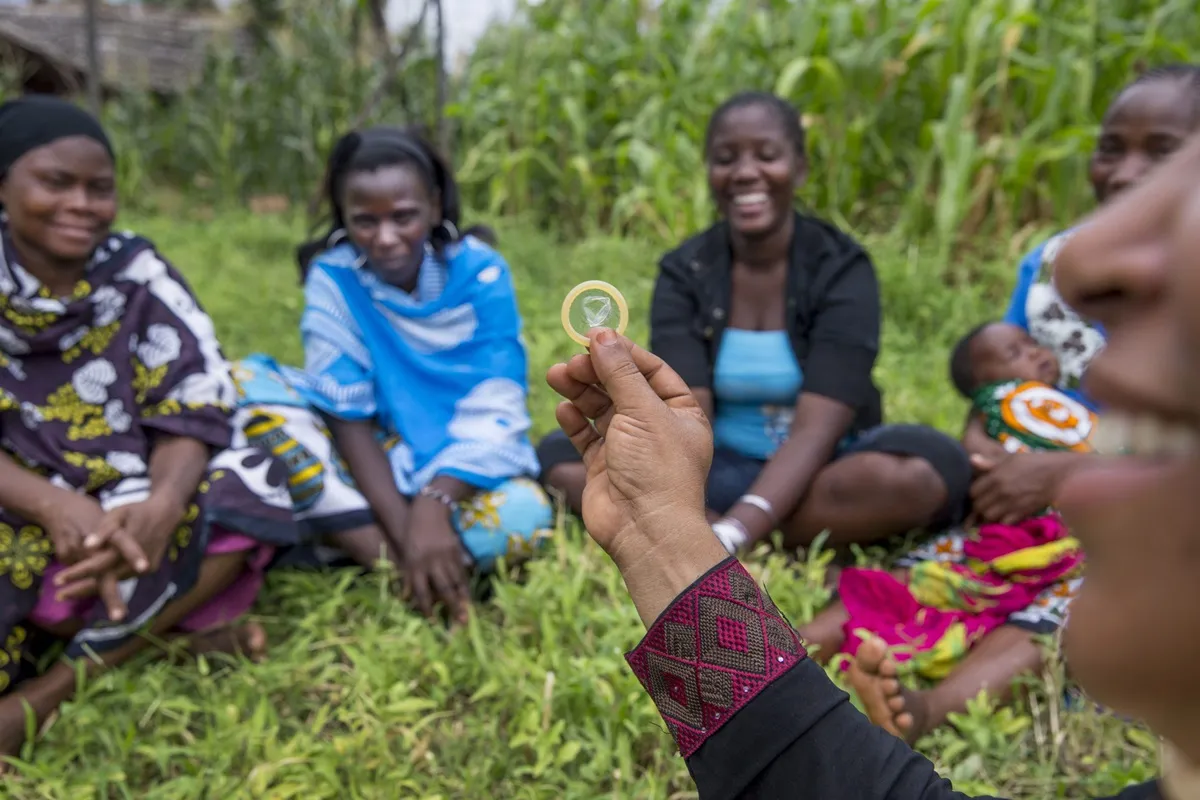
Woman that are members of the WOGE women group cooperative gathers regularly to discuss sexual reproductive health, and family planning options. Here they are going through a condom demonstration session.
This paper was originally published by The Lancet on 1 October 2026. Staying the course, shaping the future: WHO's commitment to sexual health and reproductive rights – The Lancet Obstetrics, Gynaecology, & Women’s HealthAdvances in sexual and reproductive health and rights (SRHR) have been among the great public health successes of the past half-century. In particular, the past decade has delivered some of its most decisive gains. Success has never rested on a single metric. It is measured in the millions of women who have gained increased control over their health, education, and economic futures through application of SRHR. Contraception remains among the most cost-effective and life-saving interventions in health. An analysis across 172 countries estimated that contraceptive use prevents 272 000 maternal deaths in a single year, reducing maternal mortality by 44%. Access to safe abortion has followed a similar trajectory.
This article is an excerpt. To read the full content, visit the original source. World Health Organization (WHO)
Related articles

A New Injection Makes Fat Cells Self-Destruct, And Might Prevent GLP-1 Weight Regain - ScienceAlert
The new treatment kills off a sub-group of fat cells. (Jian Fan/iStockphoto/Getty Images) Early clinical trials into a new fat reduction treatment have reported promising results, and the treatment takes a more unusual approach: Rather than shrinking fat cells, as most weight loss strategies do, it safely and naturally kills them off. The drug here is CBL-514, which is administered via injection. As well as proving effective at reducing subcutaneous fat (just below the skin), there's evidence it can also reduce visceral fat (stored deeper around the organs). According to the team behind the trials, CBL-514 and its unconventional strategy have the potential to reduce fat in key areas of the body – with further benefits that come with weight loss likely to follow. "We expect that patients will be pleased by the cosmetic effects, such as the flatter stomach that can come with subcutaneous fat loss," says endocrinologist Timothy Garvey, from the University of Alabama at Birmingham, who headed up the trial.
0 comments
No comments yet. Be the first to share your thoughts!