Stanford scientists discover immune cells that explode like microscopic bombs - Science Daily
This story deserves to be shared
Send it to someone who'd care, or post it on your networks.
This article is an excerpt. To read the full content, visit the original source. Science Daily
Related articles
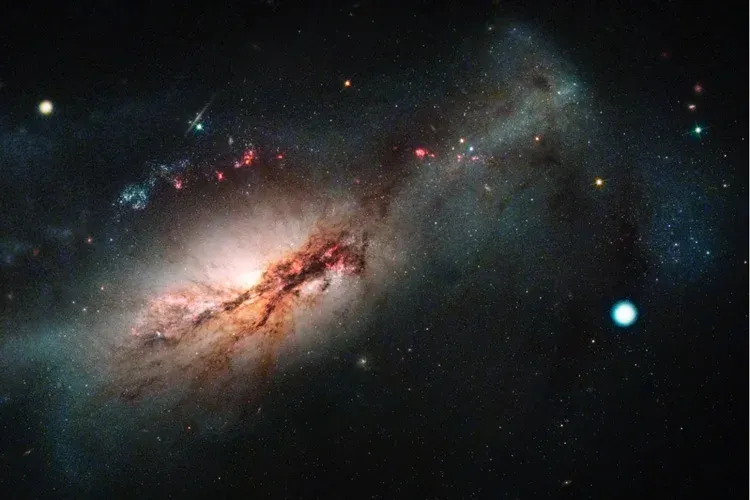
Unusual supernova solves 1,000 year mystery revealing a third way stars might explode - The Brighter Side of News
SN 2018zd matched six predicted signatures of an electron-capture supernova in a 2021 study, making it a leading candidate. Electron capture can remove pressure supporting a stellar core, triggering collapse in a narrow range of stellar masses. Competing interpretations and later Webb observations leave both SN 2018zd’s mechanism and the Crab Nebula’s origin unresolved. An unusual supernova reveals a possible third way stars explodeA fading star in a nearby galaxy offered astronomers an unusually complete set of clues about a long-predicted stellar death. Its surroundings, changing brightness and chemical signatures pointed toward an electron-capture supernova, an explosion triggered when a stellar core loses part of its internal support. The finding also raised hopes of explaining the explosion that created the Crab Nebula in 1054. However, subsequent research has complicated that connection. Both objects remain valuable tests of stellar physics, rather than settled examples of one explosion mechanism. The host galaxy and post- and pre-explosion images of SN 2018zd.

Simulations explore nuclear mitigation of asteroid threats - Phys.org
Lawrence Livermore National Laboratory researcher Isaiah Santistevan led the development of three-dimensional simulations exploring how a nuclear device could deflect or disrupt an asteroid threatening Earth. Credit: Blaise Douros/LLNL Lawrence Livermore National Laboratory (LLNL) researchers are developing three-dimensional simulations to examine how a nuclear device could be used to deflect or potentially disrupt an asteroid threatening Earth.
0 comments
No comments yet. Be the first to share your thoughts!