Seaweed strandings cause a stink – here’s why they harm your health - The Conversation
This story deserves to be shared
Send it to someone who'd care, or post it on your networks.

Seaweed piling up on a beach might look harmless, but as quantities begin to rot, they can release gases that are toxic to people.
In recent years, two people and several animals (including a horse and 36 wild boar) have died after inhaling toxic gases from decomposing seaweed on the Brittany coast in France. And between January and August 2018, thousands of people reported headaches, nausea and eye irritation after inhaling seaweed gas in the Caribbean.
This article is an excerpt. To read the full content, visit the original source. The Conversation
Related articles
How Healthy Is Seaweed? - The New York Times
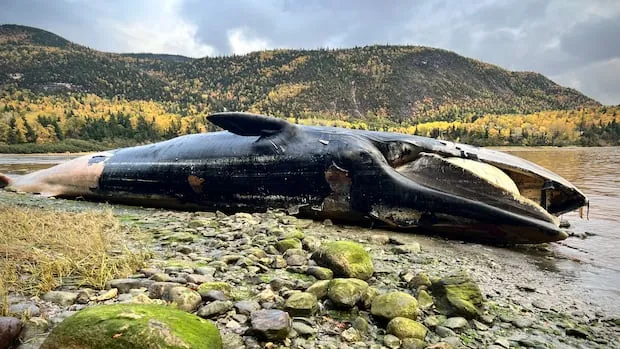
'Going to be a bad stink,’ says man about rotting dead whale on Newfoundland’s west coast - CBC
Nfld. & LabradorThe City of Corner Brook says it’s letting a dead fin whale decompose naturally, after consulting with provincial and federal authorities. Corner Brook says after consultation, it's letting the remains decompose naturallyElizabeth Whitten · CBC News · Posted: Oct 14, 2026 1:00 PM EDT | Last Updated: October 14Listen to this articleEstimated 3 minutesThe audio version of this article is generated by AI-based technology. Mispronunciations can occur. We are working with our partners to continually review and improve the results. A fin whale that washed ashore not far from Corner Brook will stay there to decompose naturally. (Lindsay Bird/CBC)A dead fin whale that washed ashore on Newfoundland’s west coast will stay there after the municipality responsible for it decided to leave it be — a decision that at least one resident says doesn't pass the smell test. “There is going to be a bad stink there,” said Reginald MacDonald, who was among the first to discover the whale while fishing for squid. Earlier this month, the whale became stuck in shallow waters in Wild Cove, on the north shore of the Bay of Islands.

Bioengineer.org | Switching HIV drugs or adding zoledronic acid rebuilds bone lost to tenofovir - European AIDS Treatment Group
Bioengineer.org news storyFor millions of people living with HIV, antiretroviral therapy has transformed a once-fatal infection into a manageable chronic condition. Yet the very drugs that suppress the virus can carry quiet costs, and one of the most insidious is bone loss. Tenofovir disoproxil fumarate, or TDF, has been a cornerstone of HIV treatment worldwide for two decades, prized for its potency, durability, and low cost. But a growing body of evidence has linked TDF exposure to measurable reductions in bone mineral density, raising an increasingly urgent clinical question: once bone has been lost on a TDF-based regimen, can it be recovered? A new prospective cohort study, published in BMC Infectious Diseases, offers some of the most detailed longitudinal evidence to date that the answer, for many patients, is yes. The research team enrolled 223 virologically suppressed men living with HIV who had low bone mineral density while taking TDF-based antiretroviral therapy.
0 comments
No comments yet. Be the first to share your thoughts!