Scientists warn a popular vitamin D supplement may have a hidden downside - Science Daily
This story deserves to be shared
Send it to someone who'd care, or post it on your networks.
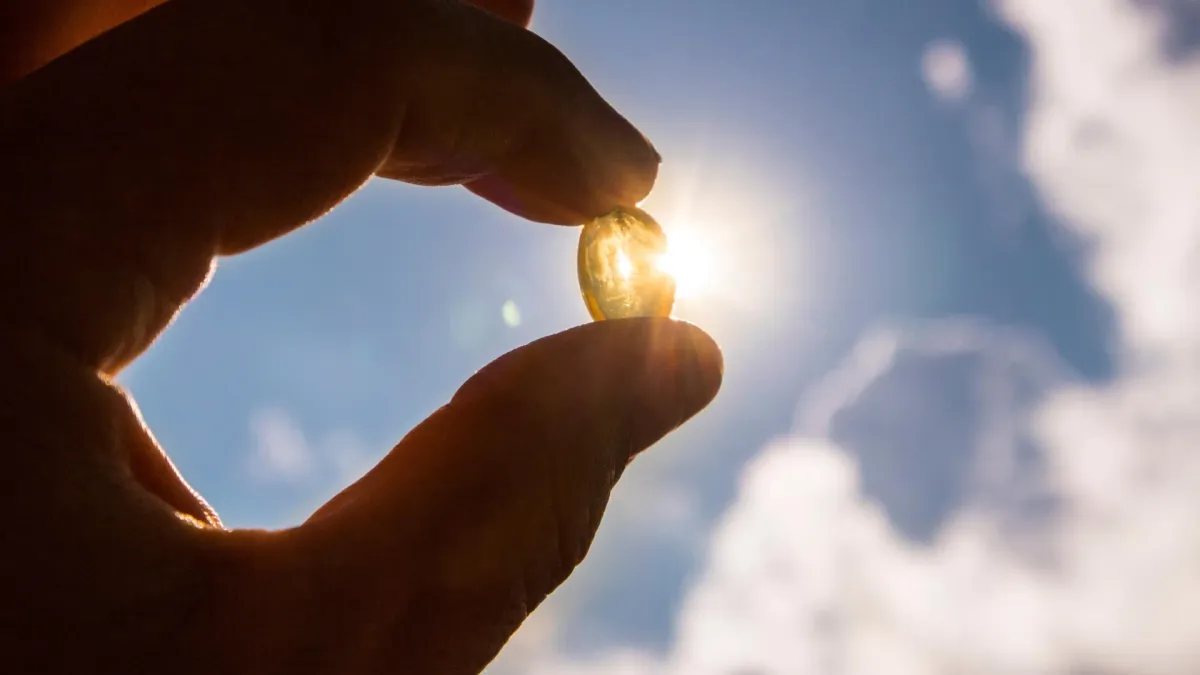
A common vitamin D supplement may have an unexpected effect inside the body. Research published in 2025 found that taking vitamin D2 can reduce levels of vitamin D3, the form humans naturally make when skin is exposed to sunlight.
That distinction matters because vitamin D2 and vitamin D3 are often treated as interchangeable sources of the same nutrient. Both can increase overall vitamin D status, but a growing body of evidence indicates that D3 is generally more effective at raising and maintaining the main form of vitamin D measured in the blood. Current guidance from the U. S. National Institutes of Health reflects that evidence, noting that D3 tends to raise vitamin D levels more and keep them elevated for longer than D2.
This article is an excerpt. To read the full content, visit the original source. Science Daily
Related articles

A Black Hole 12,000 Light-Years Away Is Firing a Plasma Jet Toward Earth - Gadget Review
Milky Way’s first microblazar candidate sits 12,000 light-years away, offering a rare ground-level lab for studying relativistic jetsA black hole 12,000 light-years away is firing a jet of plasma almost directly toward Earth. At that distance, no known or expected danger to Earth has been identified by the researchers or the institutions involved. What astronomers have actually found is rarer and more interesting than a threat. Researchers have identified IRAS 18293-0941 as a compelling candidate for the Milky Way’s first microblazar, a class of object that gives astrophysicists a close-up laboratory for studying some of the most violent physics in the galaxy. What Astronomers FoundThe discovery centers on a binary system whose black hole expels plasma jets at close to three-quarters the speed of light, pointed almost directly toward Earth. The system pairs a hot, massive star with a black hole that completes a full orbit roughly every 11.38 days. Material drawn from the companion star feeds the black hole, and some of that matter gets expelled outward as opposing jets traveling at approximately three-quarters the speed of light. Terminology matters here.
Drowned 5,000-year-old forests off Mozambique now shelter reef fish, no coral needed - Yahoo
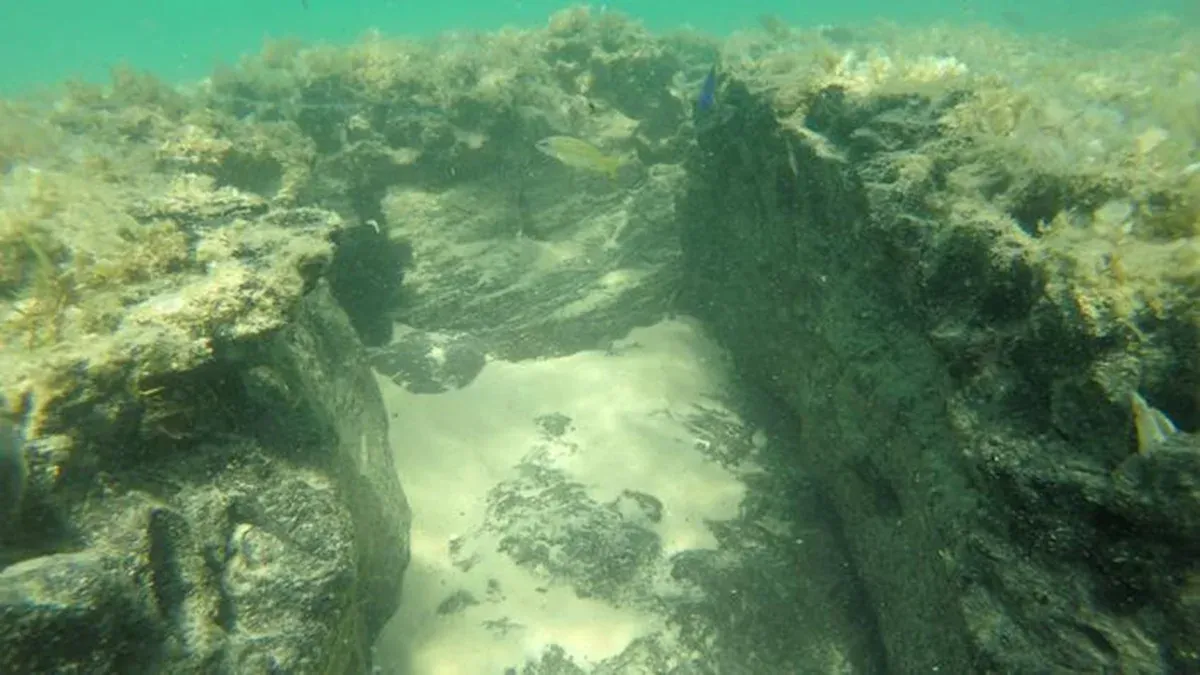
Forests that stood on Mozambique's coast thousands of years ago now lie beneath shallow seas, and they have become fish-filled "peat reefs" with marine life comparable to coral reefs, researchers report in Scientific Reports. A team from the Bazaruto Center for Scientific Studies (BCSS) Ocean Observatory, led by Mario Lebrato, documented the submerged peat in the Bazaruto Archipelago in the Western Indian Ocean. BCSS, founded in 2017, describes itself as Africa's first permanent ocean observatory. Working with universities and institutions in the U. K., U. S. and Canada, the team believes it has carried out the first ecological study of peat reefs anywhere in the tropics. Old forests, new seafloorRadiocarbon dating shows the peat formed between about 300 and 5,000 years ago, and chemical analysis indicates it came mostly from coastal land plants and trees. Some samples contain up to 40% organic carbon by dry weight. Lebrato said the coastline has very little natural hard seabed, mostly shifting sand. As rising seas expose the old peat layers, they create rare solid habitat where marine life can settle, hide and feed.
Coral Bleaching Reversed at Record Speed Using New Stanford Method: ‘Not a Lost Cause, at All’ - Good News Network
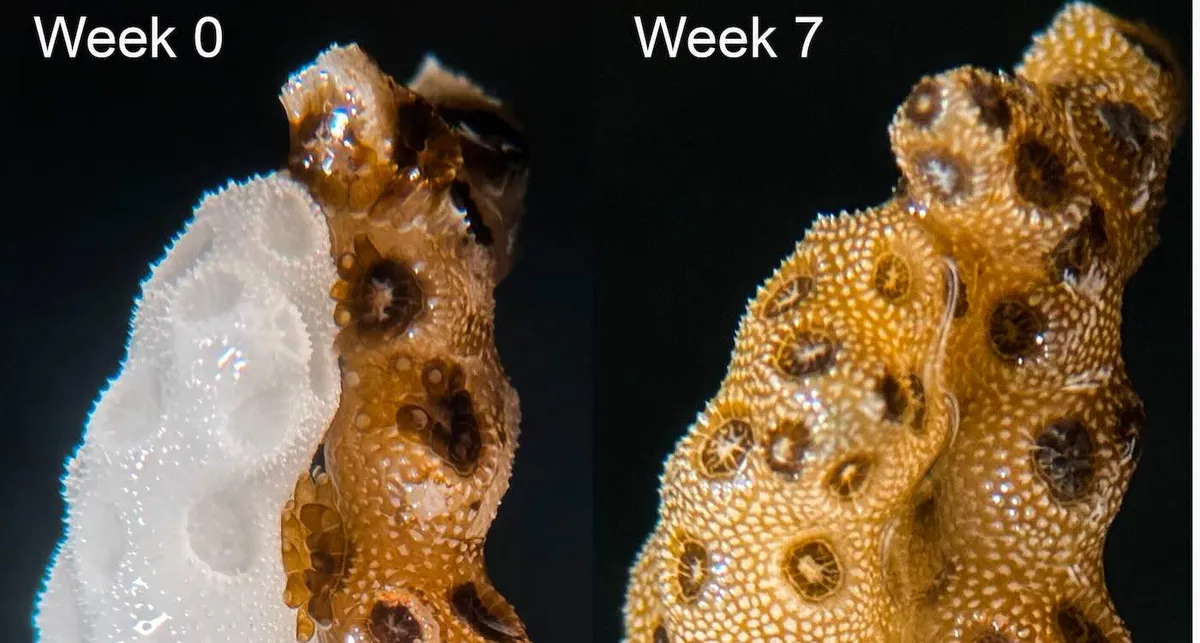
Coral bleaching restoration at Stanford – by Dan Griffin / GG Films (via SWNS, cropped) Coral bleaching has been reversed at record speed using a new method developed at Stanford University.
0 comments
No comments yet. Be the first to share your thoughts!