Scientists reveal the hidden force driving the universe’s hottest fluid - Science Daily
This story deserves to be shared
Send it to someone who'd care, or post it on your networks.
This article is an excerpt. To read the full content, visit the original source. Science Daily
Related articles

Israel's hottest degrees: medicine leads demand as AI expands, computer science declines - Ynetnews
Some 350,900 students are expected at 57 institutions, a 2.1% increase; around 70,000 served in the military reserves last year, while women account for 58.6% of enrollment and 61% finish bachelor's degrees on time, versus 43% across the OECDThe 2026–27 academic year is opening at 57 higher education institutions across Israel, with the country's university and college system continuing to grow. According to forecasts by the Council for Higher Education (CHE) and its Planning and Budgeting Committee (PBC), approximately 350,900 students are expected to enroll this year, an increase of 2.1%, or 7,183 students, compared with 2025–26. During the previous academic year, 343,717 students were enrolled, up 2.8% from 2024–25. Of those, 262,083 were studying for bachelor's degrees, 68,497 for master's degrees, 12,356 for doctoral degrees and 781 were enrolled in certificate programs. GalleryTel Aviv University (Photo: Roman Yanushevsky, shutterstock)Undergraduate studies accounted for approximately 90% of the overall growth in 2025–26, with enrollment rising 3.4%, from 253,536 students the previous year to 262,083.
Astronomers May Have Found a Planet in The Habitable Zone of The Hottest Star Yet - ScienceAlert
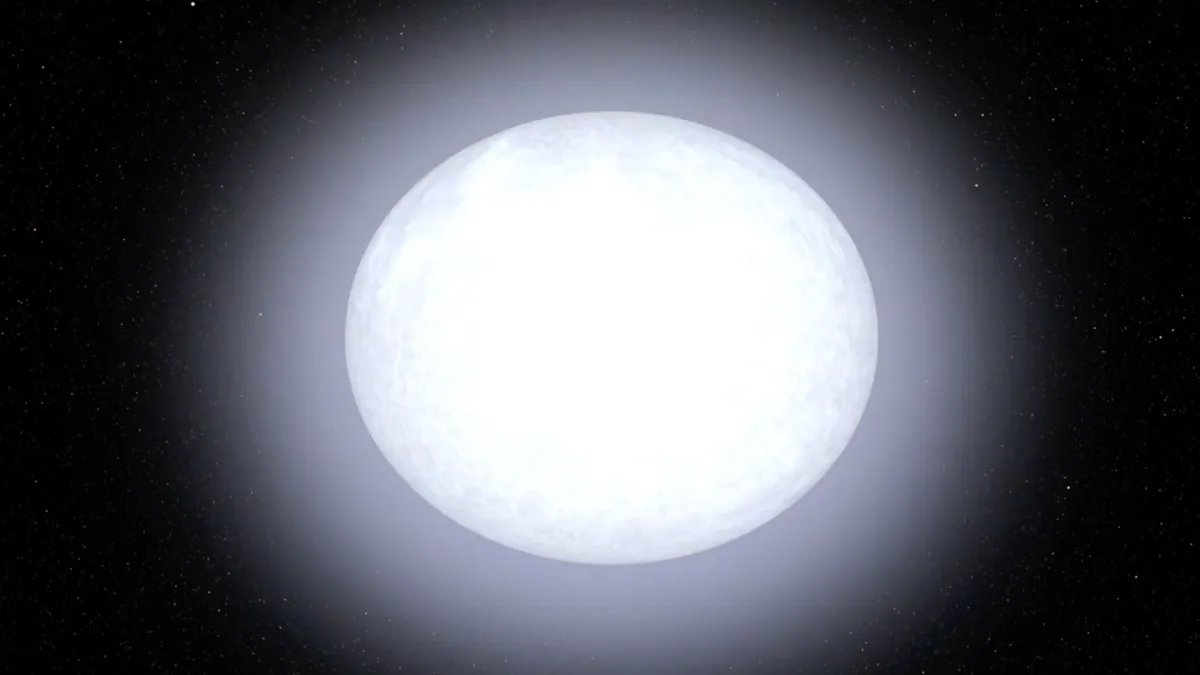
Artist impression of one type of Delta Scuti pulsation, that is driven by waves (blue arrows) traveling between the star's core and surface. (NASA's Goddard Space Flight Center) Detecting planets outside of our Solar System mostly relies on measuring minute changes in the light of distant stars. If this were akin to finding a needle in a haystack, astronomers would delight. But it's more like distinguishing the glow of a firefly flitting in front of the nuclear brilliance of a hydrogen bomb. Impressively, astronomers have found more than 6,300 exoplanets so far using various methods. They are a diverse menagerie of mouthwatering worlds, including one that seems to be emitting a weirdly tantalizing signal, as well as Earth-like analogs bathed in the crimson light of dim, blood-hued red dwarfs. Astronomers may have just made another milestone discovery in the search for intrinsically intriguing worlds: the hottest star to potentially host a habitable-zone planet, a giant world named HD 156295 b. If confirmed, this would be the first known exoplanet in the habitable zone of a massive, A-type star, named HD 156295.

SpaceX Sent 6,300 Pounds to the Space Station. The Strangest Cargo Was Grown in a Lab - Inc.com
The spacecraft delivered materials and equipment for new research studies to the station.

Ancient mud reveals a surprising secret about Greenland’s ice - Earth.com
Mud from a fjord shows an Atlantic air pattern brought wetter, colder spells to southern Greenland, a clue to how its ice may fare. Greenland’s ice is shrinking as the planet warms. But in the island’s southwest, rainfall and snowfall have been influenced by the same North Atlantic air-pressure pattern for at least 5,000 years. When that pattern tipped one way, the region turned wetter and colder. The record comes from mud on the floor of a Greenland fjord, and it suggests snowfall, not only temperature, shaped how the area’s ice grew and shrank. It doesn’t yet show how glaciers there will respond to the warming ahead. Johan Faust, a researcher at MARUM, the Center for Marine Environmental Sciences at the University of Bremen in Germany, led the work with colleagues in Germany, Norway, Denmark and Canada. A seesaw in the airThe pattern is called the North Atlantic Oscillation. It’s the difference in air pressure between a low that sits near Iceland and a high near the Azores, and it’s strongest in winter. When that difference is large, the pattern is in its positive phase. Northwestern Europe and southwestern Greenland both get more rain and snow.
0 comments
No comments yet. Be the first to share your thoughts!