Scientists alarmed as Super El Niño collides with ‘strange uptick’ in Galapagos iguana trafficking - Simon Fraser University
This story deserves to be shared
Send it to someone who'd care, or post it on your networks.
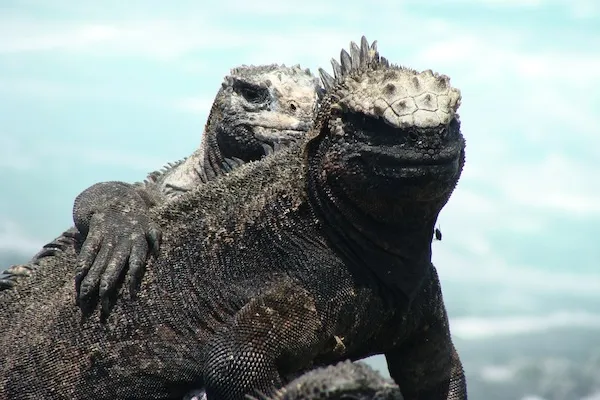
A pair of Galapagos marine iguanas soak up the sun on Marchena Island in the Galapagos Archipelago. Photo by Juan José Alava.
The only lizard in the world that can live and forage at sea may now be in a fight for survival. International scientists warn black-market trafficking of Galapagos marine iguanas is peaking just as the Super El Niño decimates their natural food source.
This article is an excerpt. To read the full content, visit the original source. Simon Fraser University
Related articles
Scientists alarmed as super El Niño collides with 'strange uptick' in Galapagos iguana trafficking - Phys.org
Extreme events, such as this South Australian algal bloom that lasted from 2025 to 2026, have devastating effects on marine ecosystems. The only lizard in the world that can live and forage at sea may now be in a fight for survival. International scientists warn black-market trafficking of Galapagos marine iguanas is peaking just as the super El Niño decimates their natural food source. The 2026/27 El Niño event started warming equatorial waters in May, the same month Ecuadorian officials discovered four Galapagos iguanas being kept in a home near Guayaquil. Shortly after, they found a dozen more at a nearby airport, stuffed in handbags with their limbs bound.

Simulations explore nuclear mitigation of asteroid threats - Phys.org
Lawrence Livermore National Laboratory researcher Isaiah Santistevan led the development of three-dimensional simulations exploring how a nuclear device could deflect or disrupt an asteroid threatening Earth. Credit: Blaise Douros/LLNL Lawrence Livermore National Laboratory (LLNL) researchers are developing three-dimensional simulations to examine how a nuclear device could be used to deflect or potentially disrupt an asteroid threatening Earth.
0 comments
No comments yet. Be the first to share your thoughts!