Russian researchers map out water hotspots on Mars - Global Times
This story deserves to be shared
Send it to someone who'd care, or post it on your networks.

A team of Russian scientists has charted water-rich deposits on Mars in unprecedented detail, uncovering around 30 "water oases" after analyzing eight years of data from the FREND neutron detector aboard the ExoMars Trace Gas Orbiter. Two new concentrations of water-bearing minerals were identified, with estimated water content reaching 30 percent, up from 20 percent in the latest mappingScientists detected readings suggesting water content approaching 100 percent, though this does not confirm the presence of pure ice on the surface. The area explored by NASA's Curiosity rover is among the promising locations highlighted in the new mapThe number of known water-rich zones has risen from 23 to roughly 30. The new map could help future human missions locate water on Mars — both to produce oxygen for breathing and to generate hydrogen for rocket fuel. The findings were presented at the 17th Moscow Solar System Symposium.
This article is an excerpt. To read the full content, visit the original source. Global Times
Related articles
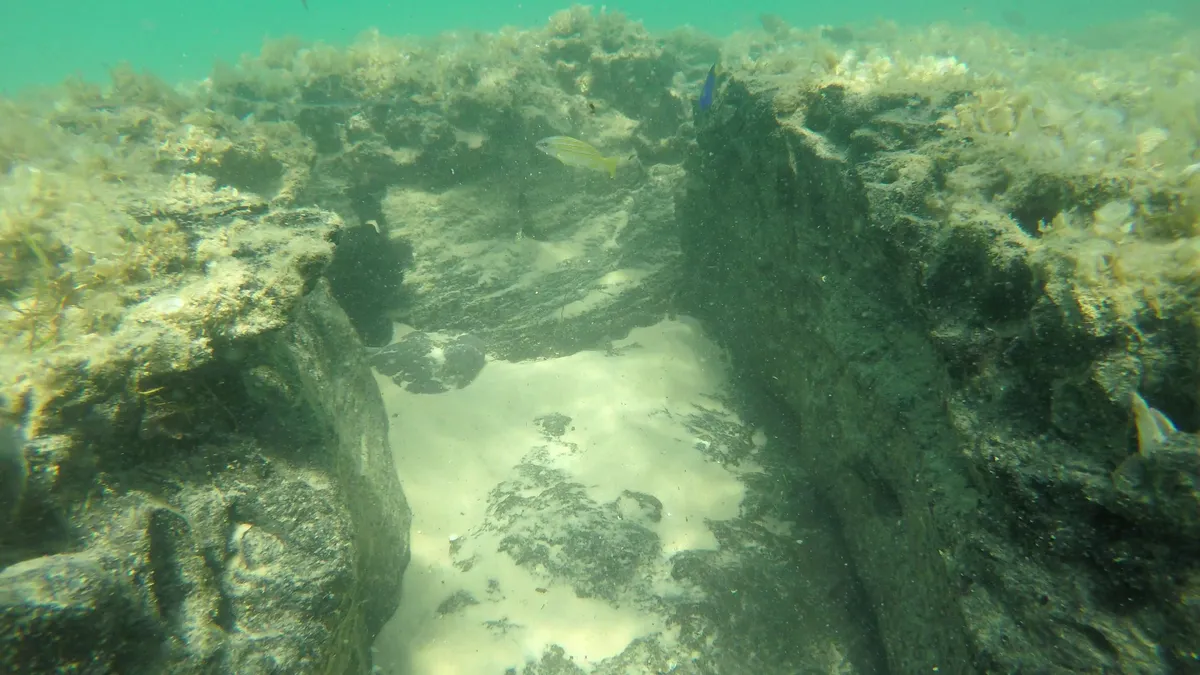
Drowned 5,000-year-old forests reborn as thriving peat reefs and biodiversity hotspots off Mozambique - Phys.org
Peat reef habitat fauna, a bluebanded snapper. Researchers from the Bazaruto Center for Scientific Studies (BCSS) Ocean Observatory have documented ancient forests that grew on the Mozambican coast thousands of years ago and have been found beneath the sea, where they now serve as hotspots teeming with marine life similar in biodiversity to coral reefs. The discovery raises the question of how many more of these hidden peat reefs exist around the world's coastlines and how to evaluate them as a carbon store and develop policies to protect them and their biodiversity. The paper in Scientific Reports published by the BCSS Ocean Observatory, working in collaboration with researchers from U.
The Hungriest Countries in the World: 2026 Hunger Hotspots - Action Against Hunger

Simulations explore nuclear mitigation of asteroid threats - Phys.org
Lawrence Livermore National Laboratory researcher Isaiah Santistevan led the development of three-dimensional simulations exploring how a nuclear device could deflect or disrupt an asteroid threatening Earth. Credit: Blaise Douros/LLNL Lawrence Livermore National Laboratory (LLNL) researchers are developing three-dimensional simulations to examine how a nuclear device could be used to deflect or potentially disrupt an asteroid threatening Earth.
0 comments
No comments yet. Be the first to share your thoughts!