Remembering the British Home Children sent to Canada all alone - BBC
This story deserves to be shared
Send it to someone who'd care, or post it on your networks.
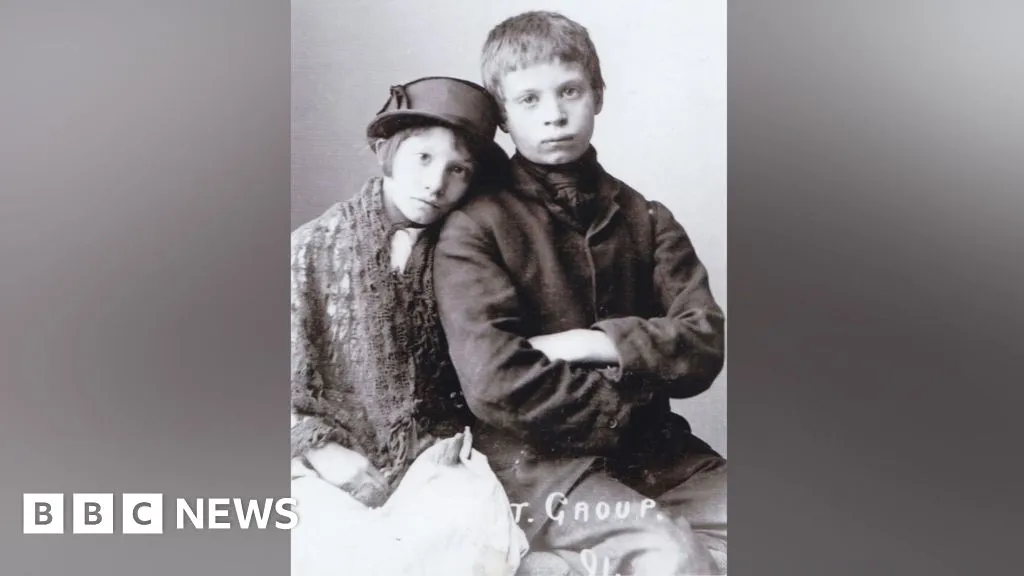
Sorrow of the children shipped to Canada all alone5 October 2026Angela FergusonNorth WestHome Children CanadaSiblings Rose and Fred Shapcott, pictured on their admission to Barnardo's in 1891, were among those sent away to CanadaWhen 10-year-old Rose Shapcott and her brother Fred, 14, were orphaned and put into a Barnardo's children's home in 1891, little did they know they would end up being separated and sent thousands of miles away across the Atlantic. The siblings were sent to Canada as part of the British Home Children child migration programme, which saw about 100,000 impoverished children from Britain sent to overseas colonies including Canada, between 1869 and the 1940s. These children were separated from their families and sent off to Canada as a source of cheap labour, often suffering mistreatment at the hands of those who took them in, said Rose's great grandson Malcolm Farrow. Farrow said Fred was sent to Saskatchewan first and then Rose asked to be sent over when she was 17, thinking they would be reunited. Instead, she was sent thousands of miles away to Peterborough in Ontario and went on to have "a very sad life", Farrow revealed.
This article is an excerpt. To read the full content, visit the original source. BBC
Related articles
Remembering Rebecca Luna - Dying With Dignity Canada

Alberta referendum expected to bring finality, but also more questions on separation - Global News
On Monday, Albertans vote on whether to stay in Canada or hold another binding referendum on quitting Canada. If the vote goes as polls suggest, a majority of Albertans will mark an X to stay in Confederation, and Premier Danielle Smith has said if that’s so, she expects everyone to accept it and move on. Leaders of the independence movement contest that. And political watchers are divided about whether separation — previously a fringe sentiment — will now be a prominent, permanent feature of Alberta’s political landscape, as in Quebec. Julian Castro-Rea, a political-science professor at the University of Alberta who studies the separation debates in Quebec and Alberta, believes as long as Alberta feels alienated from the Canadian capital — feeling that Ottawa benefits from Alberta’s resource economy without giving back — the movement will have fuel. “Even if the referendum is lost, the westernization will still be around, because it’s kind of a way which, traditionally, Albertans have related to the rest of Canada,” says Castro-Rea, who believes western alienation may remain indefinitely. Story continues below advertisement

How Canada’s fractured immigration consensus is starting to show up at ballot boxes - Global News
It’s no secret the long-held Canadian consensus on immigration has fractured — pulled apart by a rapid increase in new arrivals post-pandemic and growing affordability challenges. Now, that fracture is starting to show up at the ballot box. The Parti Québécois won a minority mandate in Quebec on a platform that included promises of tighter immigration controls, which the party linked to protecting French culture and easing pressure on public services and housing. And when Albertans head to the polls Monday to vote on whether to hold a future referendum on separation from Canada, they’ll also be answering five separate questions on immigration being pushed by the government of Alberta Premier Danielle Smith. Those questions include:— Should the province should have more say over economic immigration?— Should provincially funded services should be restricted to citizens, permanent residents and those with “Alberta-approved” immigration status? Story continues below advertisement

Encryption Is Getting Squeezed From All Sides - WIRED
Welcome to Kernel Panic, a weekly newsletter by Lily Hay Newman and Matt Burgess from inside the new world of privacy and digital security. To receive this newsletter in your inbox each week, sign up here. Oh, Canada. The Great White North is the latest country to contemplate legislation that could essentially mandate backdoors and increase data retention in encrypted services. The proposed changes have prompted the Canadian anti-censorship company Psiphon VPN—which keeps millions of Iranians online during repressive internet shutdowns—to say it will leave the country if the bill passes. And Psiphon is not the only one. Encrypted messaging app Signal has said it would exit the Canadian market because the legislation would require unacceptable changes to its open source projects. Apple and Meta have criticized the bill, and DuckDuckGo and NordVPN say they would consider pulling their services, too. But as countries around the world contemplate similar legislation, even larger questions begin to emerge about which states or regions could differentiate themselves as being safe havens for privacy services if global hostility to encryption continues to rise.
0 comments
No comments yet. Be the first to share your thoughts!