Our clocks and the Earth are slowly drifting apart — and timekeepers may let it happen | CBC News - CBC
This story deserves to be shared
Send it to someone who'd care, or post it on your networks.
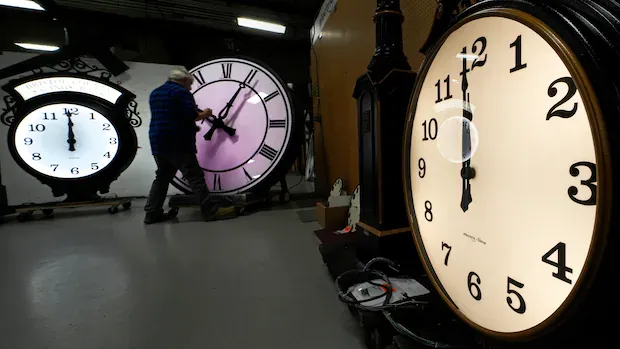
WorldFor more than 50 years, humanity has used "leap seconds" to keep our clocks aligned with the rotation of the Earth. On Thursday, an international time-keeping body in France voted to do away with leap seconds and let the clocks slip until they're out of alignment by a full hour — meaning it could be centuries, or even millennia, before another tweak is needed. International time-keeping body votes to ditch the decades-long tradition ThursdayKevin Maimann · CBC News · Posted: Oct 15, 2026 4:00 AM EDT | Last Updated: October 15Listen to this articleEstimated 5 minutesThe audio version of this article is generated by AI-based technology. Mispronunciations can occur. We are working with our partners to continually review and improve the results. Clockmaker Scott Gow adjusts the hands of a clock at the Electric Time Company in Medfield, Mass., in 2024. An international body voted to do away with leap seconds and let the clocks slip until they're out of alignment by a full hour. (Charles Krupa/The Associated Press)For more than 50 years, humanity has used "leap seconds" to keep our clocks aligned with the rotation of the Earth.
This article is an excerpt. To read the full content, visit the original source. CBC
Related articles
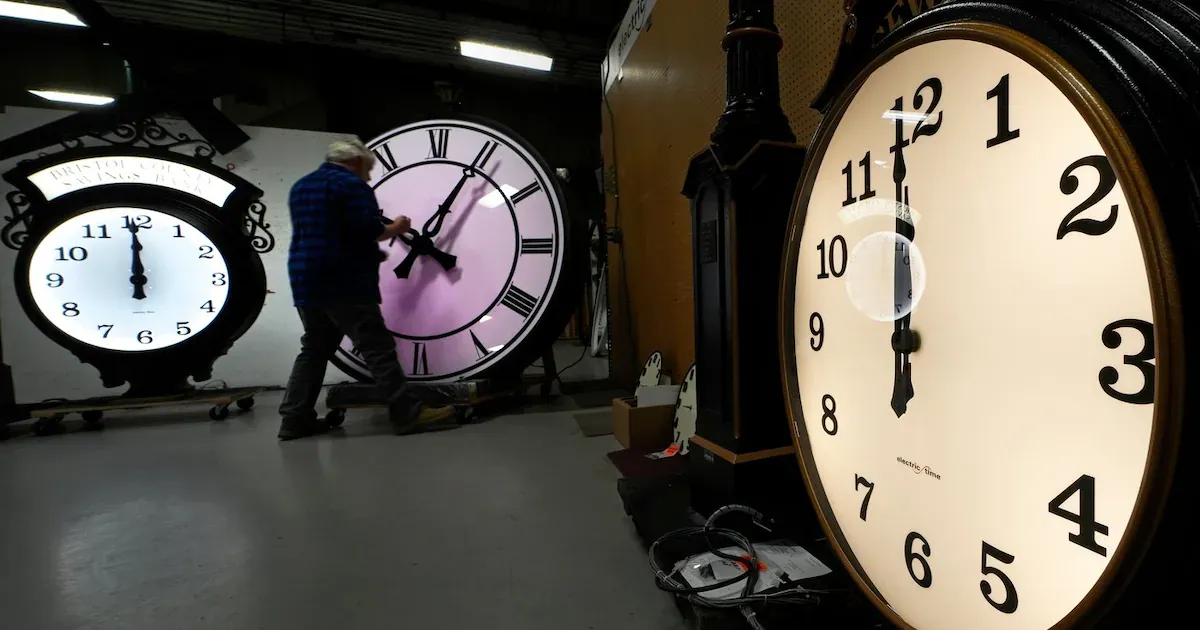
International timekeepers vote to abolish the leap second from our clocks. What does it mean? - CP24
The leap second, a measure to align time with the rotation of the earth, is no more. Georgette Macdonald with the National Research Council of Canada discusses. International timekeepers have voted to eliminate a 50-year-old time adjustment that has long been an operational bane to data servers, financial traders, websites and other technologies. On Thursday, delegates with the International Bureau of Weights and Measures (BIPM) voted to abolish the leap second, at a general conference in Versailles, France. How to set CTV News as your preferred source on GoogleThe leap second was introduced in 1972 as a way to correct the discrepancy between solar and atomic time, to account for the Earth’s irregular rotations. Since then, the leap second has been added 27 times. “Every time we introduce a leap second into the system, what happens is we no longer have continuous time scale at the atomic level, and so all of the systems that depend on continuous and synchronous time have to shift a little bit,” Georgette MacDonald, director general of the National Research Council of Canada’s metrology research centre, told CTV’s Your Morning on Friday.
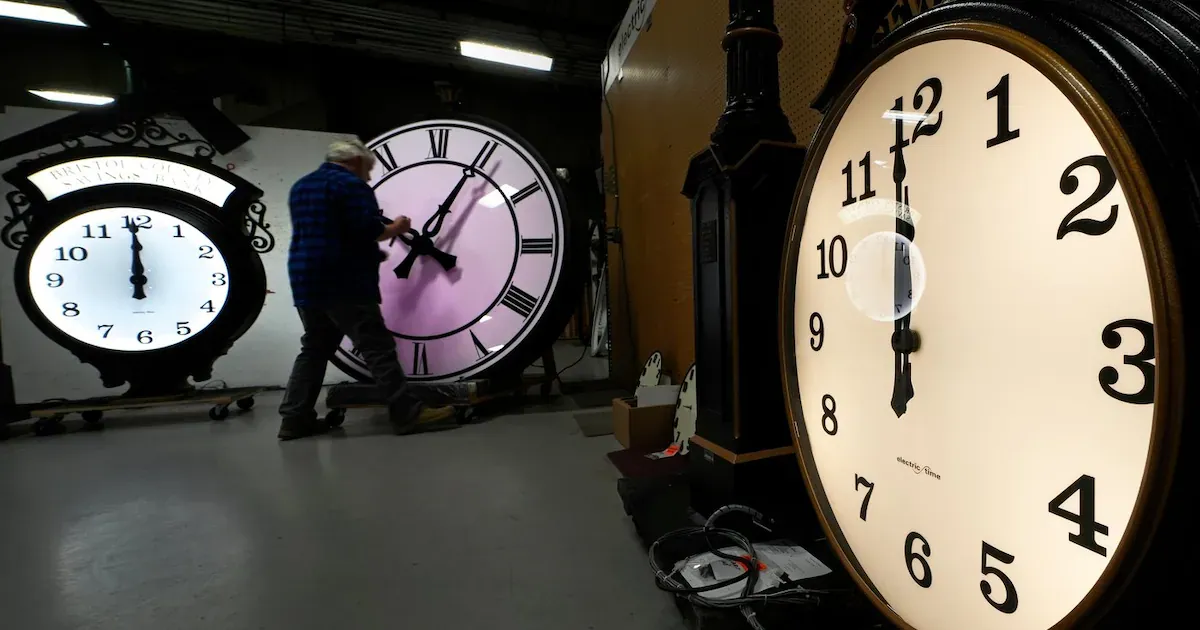
International timekeepers vote to abolish the leap second from our clocks. What does it mean? - CTV News
AtlanticNova ScotiaNew BrunswickPrince Edward Island Newfoundland and LabradorCalgaryLethbridgeKitchenerGuelphNorthern OntarioSudburyNorth BaySault Ste. MarieTimminsOttawaKingstonBrockvillePembrokeReginaYorktonSaskatoonPrince AlbertTorontoWatchWeatherPeelHamiltonDurhamYorkHaltonNiagaraQueen's ParkToronto City HallIn PicturesVancouverVancouver IslandCanadaLocal SpotlightRoyal FamilyPoliticsNanosPower PlayQuestion PeriodFederal Election 2025WorldMideast ConflictRussia-Ukraine WarWatchLatestCaptured on CameraPoliticsLifestyleConsumerHealthExplainedEntertainmentTechnologyDeception DecodedAutosEnvironmentBusinessInflationReal EstateAutos
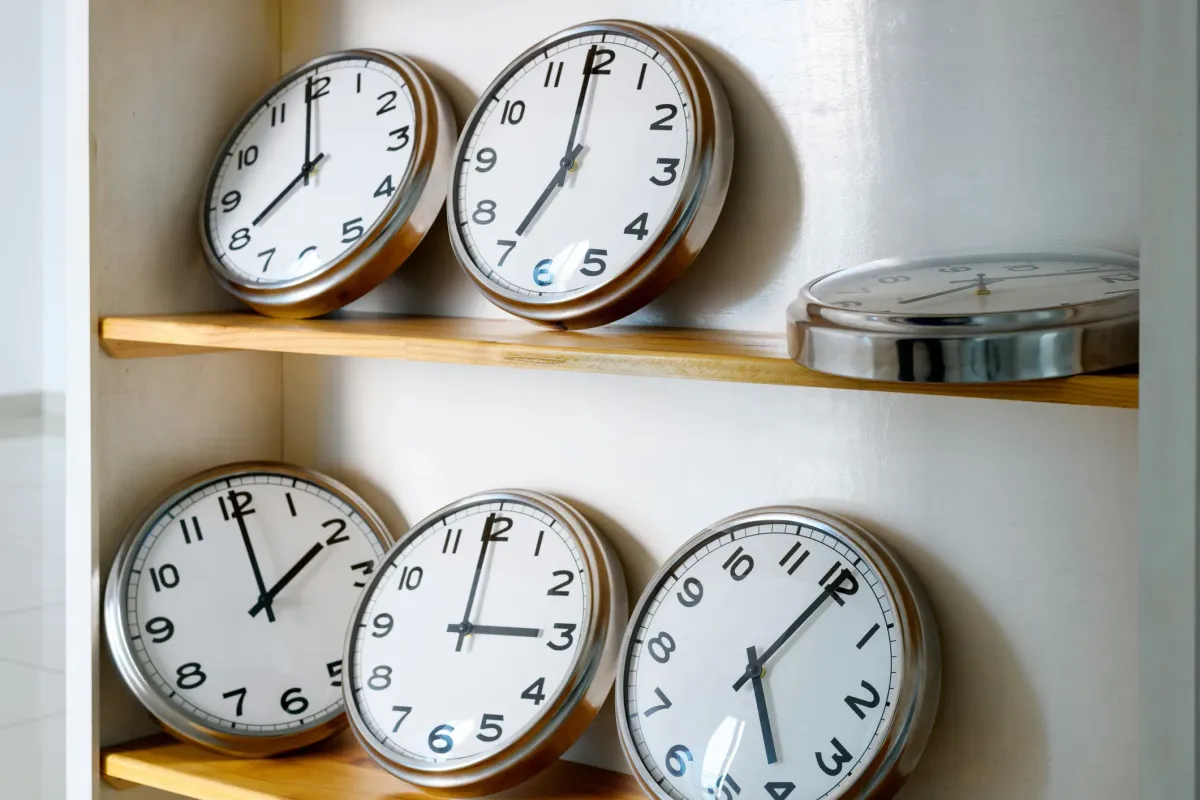
World Timekeepers Decide to Kill the Leap Second - CNET
Human timekeeping rests on two main clocks, and they don’t always run at the same speed. For decades, the solution was the leap second, a minor adjustment added to international time to keep atomic accuracy aligned with the Earth’s natural motion. But on Thursday, the General Conference on Weights and Measures, or the CGPM (abbreviated from its French name), voted to abolish the leap second, closing a long-standing chapter in global time sync. Most modern clocks rely on Coordinated Universal Time, a hybrid system caught between atomic time, which flows at a near-perfectly constant rate, and astronomical time, which fluctuates as the Earth’s rotation speeds up and slows down. To bridge the gap, UTC periodically inserted a leap second to keep pace with the planet. But reconciling physical planetary shifts with precise digital systems ultimately created more technical disruptions than it solved.
0 comments
No comments yet. Be the first to share your thoughts!