Ontarians prescribed safer supply drugs will now have to take them in front of health-care professionals - CBC
This story deserves to be shared
Send it to someone who'd care, or post it on your networks.
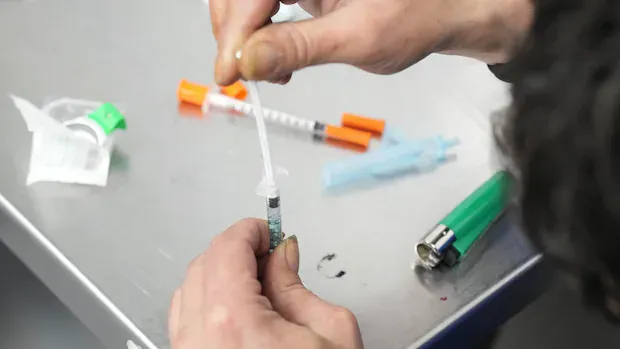
TorontoOntario's medical regulator has approved significant changes to the way doctors prescribe safer supply drugs, in an effort to reduce the amount of opioids making their way to the streets. Move is an effort to reduce amount of opioids making their way to the streets: regulatorLiam Casey · The Canadian Press · Posted: Oct 13, 2026 2:49 PM EDT | Last Updated: October 14Listen to this articleEstimated 4 minutesThe audio version of this article is generated by AI-based technology. Mispronunciations can occur. We are working with our partners to continually review and improve the results. The College of Physicians and Surgeons of Ontario's board of directors will soon implement several changes to the practice of prescribing safer supply, which are medications given to people at high risk of overdose as an alternative to illicit opioids. (Chris Young/The Canadian Press)Ontario's medical regulator approved significant changes Tuesday to the way doctors prescribe safer supply drugs, in an effort to reduce the amount of opioids making their way to the streets.
This article is an excerpt. To read the full content, visit the original source. CBC
Related articles

Commonly prescribed blood-pressure drug may stimulate 'healthy' brown fat - Medical Xpress
Brown fat cells with mitochondria labeled in magenta. (Image acquired on a CSR Biotech Cell Xtreme microscope on demo at Rockefeller's Bio-Imaging Resource Center.) Credit: Weslie R. and William H. Scientists have discovered that the drug losartan, commonly prescribed for high blood pressure, boosts brown adipose tissue activity in mice, enhancing their metabolism. This indicates that repurposing losartan—an angiotensin receptor blocker (ARB) with a well-known safety profile—may be a clinically viable method of stimulating brown fat, which has been linked to improved cardiovascular health and, reported for the first time in this study, psychiatric health.
Sunnybrook study highlights barriers to health care access for Deaf Ontarians - Sunnybrook Health Sciences Centre
Transforming rheumatology models of care for Ontarians - Sunnybrook Health Sciences Centre
Food Basics asks Ontarians to share recipes for cookbook series - 🇨🇦 Grocery Business Canada

Bioengineer.org | Viral blips during HIV therapy are common and rarely signal treatment failure, Swedish study finds - European AIDS Treatment Group
Bioengineer.org news storyFor people living with HIV, modern antiretroviral therapy can suppress the virus to levels below what standard laboratory tests can detect. Yet some patients on long-term treatment experience a curious phenomenon: a single test result showing a small, transient amount of virus in the blood, followed by an immediate return to undetectable levels. These events, known as viral blips, have puzzled clinicians and researchers for years, raising questions about whether they represent harmless statistical noise, brief bursts of viral production from hidden reservoirs, or early warnings of impending treatment failure. A new nationwide Swedish study, published in BMC Infectious Diseases, offers one of the most comprehensive answers to date. Drawing on the Swedish national InfCareHIV cohort, researchers analyzed data from 4,210 treatment-naïve adults who began antiretroviral therapy from 1 January 2007 onward, with follow-up data extracted through 30 September 2020. The median observation time was 5.5 years, with some individuals followed for as long as 13.7 years.
0 comments
No comments yet. Be the first to share your thoughts!