Nvidia commits $1bn to US science over the next five years - The Next Web
This story deserves to be shared
Send it to someone who'd care, or post it on your networks.
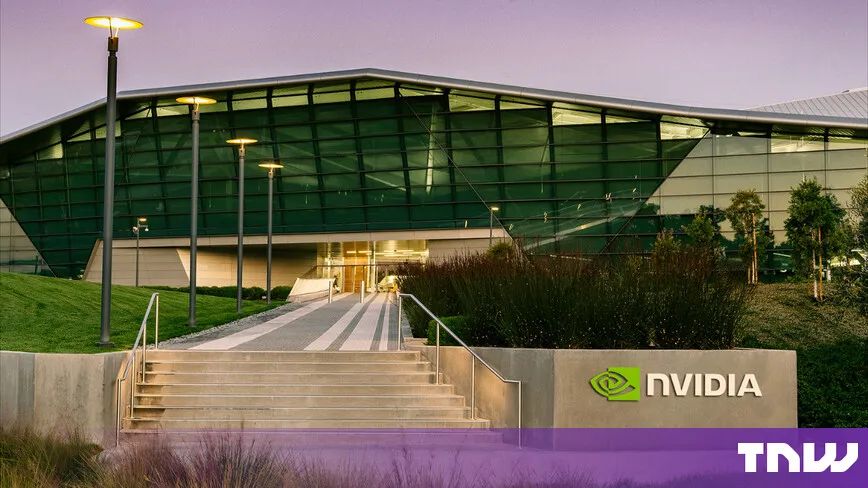
Quantum computing, healthcare and energy security are the fields Nvidia wants to strengthen with commitments it values at $1 billion. The money will be spread over the next five years.
The company announced the commitments on Thursday at the Science: A New Golden Age event in Washington, DC. US officials, industry leaders and members of the science community attended.
This article is an excerpt. To read the full content, visit the original source. The Next Web
Related articles

Elsevier Commits to Accelerate AI-Driven Science Across Europe - PR Newswire
Commitment to the European Commission's AI in Science Enablers Initiative includes 4,000 complimentary AI product licenses, support for new research collaborations, and expanded PhD, postdoctoral, and master's training in AI-assisted research , /PRNewswire/ -- Elsevier, a global leader in advanced information and decision support in science and healthcare, today announced its pledge to the European Commission's AI in Science Enablers Initiative.
Nvidia Commits US$1B to American Science Push in Tech Energy & Healthcare - Streetwise Reports
Nvidia Corp. (NVDA:NASDAQ) announced on October 8, 2026, commitments valued at US$1 billion to advance U. S. science over the next five years, focusing on superintelligence research and development in quantum computing, healthcare, and energy security. Nvidia's October 8 announcement commits US$1 billion over five years to U. S. super intelligence R&D in quantum computing, healthcare, and energy security, extending long-standing DOE collaborations.
NVIDIA Commits $1 Billion to Advance US Science Over the Next Five Years - NVIDIA Newsroom
Commitments Will Strengthen Fields Critical for US Leadership Including Quantum Computing, Healthcare and Energy Security NVIDIA announces commitments valued at $1 billion to advance U. S. science over the next five years, at a Washington event convening U. S. officials, industry leaders and members of the science community.
NVIDIA Commits $1 Billion to U.S. Science and Quantum Computing - The Quantum Insider
NVIDIA plans to commit $1 billion over five years to support super intelligence research and development in the U. S., including quantum computing, healthcare and energy. The funding will support higher-education research institutions, U. S. quantum computing initiatives and cloud service providers supporting government research needs.

Simulations explore nuclear mitigation of asteroid threats - Phys.org
Lawrence Livermore National Laboratory researcher Isaiah Santistevan led the development of three-dimensional simulations exploring how a nuclear device could deflect or disrupt an asteroid threatening Earth. Credit: Blaise Douros/LLNL Lawrence Livermore National Laboratory (LLNL) researchers are developing three-dimensional simulations to examine how a nuclear device could be used to deflect or potentially disrupt an asteroid threatening Earth.

A Black Hole 12,000 Light-Years Away Is Firing a Plasma Jet Toward Earth - Gadget Review
Milky Way’s first microblazar candidate sits 12,000 light-years away, offering a rare ground-level lab for studying relativistic jetsA black hole 12,000 light-years away is firing a jet of plasma almost directly toward Earth. At that distance, no known or expected danger to Earth has been identified by the researchers or the institutions involved. What astronomers have actually found is rarer and more interesting than a threat. Researchers have identified IRAS 18293-0941 as a compelling candidate for the Milky Way’s first microblazar, a class of object that gives astrophysicists a close-up laboratory for studying some of the most violent physics in the galaxy. What Astronomers FoundThe discovery centers on a binary system whose black hole expels plasma jets at close to three-quarters the speed of light, pointed almost directly toward Earth. The system pairs a hot, massive star with a black hole that completes a full orbit roughly every 11.38 days. Material drawn from the companion star feeds the black hole, and some of that matter gets expelled outward as opposing jets traveling at approximately three-quarters the speed of light. Terminology matters here.
0 comments
No comments yet. Be the first to share your thoughts!