No ‘snowflakes’: mental health review says today’s youth have it harder and harms are real - The Guardian
This story deserves to be shared
Send it to someone who'd care, or post it on your networks.

Eighteen months ago, in an off-the-cuff remark during a discussion on disability benefit cuts, Wes Streeting said mental health conditions were being “overdiagnosed”, riding headlong into another culture war. He later apologised for the comment, but at the time it seemed the then health secretary had endorsed a populist view that ordinary stresses and disappointments had become too often medicalised, resulting in a surge of bogus clinical diagnoses and creating a “snowflake generation” of fragile, avoidant and workshy young people. Prof Peter Fonagy’s mammoth review of mental health conditions, autism and ADHD in England, commissioned by Streeting nine months ago, has no truck with the snowflake generation caricature: the steep rise in the prevalence of mental health problems such as anxiety and depression is real, he says, and so is the distress and difficulties they can cause.
double quotation markI am in awe of their courage. Young people are contending with more powerful forces than I ever faced
This article is an excerpt. To read the full content, visit the original source. The Guardian
Related articles
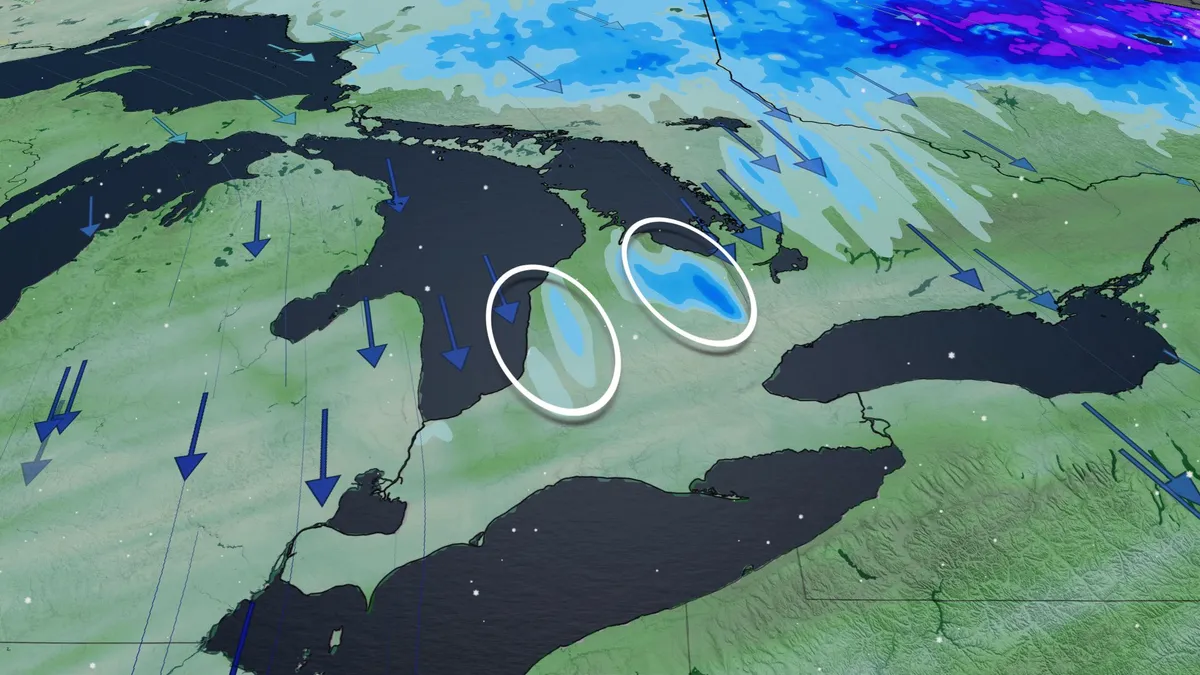
Steep temperature drop could bring Ontario its first snowflakes - The Weather Network
An incoming fall storm is bringing rain and strong winds to Ontario on Friday, followed by a sharp drop in temperatures that could deliver the season’s first lake-effect snowflakes to parts of southern Ontario. Temperatures will fall sharply behind the departing system, with the coldest conditions expected overnight Friday into Saturday. DON'T MISS: Winter snowfall across Canada may fall victim to El NiñoRain eases as cold air moves inRain will gradually ease across much of Ontario through Friday, although scattered showers are expected to linger. Rainfall totals could reach 20-30 mm in parts of eastern Ontario, with locally higher amounts possible. Behind the storm, strong northerly winds will usher in much colder air, with gusts near 50 km/h. The winds will also generate higher-than-normal waves along the Great Lakes shorelines. Temperatures will drop rapidly overnight, with some inland areas potentially reaching or falling below the freezing mark.
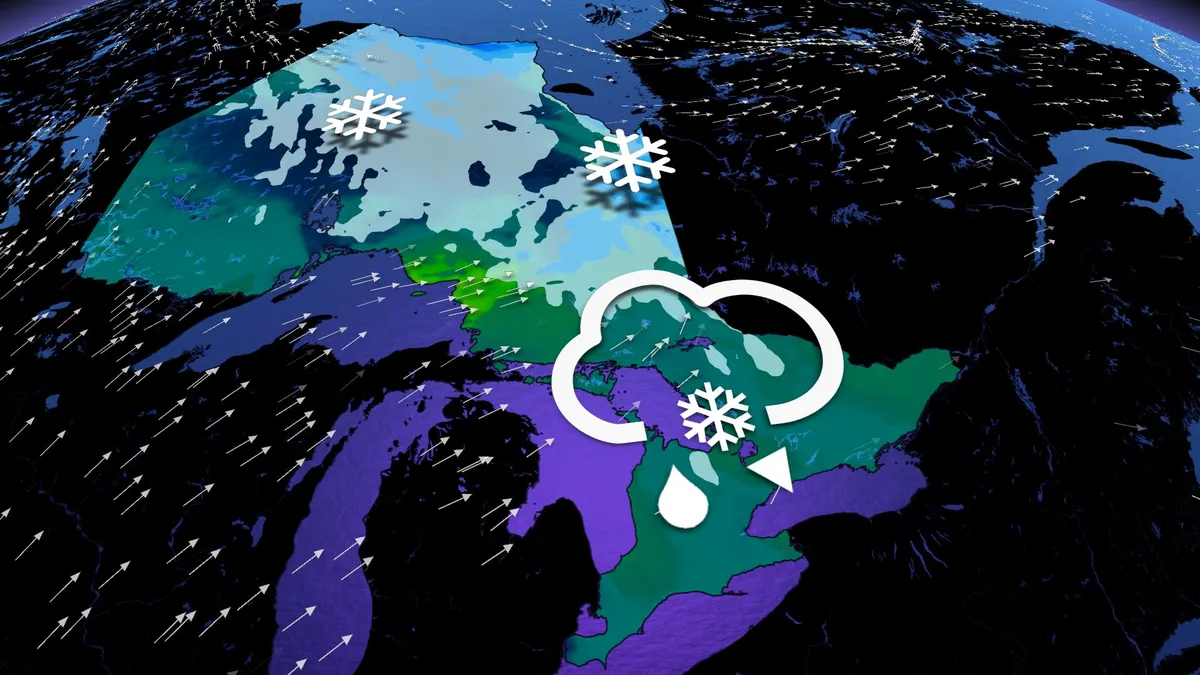
Ontario fall storm brings rain, strong winds and possible first snowflakes - The Weather Network
Ontario is in for a classic fall storm, with heavy rain, strong winds, and a sharp drop in temperature that could bring the season's first lake-effect snowflakes to southern Ontario. A large low pressure system is expected to sweep across nearly the entire province beginning Thursday evening, bringing wet and windy weather. Rain will fall in the Greater Toronto Area (GTA) and Ottawa overnight, continuing into early Friday. There may also be a rumble of thunder along the Lake Erie shoreline Friday morning, adding to the unsettling start to the day. This may increase the rainfall amounts in locations where there is a thunderstorm. DON'T MISS: Polar night approaching as Canada quickly loses daylightRain gives way to a blast of cold airRainfall should subside by Friday, though scattered showers may persist as the storm moves away. Behind the system, much colder air will rush south, bringing wind gusts of around 50 km/h and a rapid drop in temperatures, particularly Friday evening. Some inland areas may experience temperatures approaching or the below freezing mark.

Bioengineer.org | Switching HIV drugs or adding zoledronic acid rebuilds bone lost to tenofovir - European AIDS Treatment Group
Bioengineer.org news storyFor millions of people living with HIV, antiretroviral therapy has transformed a once-fatal infection into a manageable chronic condition. Yet the very drugs that suppress the virus can carry quiet costs, and one of the most insidious is bone loss. Tenofovir disoproxil fumarate, or TDF, has been a cornerstone of HIV treatment worldwide for two decades, prized for its potency, durability, and low cost. But a growing body of evidence has linked TDF exposure to measurable reductions in bone mineral density, raising an increasingly urgent clinical question: once bone has been lost on a TDF-based regimen, can it be recovered? A new prospective cohort study, published in BMC Infectious Diseases, offers some of the most detailed longitudinal evidence to date that the answer, for many patients, is yes. The research team enrolled 223 virologically suppressed men living with HIV who had low bone mineral density while taking TDF-based antiretroviral therapy.

A New Injection Makes Fat Cells Self-Destruct, And Might Prevent GLP-1 Weight Regain - ScienceAlert
The new treatment kills off a sub-group of fat cells. (Jian Fan/iStockphoto/Getty Images) Early clinical trials into a new fat reduction treatment have reported promising results, and the treatment takes a more unusual approach: Rather than shrinking fat cells, as most weight loss strategies do, it safely and naturally kills them off. The drug here is CBL-514, which is administered via injection. As well as proving effective at reducing subcutaneous fat (just below the skin), there's evidence it can also reduce visceral fat (stored deeper around the organs). According to the team behind the trials, CBL-514 and its unconventional strategy have the potential to reduce fat in key areas of the body – with further benefits that come with weight loss likely to follow. "We expect that patients will be pleased by the cosmetic effects, such as the flatter stomach that can come with subcutaneous fat loss," says endocrinologist Timothy Garvey, from the University of Alabama at Birmingham, who headed up the trial.
0 comments
No comments yet. Be the first to share your thoughts!