New tax on millionaires to fund health care in B.C., promises NDP Leader Eby - CBC
This story deserves to be shared
Send it to someone who'd care, or post it on your networks.

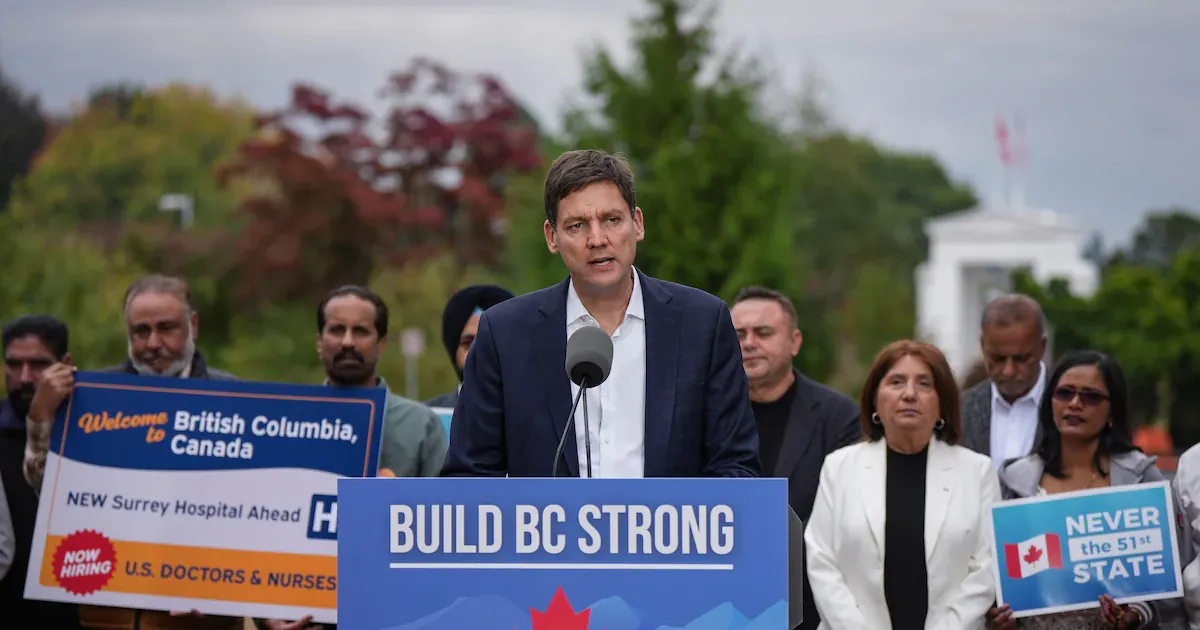
British ColumbiaB. C. NDP Leader David Eby is promising to tax people earning more than $1 million at a rate of 24.5 per cent if re-elected, with the revenue being used to help fund health care. The top 2 tax brackets would see a rate hike in addition to a new tax bracketArden McLeod · CBC News · Posted: Oct 04, 2026 6:07 PM EDT | Last Updated: October 5Listen to this articleEstimated 3 minutesThe audio version of this article is generated by AI-based technology. Mispronunciations can occur. We are working with our partners to continually review and improve the results. B. C. NDP Leader David Eby made a stop in Comox, B. C., to speak with voters on Oct. 4. (CBC)B. C. NDP Leader David Eby is promising to tax people earning more than $1 million at a rate of 24.5 per cent if re-elected, with the revenue being used to help fund health care. The change would see rates rise by two percentage points on earnings in the current top two tax brackets and four percentage points for a new $1-million-plus bracket.
This article is an excerpt. To read the full content, visit the original source. CBC
Related articles

B.C.’s Eby promises new tax on millionaires to help pay for health care - CityNews Vancouver
British Columbia NDP Leader David Eby said his party would introduce a new tax bracket for those who earn $1 million or more and raise the existing rates of the two highest brackets to help pay for health care, if re-elected. Eby’s party said British Columbia would become the first large province with a tax bracket on individuals who earn more than a million, while the B. C. Conservatives said the move would drive doctors out of the province.
B.C.'s Eby promises new tax on millionaires to help pay for health care - CP24
There was a weekend of new promises on the campaign trail as the provincial election quickly approaches. British Columbia NDP Leader David Eby said his party would introduce a new tax bracket for those who earn $1 million or more to help pay for health care, if re-elected. The leader made the promise Sunday, while campaigning in Comox on Vancouver Island, after he toured ridings in southern British Columbia ahead of the Oct. 24 election day. “We are glad when people are successful, it’s fantastic,” he said. “We cheer for them, we want them to be successful, and it’s also right to ask people, who earn a little bit more to pitch-in in a moment like this, when people across the province need those strong public services.”Eby did not offer specifics about the proposed new tax bracket, but promised more details at a scheduled campaign stop in Victoria later Sunday. The announcement comes after Eby said his government would introduce price guards for certain groceries, as well as gasoline and diesel, while temporarily lowering the provincial motor fuel tax by 10 cents per litres.

Bioengineer.org | Switching HIV drugs or adding zoledronic acid rebuilds bone lost to tenofovir - European AIDS Treatment Group
Bioengineer.org news storyFor millions of people living with HIV, antiretroviral therapy has transformed a once-fatal infection into a manageable chronic condition. Yet the very drugs that suppress the virus can carry quiet costs, and one of the most insidious is bone loss. Tenofovir disoproxil fumarate, or TDF, has been a cornerstone of HIV treatment worldwide for two decades, prized for its potency, durability, and low cost. But a growing body of evidence has linked TDF exposure to measurable reductions in bone mineral density, raising an increasingly urgent clinical question: once bone has been lost on a TDF-based regimen, can it be recovered? A new prospective cohort study, published in BMC Infectious Diseases, offers some of the most detailed longitudinal evidence to date that the answer, for many patients, is yes. The research team enrolled 223 virologically suppressed men living with HIV who had low bone mineral density while taking TDF-based antiretroviral therapy.
0 comments
No comments yet. Be the first to share your thoughts!