New equipment strengthens the capacity of Guinea-Bissau’s National Ophthalmology Service - WHO | Regional Office for Africa
This story deserves to be shared
Send it to someone who'd care, or post it on your networks.
This article is an excerpt. To read the full content, visit the original source. WHO | Regional Office for Africa
Related articles
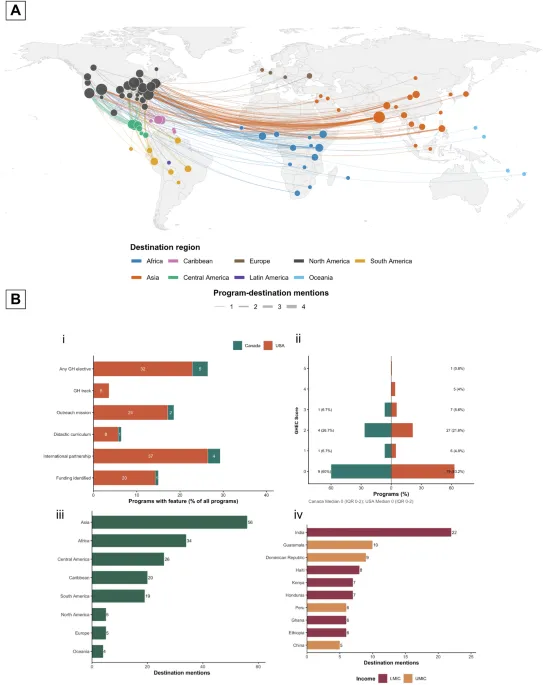
Global health training in North American ophthalmology residency programs: a cross-sectional study - Nature
Preventable vision loss is a disproportionate global burden affecting low- and middle-income countries [1]. While contemporary frameworks highlight the pivotal role of sustained, capacity-building partnerships to address these inequities, current institutional offerings often fall short of this model [2]. Notably, prospective trainees seeking global health tracks may face limited publicly available information on structured opportunities across North America. Herein, we aimed to evaluate the documented global health training across accredited Canadian and US ophthalmology residency programs. We hypothesised that global health infrastructure remains limited and inequitably distributed. This cross-sectional study was conducted in accordance with Strengthening the Reporting of Observational Studies in Epidemiology (STROBE) guidelines.
Nurturing healthy districts in Papua New Guinea - World Bank Group

Guinea-Bissau denies it has approved controversial vaccine trial in newborns - The Guardian
Guinea-Bissau has not approved the controversial hepatitis B study in newborns that would be funded by the US government and private partners, the African country’s minister of health said on Tuesday. The study, which would not investigate the safety or effectiveness of vaccines but would instead track “nonspecific” health outcomes like overall mortality or neurodevelopmental conditions, has been championed by Robert F Kennedy Jr, secretary of the US Department of Health and Human Services (HHS) and a longtime anti-vaccine activist. Members of a Danish research ethics committee were informed that officials in Guinea-Bissau had approved an updated design of the study, which influenced some committee members’ votes to proceed with the trial last week. But the health ministry never agreed to or authorized the trial, said Quinhin Nantote in Portuguese at a press briefing, where he referred to the study as “tests”. “The ministry did not authorize the tests under the terms presented in the publications currently in circulation,” the health minister said. He said officials in Guinea-Bissau were “surprised” to see media reports that the country had given approval to the study.
European Medical Journal | HIV linked to early signs of heart dysfunction - European AIDS Treatment Group
European Medical Journal news storyPeople living with HIV may experience subtle changes in heart muscle function even when conventional measures of cardiac performance remain normal, according to findings from a systematic review and meta-analysis. Researchers identified significantly impaired global longitudinal strain (GLS) among people with HIV compared with HIV-uninfected individuals, despite preserved left ventricular ejection fraction (LVEF) in both groups. The findings suggest that speckle-tracking echocardiography (STE) could provide additional information about early myocardial dysfunction in this population. Read the full news story here.
0 comments
No comments yet. Be the first to share your thoughts!