Margaret Hamilton, computing pioneer who led software development for the Apollo program, dies at 90 - MIT News
This story deserves to be shared
Send it to someone who'd care, or post it on your networks.

Margaret Hamilton, a profoundly influential computer scientist best known for leading the software engineering team at MIT’s Instrumentation Lab during NASA’s Apollo program, died on Sep. 30. She was 90. A computing pioneer who authored over 130 publications, Hamilton helped to establish software engineering as a dedicated discipline. She worked at MIT from 1959 until the mid-1970s, after which she became a successful computing entrepreneur and CEO. Her life’s work was recognized with many awards and honors, including the 2016 Presidential Medal of Freedom from President Barack Obama, whose citation noted: “Hamilton defined new forms of software engineering and helped launch an industry that would forever change human history. Her software architecture led to giant leaps for humankind, writing the code that helped America set foot on the moon.”“To say Margaret Hamilton was a pioneer — to say she was ahead of her time — would be a dramatic understatement.
This article is an excerpt. To read the full content, visit the original source. MIT News
Related articles
Margaret Hamilton, software engineer, 1936-2026 - Financial Times
Trailblazing computer scientist whose software saved the Apollo 11 Moon landing

Transcript: Shyam Sankar, chief technology officer of Palantir, on "Face the Nation with Margaret Brennan," Oct. 11, 2026 - CBS News
The following is the full transcript of the interview with Shyam Sankar, chief technology officer of Palantir, a portion of which aired on "Face the Nation with Margaret Brennan" on Oct. 11, 2026. MARGARET BRENNAN: And we're joined now by the Chief Technology Officer of Palantir, Shyam Sankar. Welcome to Face the Nation. SHYAM SANKAR: Thank you for having me, Margaret. MARGARET BRENNAN: It's good to have you here in person. We've been talking a lot about technology, artificial intelligence, and public perception of it right now, and that's where I want to start with you because our polling shows there's a problem here. 50% of those polled by CBS say AI will create more problems than it solves. 29% say it'll solve more than it creates, and 21% just really don't know. Like 45% of Americans want the government to restrict use and development of AI. Is your position there should not be any guardrails at this moment? SHYAM SANKAR: No, not at all. That's not my position.
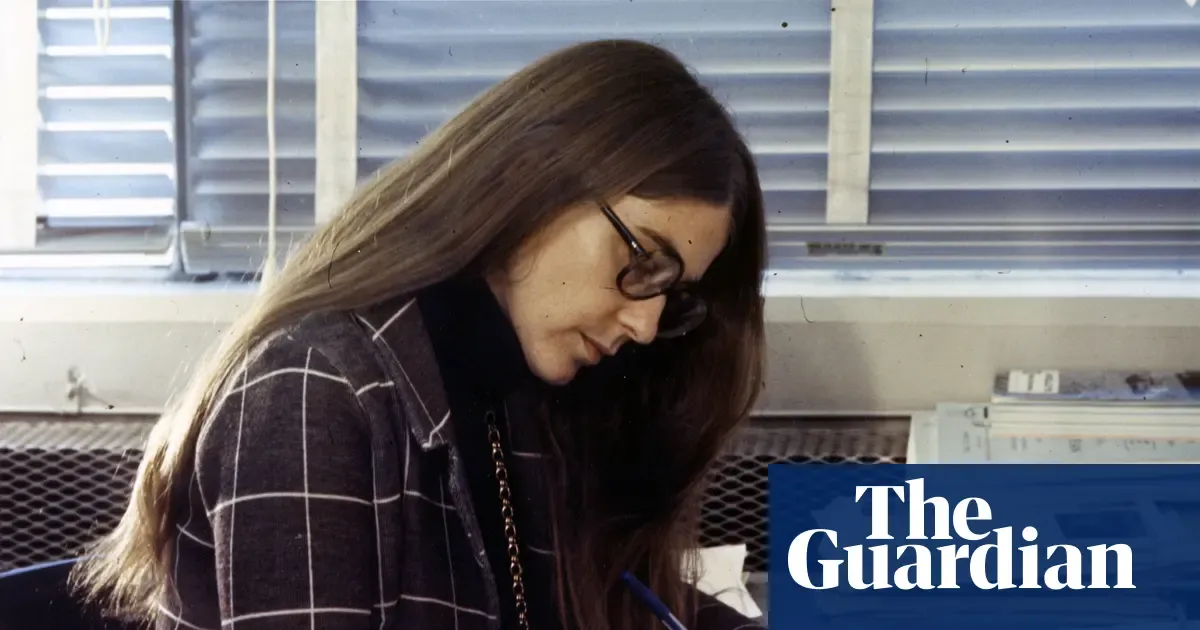
Margaret Hamilton, trailblazer whose software powered Apollo 11 moon landing, dies aged 90 - The Guardian
Margaret Hamilton, the computer pioneer whose software powered the first moon landing, has died, the Massachusetts Institute of Technology (MIT) announced on Wednesday. She was 90. In an era before titles such as software engineer and computer scientist became mainstream, Hamilton, who died on 30 September, learned to program under the tutelage of a renowned MIT meteorologist. She continued to perfect the craft in an MIT laboratory, writing software that could detect enemy aircraft. When the institute received a Nasa contract to develop the Apollo onboard flight software, she jumped at the opportunity. “I was attracted both by the sheer idea and the fact that it had never been done before. I was the first programmer to join and the first woman they hired,” she told the Guardian in 2019. In 1969, minutes before the Apollo 11 spacecraft was set to make history by landing on the lunar surface, an onboard computer’s alarm rang, indicating an emergency. Faced with a decision of whether to abort the mission, the spacecraft continued on. The software was working just as Hamilton and her team intended.

No V12 Required: Argentina's Mid-Engine Supercar Packs An American V8 Punch - CarBuzz
Classic gems, tasteful customs, legendary supercars - for Silvian, they're all fair game. He's been in love with cars and motorcycles for as long as he can remember, so it made perfect sense to eventually turn that passion into a full-time writing career. Around six years and more than 3,000 articles later, he is still going strong and doesn't plan on hitting the brakes anytime soon. Argentina is a country known for its natural beauty, soccer legends, and chainsaw-wielding president, but it probably isn’t the first place you’d expect a rad V8 supercar to be developed. However, that assumption might change once you learn about a company called Valtor, the brainchild of engineer-turned-CEO Sergio Arias. He leads a small but ambitious team of designers and engineers like himself, who’d previously caught people’s attention with the Azor GT concept last year. Now they’re back at it once again with the Eaglon, an evolution of the Azor and something that could easily be mistaken for a Ferrari by those who don’t know their automotive lore.

Game developers cancel upcoming public demo out of fear of AI copycats - Mashable
There's currently some tension between the video game industry and the proliferation of AI tools. You can see the evidence of this in a recent development regarding the upcoming indie game Drunken Goddess Reflux. It's a game with the objective of imbibing alcohol until a demon vomits up her soul, a decidedly unique premise that would be hard for any AI to come up with. As spotted by Rock Paper Shotgun, though, the developers had to cancel an upcoming public demo session. The decision is partly due to concerns that AI could quickly clone it for someone else's financial benefit. Instead, they will hold closed sessions for a "limited number of participants. "
0 comments
No comments yet. Be the first to share your thoughts!