Leah Frerichs keeps communities at the center - The University of North Carolina at Chapel Hill
This story deserves to be shared
Send it to someone who'd care, or post it on your networks.
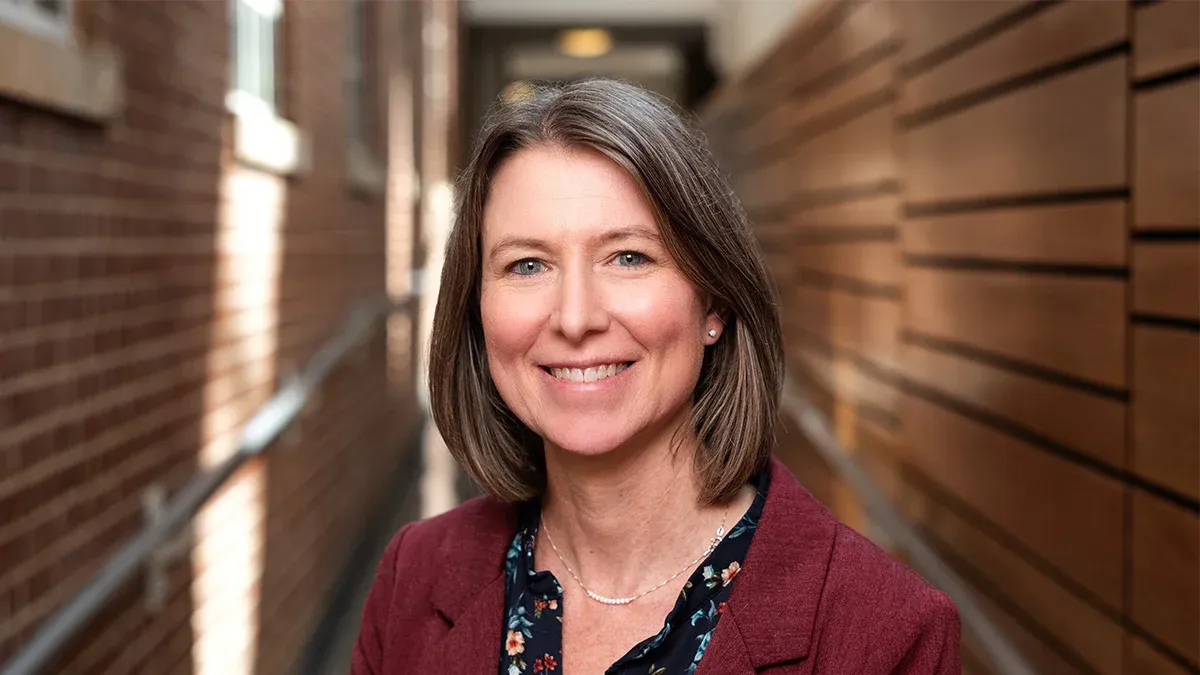
Gillings School of Global Public HealthThe 2026 faculty service award winner tackles complex health challenges with community partners while training Carolina students to do the same. By Jennie Harper, University Communications and Marketing, Thursday, October 8th, 2026For Leah Frerichs, service starts with listening. Even to 16-year-olds. Even when they tell her she’s wrong. In Frerichs’ model of community-engaged systems science, that’s the whole point: for researchers to listen as much as or more than they talk. “I think it always makes sense to look at a problem from the perspective of the people closest to it,” she says. Frerichs is associate director of UNC’s Center for Thriving Communities and Joan Heckler Gillings Endowed associate professor of health policy and management at the UNC Gillings School of Global Public Health. She has applied the model to challenges ranging from mental health to insurance coverage to colorectal cancer screening. This University Day, Carolina is honoring her efforts with the 2026 Edward Kidder Graham Faculty Service Award, which recognizes the positive impact she has achieved across the state by starting from a place of curiosity.
This article is an excerpt. To read the full content, visit the original source. The University of North Carolina at Chapel Hill
Related articles

Continuous glucose monitors help type 2 diabetes patients spend 5 more hours a day in healthy blood sugar range - Medical Xpress
Continuous glucose monitors (CGMs) could transform diabetes management for millions of Americans with type 2 diabetes who don't take insulin, according to findings published in the New England Journal of Medicine. The clinical trial found that adults using CGMs spent approximately five additional hours each day within their target blood sugar range compared with those receiving routine care. Nearly twice as many CGM users also achieved an A1c level below 7%, a common treatment goal for people with diabetes.
Wearing headphones during surgery may reduce nausea and vomiting afterward - Medical Xpress
Patients who wore noise-canceling headphones during minimally invasive gynecological surgery were significantly less likely to experience postoperative nausea and vomiting (PONV), suggest findings from a randomized clinical trial presented at the Anesthesiology 2026 annual meeting.

Kefah Mokbel: Can Whole-Genome Sequencing-Based ctDNA Monitoring Help Personalize Adjuvant Treatment? - Oncodaily
“Beyond Detecting Cancer Recurrence: Can Whole-Genome Sequencing-Based ctDNA Monitoring Help Personalize Adjuvant Treatment? An exciting new study published in The Oncologist highlights the clinical potential of Signatera Genome, a whole-genome sequencing (WGS)-based, tumor-informed circulating tumor DNA (ctDNA) assay, not only for detecting molecular residual disease (MRD), but also for potentially informing adjuvant treatment decisions.
0 comments
No comments yet. Be the first to share your thoughts!