Labos: I’ve got no time for Apple Watch’s new Health Sensing System - Montreal Gazette
This story deserves to be shared
Send it to someone who'd care, or post it on your networks.
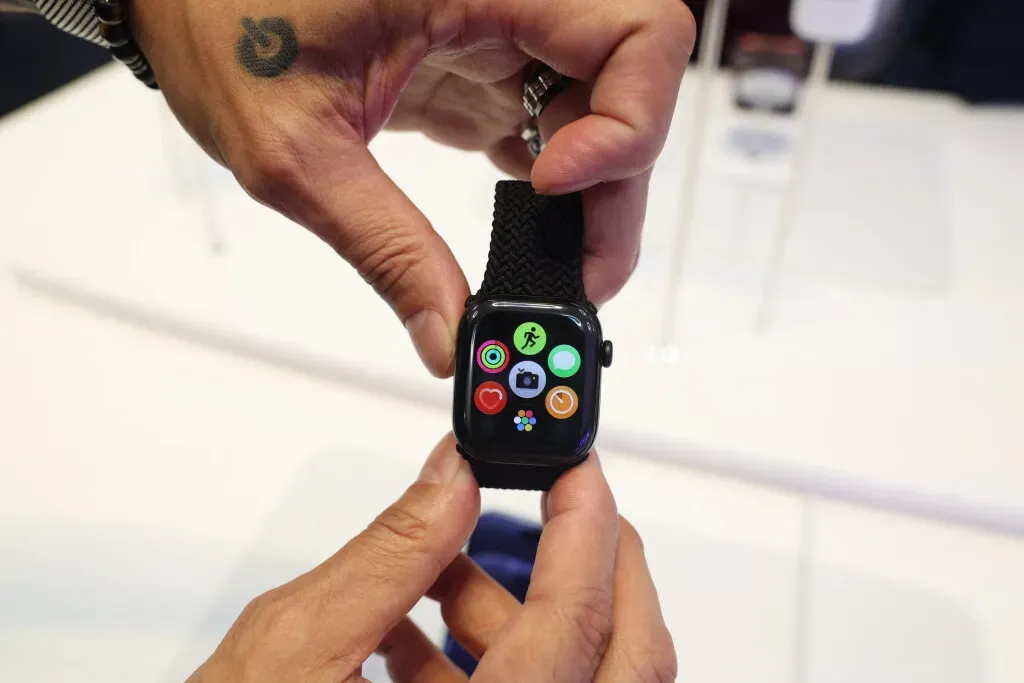
There is little medical value in measuring your HRV or generating a readiness score.
A staff member holds the Apple Watch Series 12 at the Apple Fifth Ave. store in New York. Those with enough disposable income to afford it will now get a new "readiness score" — how ready your body is for physical activity, on a scale of 0 to 10, notes Dr. Christopher Labos. (TIMOTHY A. CLARY / AFP via Getty Images)
This article is an excerpt. To read the full content, visit the original source. Montreal Gazette
Related articles
A two-stage optimization method for wide-range single-electron quantum magnetic sensing - Nature
We’re sharing this article early to provide faster access to peer-reviewed, accepted research. It is citable and carries a permanent DOI. This version is subject to further edits and will be replaced automatically by the final Version of Record. All legal disclaimers apply. AbstractQuantum magnetic sensing is a new paradigm for detecting ultra-weak magnetic fields. Its protocol design concerns the devise of optimal sensing parameters to estimate the underlying signals of interest (SoI). Existing studies mainly rely on adaptive algorithms based on black-box AI models or formula-driven principled searches. However, when the SoI spans a wide range and the quantum sensor has physical constraints, these methods may fail to converge efficiently or optimally, causing prolonged interrogation times and reduced accuracy. This work presents a new protocol using a two-stage optimization method, consisting of a Bayesian neural network to first narrow the SoI range and a federated reinforcement learning agent to subsequently calibrate the SoI.

Continuous glucose monitors help type 2 diabetes patients spend 5 more hours a day in healthy blood sugar range - Medical Xpress
Continuous glucose monitors (CGMs) could transform diabetes management for millions of Americans with type 2 diabetes who don't take insulin, according to findings published in the New England Journal of Medicine. The clinical trial found that adults using CGMs spent approximately five additional hours each day within their target blood sugar range compared with those receiving routine care. Nearly twice as many CGM users also achieved an A1c level below 7%, a common treatment goal for people with diabetes.
Wearing headphones during surgery may reduce nausea and vomiting afterward - Medical Xpress
Patients who wore noise-canceling headphones during minimally invasive gynecological surgery were significantly less likely to experience postoperative nausea and vomiting (PONV), suggest findings from a randomized clinical trial presented at the Anesthesiology 2026 annual meeting.

Kefah Mokbel: Can Whole-Genome Sequencing-Based ctDNA Monitoring Help Personalize Adjuvant Treatment? - Oncodaily
“Beyond Detecting Cancer Recurrence: Can Whole-Genome Sequencing-Based ctDNA Monitoring Help Personalize Adjuvant Treatment? An exciting new study published in The Oncologist highlights the clinical potential of Signatera Genome, a whole-genome sequencing (WGS)-based, tumor-informed circulating tumor DNA (ctDNA) assay, not only for detecting molecular residual disease (MRD), but also for potentially informing adjuvant treatment decisions.
0 comments
No comments yet. Be the first to share your thoughts!