Kyoto scientists create nature-inspired white polymer - Packaging Insights
This story deserves to be shared
Send it to someone who'd care, or post it on your networks.
This article is an excerpt. To read the full content, visit the original source. Packaging Insights
Related articles

Christopher Soles Selected as "Hero of Polymer Science" - National Institute of Standards and Technology (.gov)
Christopher Soles was selected as a "Hero of Polymer Science" by the American Chemical Society Polymer Science, Materials, and Engineering (PMSE) Division and Division of Polymer Chemistry (POLY). Christopher Soles of the NIST Material Measurement Laboratory was selected as one of 10 "Heroes of Polymer Science" by the American Chemical Society Polymer Science, Materials, and Engineering (PMSE) Division and Division of Polymer Chemistry (POLY). As a “hero,” he was invited to give a plenary poster at the PMSE/POLY Awards Reception at the end of the Fall 2026 ACS National Meeting on August 25, 2026 in Chicago, IL.
Dow Partnership Advances Recyclable Polymer Technology - Northwestern University
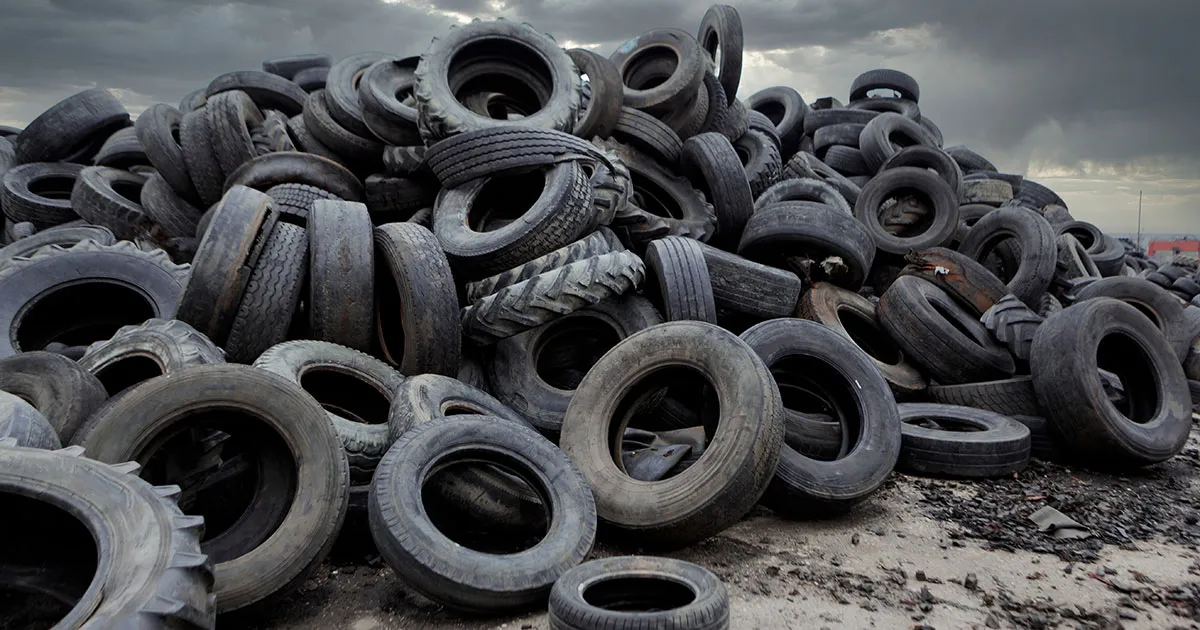
Oct 15, 2026The ProblemConventional crosslinked polymers found in car tires, rubber bands, and other everyday items are durable, but their permanent crosslinks prevent them from being recycled. Our IdeaResearchers developed crosslinks that remain strong during use but can break and reform during reprocessing, allowing the material to be recycled multiple times. Why It MattersThe approach could make widely used crosslinked polymers recyclable using improved industrial processes. Our TeamProfessor John Torkelson; PhD graduates Boran Chen (PhD ’24), Logan Fenimore (PhD ’25), Yen-Wen Huang (PhD ’26), and Mathew Suazo (PhD ’26); Dow researchers Evelyn Auyeung (PhD ’14), Stephanie Barbon, Hayley Brown, and Colin Li Pi Shan. Northwestern Engineering’s John Torkelson and eight collaborators from Northwestern University and the Dow Chemical Company have been selected to receive the 2027 Cooperative Research Award in Polymer Science and Engineering from the American Chemical Society’s (ACS) Division of Polymeric Materials: Science and Engineering (PMSE). An award symposium in their honor will be held at the Spring 2027 National ACS Meeting in New Orleans.
Titanium-polymer metamaterial floats in water - Physics World
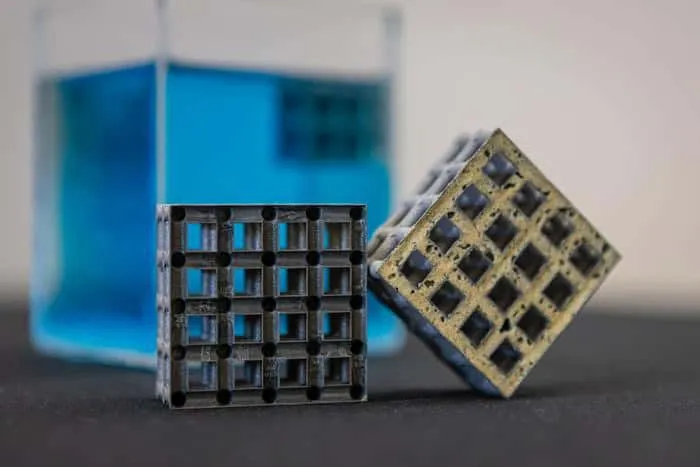
Architected material: Cross sections of the titanium lattice cube showing before and after being filled with polyurethane foam for buoyancy. (Courtesy: Sara Tan, RMIT) Open-cell metallic structures are widely employed in the aerospace industry and in biomedical applications that require materials to be extremely light as well as strong. In marine infrastructure, however, their usefulness is limited because water quickly fills their interconnected open pores, preventing them from floating even though their bulk density is much lower than that of water.

SpaceX Sent 6,300 Pounds to the Space Station. The Strangest Cargo Was Grown in a Lab - Inc.com
The spacecraft delivered materials and equipment for new research studies to the station.

Ancient mud reveals a surprising secret about Greenland’s ice - Earth.com
Mud from a fjord shows an Atlantic air pattern brought wetter, colder spells to southern Greenland, a clue to how its ice may fare. Greenland’s ice is shrinking as the planet warms. But in the island’s southwest, rainfall and snowfall have been influenced by the same North Atlantic air-pressure pattern for at least 5,000 years. When that pattern tipped one way, the region turned wetter and colder. The record comes from mud on the floor of a Greenland fjord, and it suggests snowfall, not only temperature, shaped how the area’s ice grew and shrank. It doesn’t yet show how glaciers there will respond to the warming ahead. Johan Faust, a researcher at MARUM, the Center for Marine Environmental Sciences at the University of Bremen in Germany, led the work with colleagues in Germany, Norway, Denmark and Canada. A seesaw in the airThe pattern is called the North Atlantic Oscillation. It’s the difference in air pressure between a low that sits near Iceland and a high near the Azores, and it’s strongest in winter. When that difference is large, the pattern is in its positive phase. Northwestern Europe and southwestern Greenland both get more rain and snow.

Simulations explore nuclear mitigation of asteroid threats - Phys.org
Lawrence Livermore National Laboratory researcher Isaiah Santistevan led the development of three-dimensional simulations exploring how a nuclear device could deflect or disrupt an asteroid threatening Earth. Credit: Blaise Douros/LLNL Lawrence Livermore National Laboratory (LLNL) researchers are developing three-dimensional simulations to examine how a nuclear device could be used to deflect or potentially disrupt an asteroid threatening Earth.
0 comments
No comments yet. Be the first to share your thoughts!