I've spent my career studying ageing. Here are the 7 ways I slow my biological clock - BBC Science Focus Magazine
This story deserves to be shared
Send it to someone who'd care, or post it on your networks.
This article is an excerpt. To read the full content, visit the original source. BBC Science Focus Magazine
Related articles
Weight-loss jabs may slow biological ageing, landmark new study suggests - BBC Science Focus Magazine
The simple, surprising habits that can slow your immune ageing by years - BBC Science Focus Magazine
Anti-ageing pills are real, and some of us are taking them without knowing it - BBC Science Focus Magazine
A primary cell culture platform for studying venom gland and brain tissue in octopus - Nature
We’re sharing this article early to provide faster access to peer-reviewed, accepted research. It is citable and carries a permanent DOI. This version is subject to further edits and will be replaced automatically by the final Version of Record. All legal disclaimers apply. AbstractColeoid cephalopods, squids, cuttlefish, and octopuses, have emerged as powerful model organisms for studying neurobiology, development, and behavior, however, cellular tools for investigating their specialized tissues remain limited. In particular, their venom producing gland, the posterior salivary gland (PSG), has been extensively described anatomically and histologically, yet remains largely inaccessible to experimental investigation at the cellular level. Here, we report the first establishment of primary cell cultures derived from both the optic lobe (OL) and PSG tissues of Octopus bimaculoides. Building on recent advances in cephalopod brain cultures, we adapted and optimized dissociation and culture conditions to support short-term survival and attachment of cells in vitro.
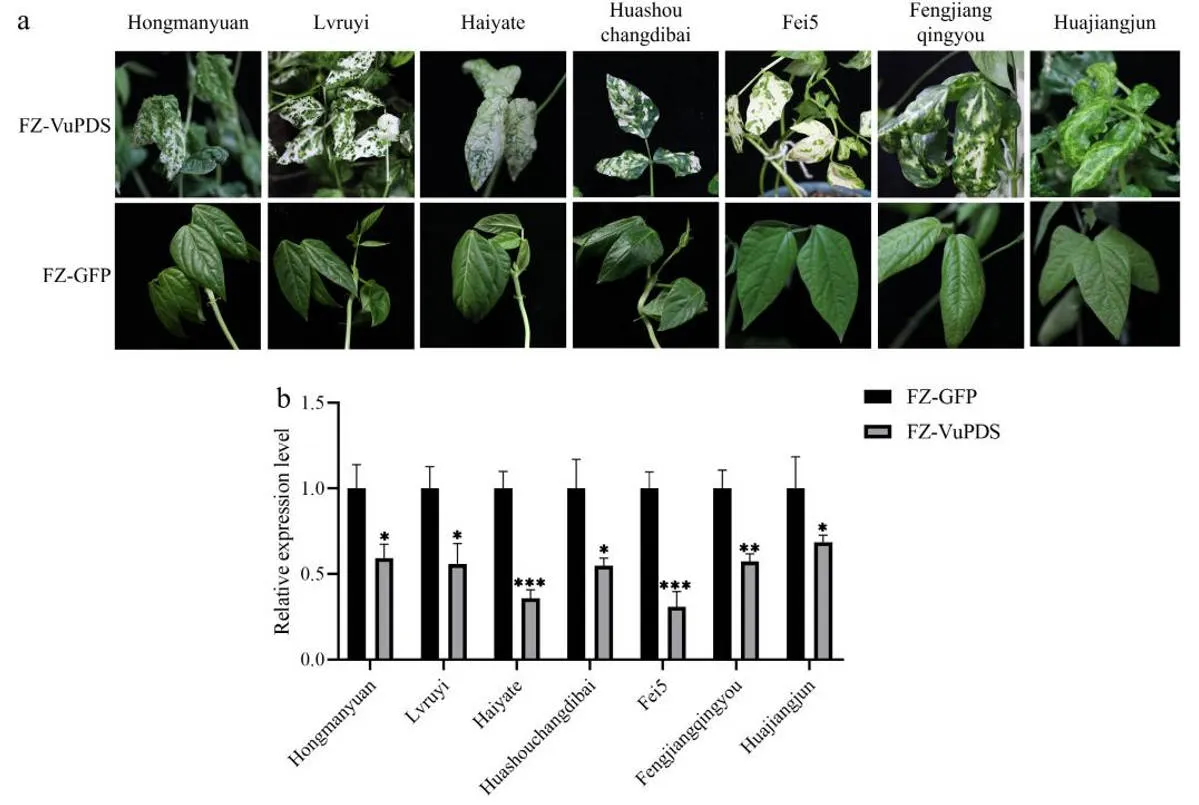
Virus-based tool opens a faster route to studying cowpea genes | Newswise - Newswise
Cowpea (Vigna unguiculata) supplies dietary protein, livestock feed, and income in tropical and subtropical regions, while its nitrogen-fixing ability adds agricultural value. Genome sequencing has provided researchers with numerous candidate genes, and genetic transformation has enabled studies of traits such as drought and heat tolerance. However, stable transformation requires extensive preparation and lengthy screening, and its performance depends strongly on plant genotype. Virus-induced gene silencing offers a faster alternative by using viral vectors to trigger the plant’s own gene-silencing machinery. Yet existing approaches have performed inconsistently in cowpea, leaving researchers without a dependable, broadly applicable method for rapidly linking genes to biological functions. A study (DOI: 10.48130/tp-0026-0035) published in Tropical Plants on 08 October 2026 by Ying Zhou's team, Zhejiang University, reports sustained gene silencing across seven cowpea varieties and demonstrates the system's utility for investigating jasmonate regulation during leafminer infestation.
0 comments
No comments yet. Be the first to share your thoughts!