Iran has reached developed nations’ level in nuclear science, says AEOI chief - Tehran Times
This story deserves to be shared
Send it to someone who'd care, or post it on your networks.
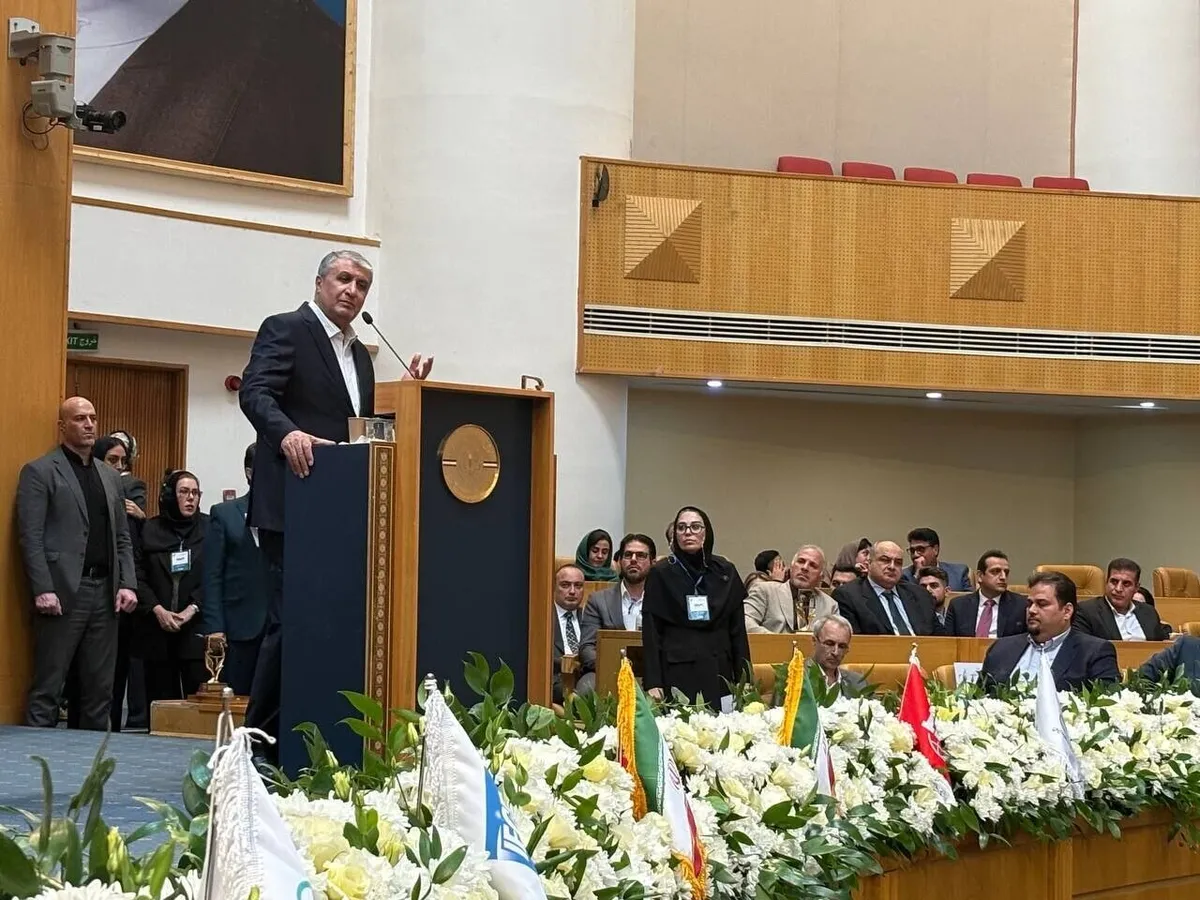
TEHRAN — Iran has attained a level of nuclear science and technology comparable to that of developed countries and is now manufacturing domestically the equipment and systems required by its national industries, Vice President and Atomic Energy Organization of Iran (AEOI) chief Mohammad Eslami said on Tuesday. Speaking at a ceremony marking National Standard Day, Eslami highlighted the role of scientific expertise, innovation and effective management in advancing Iran’s technological capabilities, saying the country had the human and technical resources needed to become a leading force in science and technology.
He stressed that management should create the conditions for talented individuals to flourish and ensure that scientific achievements translate into tangible benefits for the Iranian people.
This article is an excerpt. To read the full content, visit the original source. Tehran Times
Related articles

AI deepfakes are getting more realistic. CU scientists developed a better way to spot them - University of Colorado Boulder
Hundreds of the nation’s smartest computer scientists gathered for a conference in Denver last fall, and Tuan Tran had a big test for them:Could they tell the difference between the real Brad Pitt and an AI-generated version of him? Tran, a doctoral candidate in computer science at CU Boulder, rolled the tape on a large projector. Only half of the audience could spot the deepfake. “These deepfake generating models are becoming very strong,” Tran said. To address this, Tran and a team of researchers at CU Boulder set out last year to build their own system for spotting fakes in video. It uses far less computing power to achieve the same results as the current detection models. The team of scientists at CU Boulder who developed a new deepfake detection system includes, from left, Eric Keller, Sangtae Ha, Shirin Ebadi and Tuan Tran. (Credit: Scott Franz/CU Boulder)Their findings were presented at SIGCOMM, a flagship conference in computer networking and systems held in August in Denver. Bad actors have used AI-generated deepfakes to impersonate financial officers at major companies and convince employees to wire large amounts of money.

SpaceX Sent 6,300 Pounds to the Space Station. The Strangest Cargo Was Grown in a Lab - Inc.com
The spacecraft delivered materials and equipment for new research studies to the station.

Ancient mud reveals a surprising secret about Greenland’s ice - Earth.com
Mud from a fjord shows an Atlantic air pattern brought wetter, colder spells to southern Greenland, a clue to how its ice may fare. Greenland’s ice is shrinking as the planet warms. But in the island’s southwest, rainfall and snowfall have been influenced by the same North Atlantic air-pressure pattern for at least 5,000 years. When that pattern tipped one way, the region turned wetter and colder. The record comes from mud on the floor of a Greenland fjord, and it suggests snowfall, not only temperature, shaped how the area’s ice grew and shrank. It doesn’t yet show how glaciers there will respond to the warming ahead. Johan Faust, a researcher at MARUM, the Center for Marine Environmental Sciences at the University of Bremen in Germany, led the work with colleagues in Germany, Norway, Denmark and Canada. A seesaw in the airThe pattern is called the North Atlantic Oscillation. It’s the difference in air pressure between a low that sits near Iceland and a high near the Azores, and it’s strongest in winter. When that difference is large, the pattern is in its positive phase. Northwestern Europe and southwestern Greenland both get more rain and snow.

Simulations explore nuclear mitigation of asteroid threats - Phys.org
Lawrence Livermore National Laboratory researcher Isaiah Santistevan led the development of three-dimensional simulations exploring how a nuclear device could deflect or disrupt an asteroid threatening Earth. Credit: Blaise Douros/LLNL Lawrence Livermore National Laboratory (LLNL) researchers are developing three-dimensional simulations to examine how a nuclear device could be used to deflect or potentially disrupt an asteroid threatening Earth.
0 comments
No comments yet. Be the first to share your thoughts!