Improving mental health and health behaviors among transgender and non-binary populations: a systematic review and meta-analysis - Nature
This story deserves to be shared
Send it to someone who'd care, or post it on your networks.
This article is an excerpt. To read the full content, visit the original source. Nature
Related articles
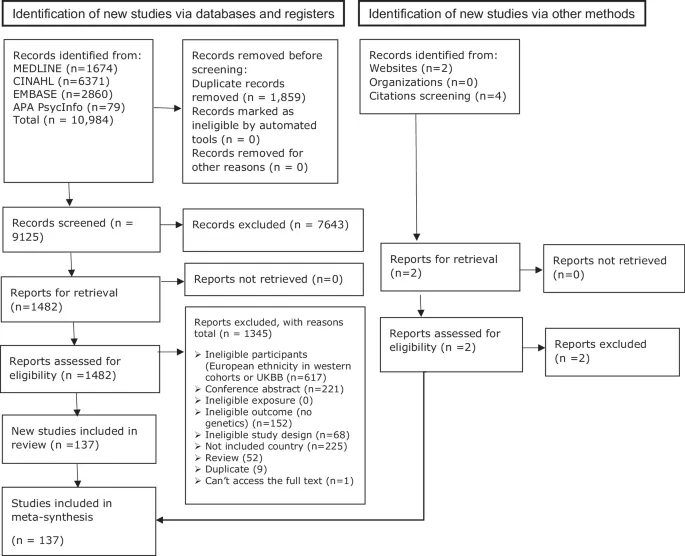
Health inequalities in precision medicine: A systematic review - Nature
IntroductionPrecision medicine is an innovative approach to healthcare that tailors disease prevention and treatment to individual variability in genes, environment, and lifestyle [1]. This rejects the “one size fits all” notion and seeks to develop tailored approaches for more effective treatment. Integral to this are advances in genomic technology that enables early disease detection and personalised treatments, such as using genotype information to determine the serious side-effects of carbamazepine and improving cancer outcomes through genomic profiling [2, 3]. However, there are concerns that advances in precision medicine, in particular genomics, are exacerbating health inequalities, particularly among certain ethnic groups. These groups often have limited access to precision medicine services and are underrepresented in research [4, 5]. Addressing these health inequalities is crucial to ensure that advancements in precision medicine benefit everyone. Although the 10-year strategy “Genome UK: the future of healthcare” is a radical vision of genomic medicine in the UK health service, but it does not directly consider how to tackle health inequalities.
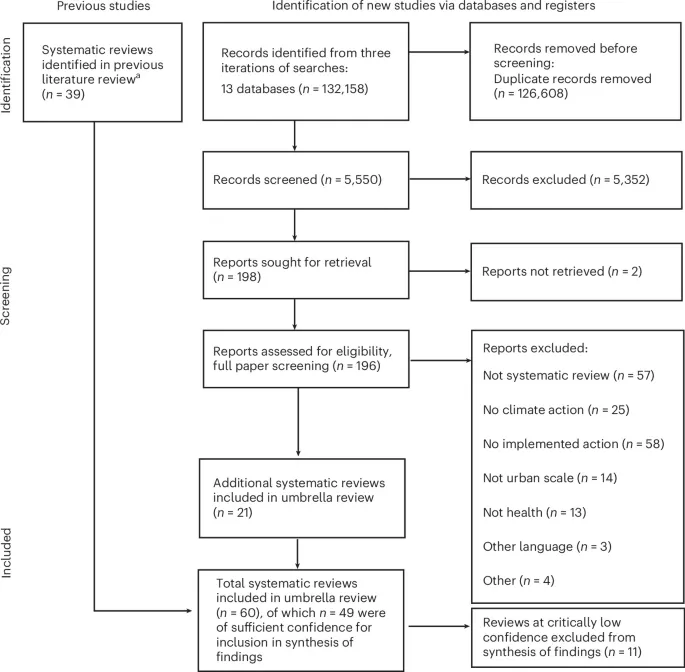
Systematic overview of climate actions for health in cities - Nature
MainMultisectoral mitigation and adaptation actions are required to counter the climate crisis1. Global and national actions to address upstream causes (for example, fossil fuel use2) alongside implementation of city policies (for example, transport, urban planning3) are needed to achieve rapid, deep reductions in greenhouse gas (GHG) emissions and thus limit global temperature increases to well below 2 °C (ref. 4). Increasingly, there is recognition that such actions have potential co-benefits for health such as from reduced air pollution, which could increase motivation and public support for achieving deep cuts in emissions3,5,6,7,8,9,10. However, trade-offs between climate action and health outcomes are also possible, necessitating careful design and implementation to achieve optimal effects. Transformative actions, addressing the systemic drivers of GHG emissions, are needed to achieve net zero emissions over coming decades and capitalize on the health (co-) benefits, as well as supporting effective adaptation responses in cities10,11,12.
0 comments
No comments yet. Be the first to share your thoughts!