Improved Social Science? Don’t Laugh, It Could Happen - Science and Culture Today
This story deserves to be shared
Send it to someone who'd care, or post it on your networks.
A struggle, worth knowing about, has been initiated to produce better social science. A recent article at Real Clear Investigations tell us “Why so many social science claims are false.” The theme is not unfamiliar: neither the falsehood nor the reasons are news. However, Stetson University psychology professor Christopher J. Ferguson also identifies three efforts at reform.
One promising sign is the growth of the “open science movement,” which encourages the preregistration of studies. This reduces the ability of researchers to mangle their data analysis to produce preferred results. And the movement’s promotion of greater data transparency allows for more confirmation of findings.
This article is an excerpt. To read the full content, visit the original source. Science and Culture Today
Related articles
Physicists Simulated What Might Happen When Two Wormholes Collide, And Things Got Weird - ScienceAlert
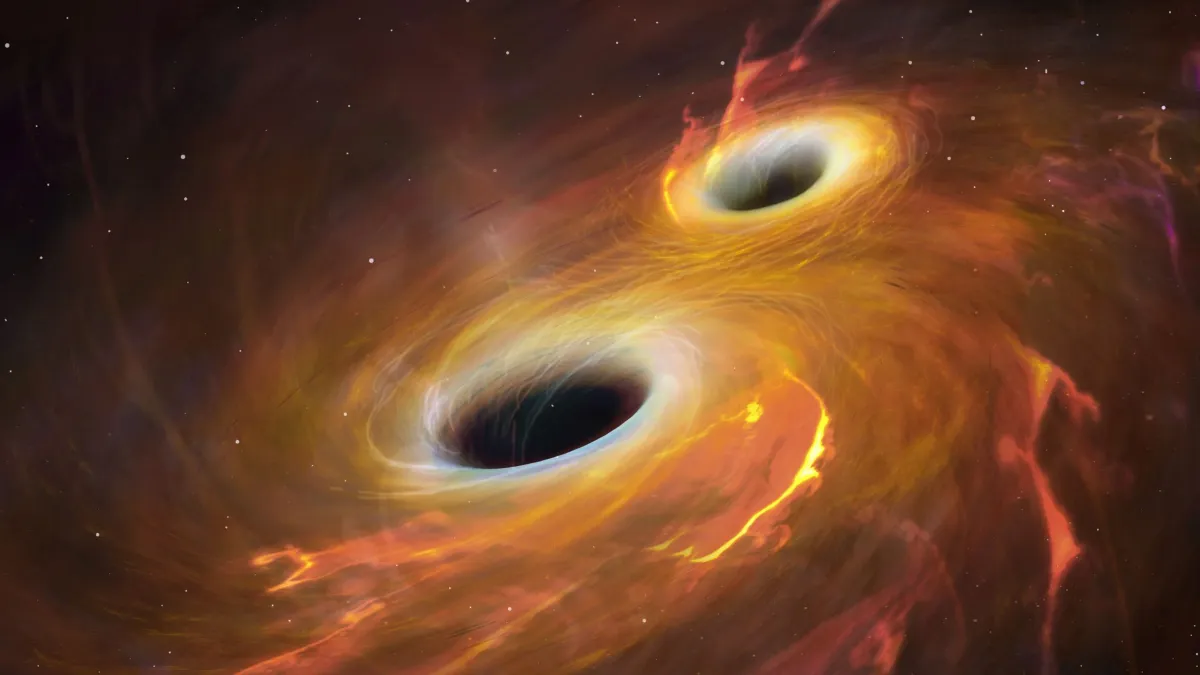
An artist's impression of two black holes colliding. Interacting wormholes could produce a similar gravitational wave signature. (Mark Garlick/Science Photo Library RF/Getty Images) Like the surface of an ocean, the fabric of the Universe is constantly rippling with an infinitude of gravitational waves, propagating outward across the cosmos. We can count, in triple digits, the number of these ripples we've detected to date – and most of them have been linked to collisions between black holes, the densest objects in the Universe. But how do we know that every collision attributed to black holes is what it looks like? And what of the gravitational wave signatures we are yet to detect? What if there's something else out there that can make the Universe sing? What if colliding wormholes can make a similar splash – and how would we recognize it when we find it? For one particular kind of wormhole, at least, new simulations suggest collisions would be profoundly strange – and could leave distinctive signatures in the fabric of spacetime. According to a preprint authored by physicist Nikita M.

Simulations explore nuclear mitigation of asteroid threats - Phys.org
Lawrence Livermore National Laboratory researcher Isaiah Santistevan led the development of three-dimensional simulations exploring how a nuclear device could deflect or disrupt an asteroid threatening Earth. Credit: Blaise Douros/LLNL Lawrence Livermore National Laboratory (LLNL) researchers are developing three-dimensional simulations to examine how a nuclear device could be used to deflect or potentially disrupt an asteroid threatening Earth.
0 comments
No comments yet. Be the first to share your thoughts!