I worked 7 days a week while my husband couldn't work. Now I'm learning to slow down. - Business Insider
This story deserves to be shared
Send it to someone who'd care, or post it on your networks.
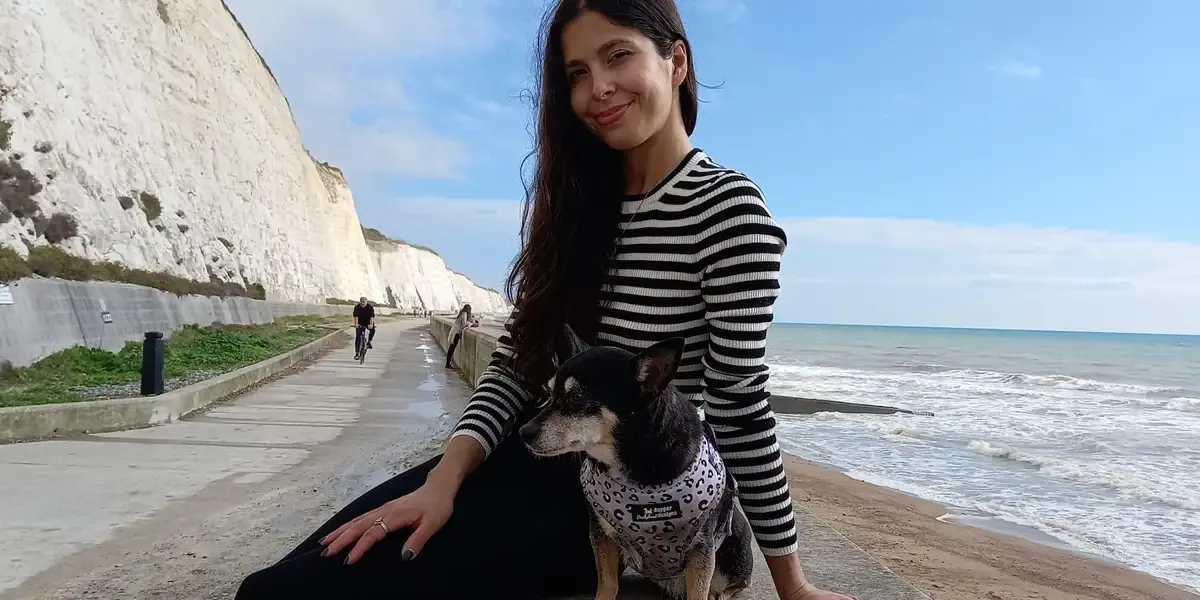
The author used to work seven days a week. Now, she has more free time.
Eight years ago, I worked a visual merchandising job with a 6-2 schedule. I also lived in Vancouver, one of the most expensive cities in North America. With mostly free afternoons and a love of writing, I started looking into freelancing to boost my income. It was just a fun side hustle at first. The gigs weren't too time-consuming, and I took a little break after moving to the UK for love in 2019. But after getting settled and finding a new full-time merchandising job, I decided to give it another go. The pandemic gave me a lot of time to work on new projects and build my portfolio, as I was furloughed from my full-time job during the thick of lockdown between 2020 and 2021. Then restrictions started to lift, but my workload kept growing. I went back to my full-time job, which had a more conventional 8-5 schedule. By then, I had regular freelance clients, so I'd use evenings and weekends to work on projects until working six or seven days a week became normal for me. I eventually switched to a part-time role in 2022 to give myself more time for freelancing, but the long workweek stuck.
This article is an excerpt. To read the full content, visit the original source. Business Insider
Related articles

I couldn't afford a $13,000 hair transplant in the US. So I flew to Turkey and I love the results. - Business Insider
Nicole Ethridge before and after her hair transplant. This story is based on an interview with Nicole Ethridge, 39, a Southern Marylander who works in finance and is also an influencer. It has been edited for length and clarity. My hair had always been thin, but I first noticed it coming out soon after the birth of my daughter, now 19. It was mainly at the front, which made it noticeable. I was self-conscious and particularly hated going to hairdressing salons, where it was impossible to hide the problem. The dermatologist diagnosed me with traction alopecia, sometimes caused by tight hairstyles and other things that pull on your hair. I started wearing wigsI started wearing wigs that mimic your hairline. They were expensive, ranging from $300 to $700, but they don't last forever. I'd go through as many as nine a year.

I worked a finance day job and a supermarket night job. I've saved up nearly $300K toward early retirement. - Business Insider
Ryan Lowe. Ryan Lowe worked two jobs and lives with his parents so he can retire early. This as-told-to essay is based on conversations with Ryan Lowe, a 27-year-old living in Massachusetts who shared documentation of his savings with Business Insider. His words have been lightly edited for length and clarity. I want to retire early. So I tried working two jobs — an office finance job during the day and as a product sorter in a grocery store at night. I also live with my parents and drive a 20-year-old Toyota Camry. I'm 27. I don't drink, I don't smoke, and I don't go out to parties. My parents buy the groceries. A lot of people would look at my lifestyle and say that I'm a bum, and they're not wrong. Over the years, though, I've saved up nearly $300,000. I get paid between $1,100 and $1,200 every week from both gigs, and I usually put $1,000 of that paycheck into the S&P 500. It's a very safe long-term investment. If that were to crash, then we'd have bigger issues than my retirement fund. I'm hoping to retire in my 40s and spend time traveling. When I'm not traveling, I want to have a chill, quiet lifestyle — just like I do now.
0 comments
No comments yet. Be the first to share your thoughts!