How do chatbots affect your mental health? - Université de Montréal
This story deserves to be shared
Send it to someone who'd care, or post it on your networks.

“How are you doing?” “Are you sleeping well?” “Do you drink?” These are typical opening questions a mental-health professional might ask a patient.
Soon, another question may be added to the list: “How do you use artificial intelligence (AI)?”
This article is an excerpt. To read the full content, visit the original source. Université de Montréal
Related articles
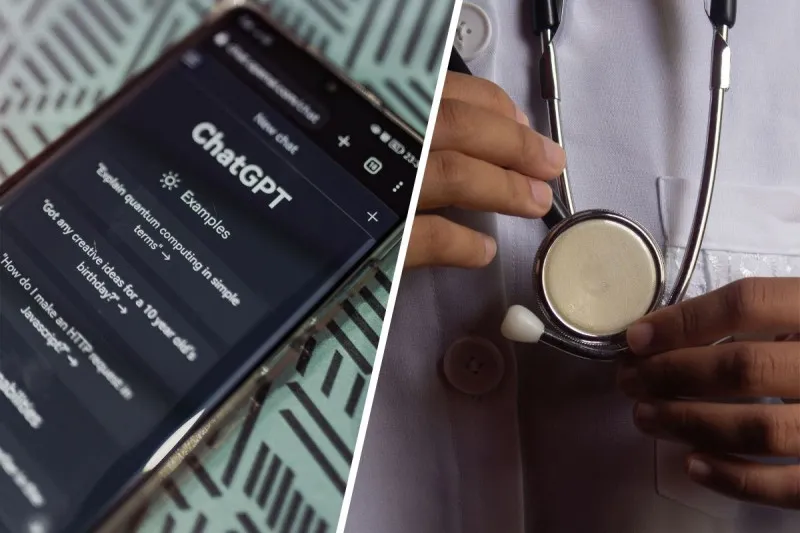
When AI chatbots give bad health advice, no one can see the damage - Binghamton University
As more and more people turn to AI chatbots for quick, 24/7 medical advice, a new perspective paper co-authored by faculty at Binghamton University explores the risks this practice carries that are largely invisible to users – and healthcare systems. The paper, written by researchers at Binghamton University, Stanford University, Texas A&M University, and Indiana University, and published in Nature Health, examines what happens when a chatbot gives someone bad health advice. The authors argue that the harm is hard to catch because the conversation stays on the AI company's platform, the person has no place to report the problem, and outside researchers cannot measure the damage. “We’re getting medical advice from these chatbots, but nobody—literally no one—is looking at this. If there’s an error or an issue, there’s just no way for people to know,” said Kaicheng Yang, an assistant professor in the School of Computing at Binghamton University’s Thomas J. Watson College of Engineering and Applied Science and one of the paper’s authors. The researchers gave the example of a 60-year-old man who asked ChatGPT how to cut chloride from his diet and swapped table salt with sodium bromide.

Continuous glucose monitors help type 2 diabetes patients spend 5 more hours a day in healthy blood sugar range - Medical Xpress
Continuous glucose monitors (CGMs) could transform diabetes management for millions of Americans with type 2 diabetes who don't take insulin, according to findings published in the New England Journal of Medicine. The clinical trial found that adults using CGMs spent approximately five additional hours each day within their target blood sugar range compared with those receiving routine care. Nearly twice as many CGM users also achieved an A1c level below 7%, a common treatment goal for people with diabetes.
Wearing headphones during surgery may reduce nausea and vomiting afterward - Medical Xpress
Patients who wore noise-canceling headphones during minimally invasive gynecological surgery were significantly less likely to experience postoperative nausea and vomiting (PONV), suggest findings from a randomized clinical trial presented at the Anesthesiology 2026 annual meeting.
0 comments
No comments yet. Be the first to share your thoughts!