Higher Levels of 19 Potentially Toxic Chemicals Found in The Teeth of Children With Autism - ScienceAlert
This story deserves to be shared
Send it to someone who'd care, or post it on your networks.
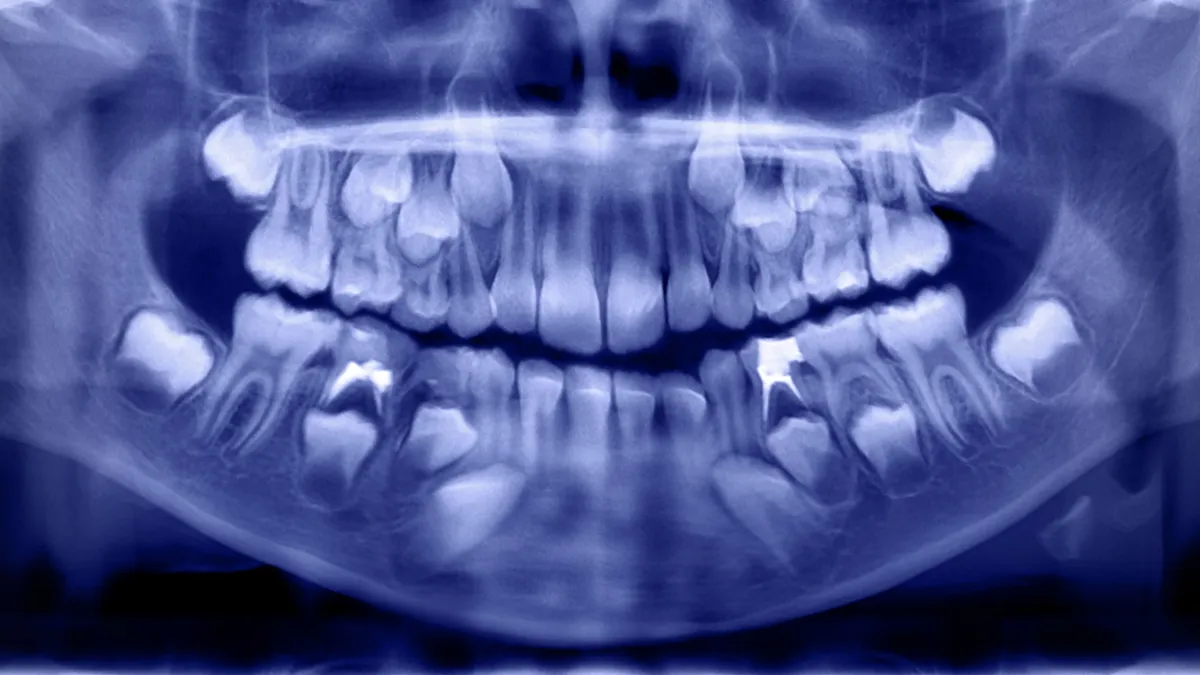
X-ray of a seven-year-old’s jaw. (–1001-/iStockphoto/Getty Images)
While scientists are still continually learning what causes autism, there's already considerable evidence linking environmental exposures to the condition, in addition to genetic factors. In recent years, a number of environmental risk factors have been identified, and while scientists have yet to demonstrate that any specific agents cause the condition, it's imperative we keep learning more about the potentially toxic substances that seem to be linked to the disorder. In this context, one challenge is that many studies measure chemical exposures by testing blood or urine samples, both of which only provide a short-term window – sometimes just hours – to identify chemicals in the sample before their signature vanishes. In a new study published in Neurotoxicology and Teratology, scientists found a way around that: analyzing children's primary or 'baby' teeth as a long-term record of chemical exposures that build up as teeth form, which can preserve detectable chemical traces for decades.
This article is an excerpt. To read the full content, visit the original source. ScienceAlert
Related articles
A microexon regulatory code reveals autism-linked genetic variation - Nature
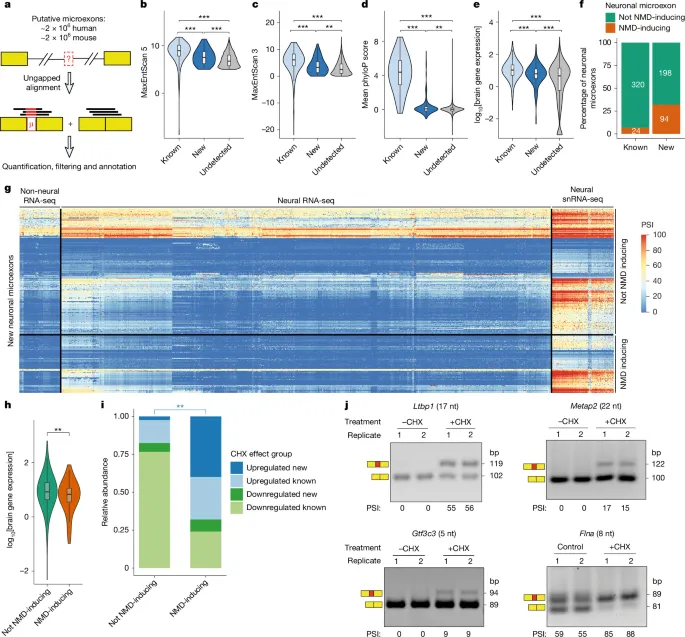
MainAutism spectrum disorder (ASD) is a highly heterogeneous condition. Common characteristics of affected individuals include altered social and communication abilities, and repetitive behaviours. Hundreds of genetic alterations have been linked to ASD5,6, and approximately 130 genes have been confidently associated with ASD susceptibility, with functions that converge on transcriptional and chromatin regulation, synaptic signalling and translational control7,8,9. However, high-confidence ASD-associated variants are detected in only around 15% of affected individuals. Among the approximately 85% of idiopathic individuals, missing genetic aetiology may be attributable, in part, to variants overlapping non-coding genomic regions with important yet difficult-to-predict functions10. Alternative splicing, a critical process by which exon and intron sequences are differentially included in transcripts to generate functional and regulatory diversity, is widespread in the mammalian nervous system11,12. Neuronally enriched, 3–27-nucleotide-long microexons represent a highly conserved class of alternative splicing1,2.
0 comments
No comments yet. Be the first to share your thoughts!