Health Officials urge caution after rabid Raccoon found in Nash County - ABC11 News
This story deserves to be shared
Send it to someone who'd care, or post it on your networks.

PETS & ANIMALSWatch Eyewitness News, First Alert Weather, and original programming. Friday, October 2, 2026NASH COUNTY, N. C. (WTVD) -- A raccoon found in the Old Bailey Highway and Bend of the River Road area of Spring Hope tested positive for rabies on Friday. According to Nash County Public Health, testing by the North Carolina State Laboratory of Public Health confirmed the animal was rabies-positive. People who live in or travel through Nash County are advised to use caution and avoid contact with wild, stray or unfamiliar animals. Anyone who believes they or their pet may have had contact with the raccoon or another potentially rabid animal should immediately call Nash County Public Health's Communicable Disease Control line at (252)-382-0904. To help prevent rabies exposure, residents are encouraged not to approach, touch, feed or attempt to capture wild animals. Officials also recommend teaching children to stay away from wild, stray or unfamiliar animals, keeping pets up to date on rabies vaccinations as required by North Carolina law, securing garbage containers and avoiding leaving pet food outdoors.
This article is an excerpt. To read the full content, visit the original source. ABC11 News
Related articles
Grief supports being offered at 2 Guelph high schools following death of 16-year-old Nash Dunlop - CBC
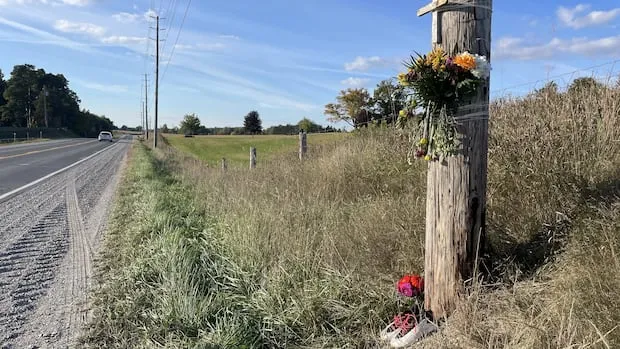
Kitchener-WaterlooThe Waterloo-Wellington branch of the Canadian Mental Health Association will be setting up walk-in clinics this week at Guelph's John F. Ross Collegiate Vocational Institute and St. James Catholic High School. It follows as the community mourns the death of 16-year-old basketball star Nash Dunlop. Nash Dunlop died suddenly on Sept. 19Carmen Groleau · CBC News · Posted: Sep 29, 2026 10:26 AM EDT | Last Updated: September 30Listen to this articleEstimated 4 minutesThe audio version of this article is generated by AI-based technology. Mispronunciations can occur. We are working with our partners to continually review and improve the results. Nash Dunlop was a student at John F. Ross Collegiate Vocational Institute in Guelph. The 16-year-old died suddenly on Sept. 19 and is remembered for his love of basketball and his skill in the sport. Students who need support following his death can attend a drop-in session with CMHA Waterloo Wellington at John F. Ross on Tuesday evening or St. James Catholic High School in Guelph on Thursday evening.
Rise in bat, raccoon encounters prompt Windsor-Essex health warning - CTV News
AtlanticNova ScotiaNew BrunswickPrince Edward Island Newfoundland and LabradorCalgaryLethbridgeKitchenerGuelphNorthern OntarioSudburyNorth BaySault Ste. MarieTimminsOttawaKingstonBrockvillePembrokeReginaYorktonSaskatoonPrince AlbertTorontoWatchWeatherPeelHamiltonDurhamYorkHaltonNiagaraQueen's ParkToronto City HallIn PicturesVancouverVancouver IslandCanadaLocal SpotlightRoyal FamilyPoliticsNanosPower PlayQuestion PeriodFederal Election 2025WorldMideast ConflictRussia-Ukraine WarWatchLatestCaptured on CameraPoliticsLifestyleConsumerHealthExplainedEntertainmentTechnologyDeception DecodedAutosEnvironmentBusinessInflationReal EstateAutos

Bioengineer.org | Switching HIV drugs or adding zoledronic acid rebuilds bone lost to tenofovir - European AIDS Treatment Group
Bioengineer.org news storyFor millions of people living with HIV, antiretroviral therapy has transformed a once-fatal infection into a manageable chronic condition. Yet the very drugs that suppress the virus can carry quiet costs, and one of the most insidious is bone loss. Tenofovir disoproxil fumarate, or TDF, has been a cornerstone of HIV treatment worldwide for two decades, prized for its potency, durability, and low cost. But a growing body of evidence has linked TDF exposure to measurable reductions in bone mineral density, raising an increasingly urgent clinical question: once bone has been lost on a TDF-based regimen, can it be recovered? A new prospective cohort study, published in BMC Infectious Diseases, offers some of the most detailed longitudinal evidence to date that the answer, for many patients, is yes. The research team enrolled 223 virologically suppressed men living with HIV who had low bone mineral density while taking TDF-based antiretroviral therapy.
0 comments
No comments yet. Be the first to share your thoughts!