Finally: Rose-Tinted Solar Panels Could Let Crops And Electricity Share The Same Land - ScienceAlert
This story deserves to be shared
Send it to someone who'd care, or post it on your networks.
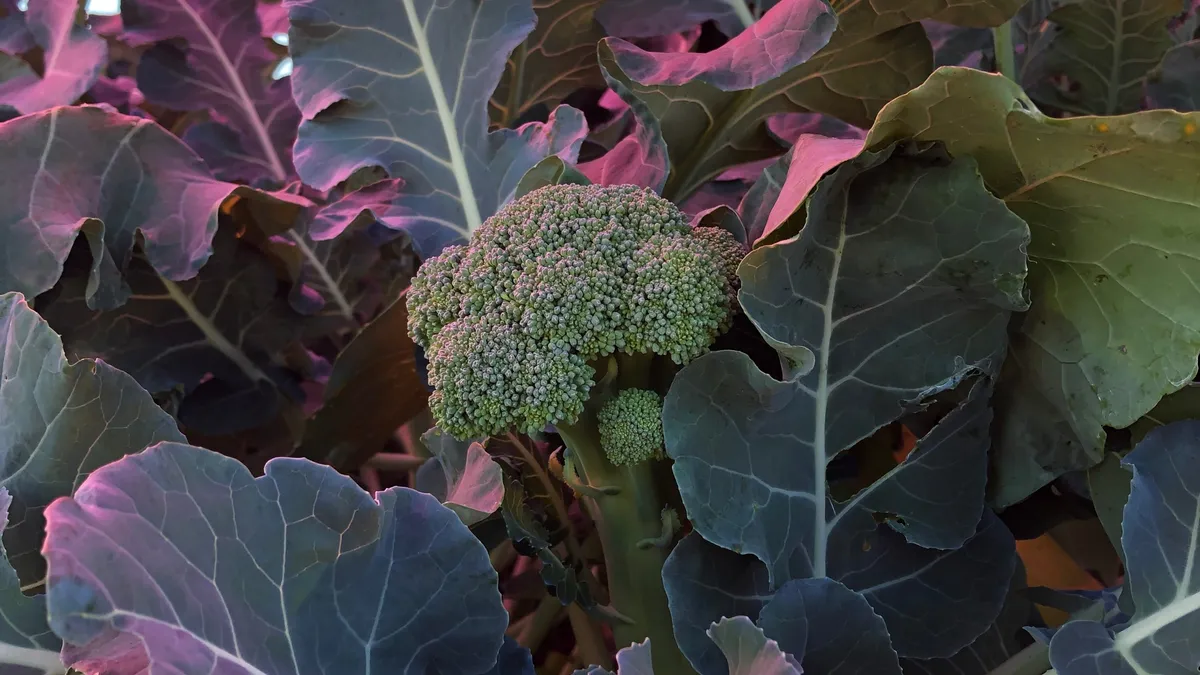
Plants are the original solar panels, and they're very good at converting light into energy – red and blue light, that is. But what if a solar panel could co-exist with plants, capturing the light that they aren't using while allowing those red and blue wavelengths through? That's what a team led by Silvia Ma Lu of Mälardalen University in Sweden has tested in a new study, using semi-transparent, rose-tinted solar panels that let specific wavelengths of light through to plants growing below, while also capturing solar energy for electricity. They've presented their prototype in the scientific journal Cell Reports Physical Science. "The basic concept is quite straightforward," Ma Lu says. "The solar panels use part of the incoming sunlight to generate renewable electricity while allowing part of the light to pass through to the crops growing underneath. "Perhaps we could be harvesting sunlight more efficiently by allocating different portions of the solar spectrum to crop growth and electricity generation, she says. Broccoli growing under the magenta solar panels. (Silvia Ma Lu)The magenta panels tested in this study, however, are more like a prototype than the final product.
This article is an excerpt. To read the full content, visit the original source. ScienceAlert
Related articles
NASA, International Partners Advance Work on Space Crops - NASA Science (.gov)

Simulations explore nuclear mitigation of asteroid threats - Phys.org
Lawrence Livermore National Laboratory researcher Isaiah Santistevan led the development of three-dimensional simulations exploring how a nuclear device could deflect or disrupt an asteroid threatening Earth. Credit: Blaise Douros/LLNL Lawrence Livermore National Laboratory (LLNL) researchers are developing three-dimensional simulations to examine how a nuclear device could be used to deflect or potentially disrupt an asteroid threatening Earth.
0 comments
No comments yet. Be the first to share your thoughts!