Dark Boreal Forests of Canada Absorb Enough Heat to Cancel Up to a Fifth of Their Climate Benefit, Scientists Warn - UNU | United Nations University
This story deserves to be shared
Send it to someone who'd care, or post it on your networks.
This article is an excerpt. To read the full content, visit the original source. UNU | United Nations University
Related articles
Drowned 5,000-year-old forests off Mozambique now shelter reef fish, no coral needed - Yahoo
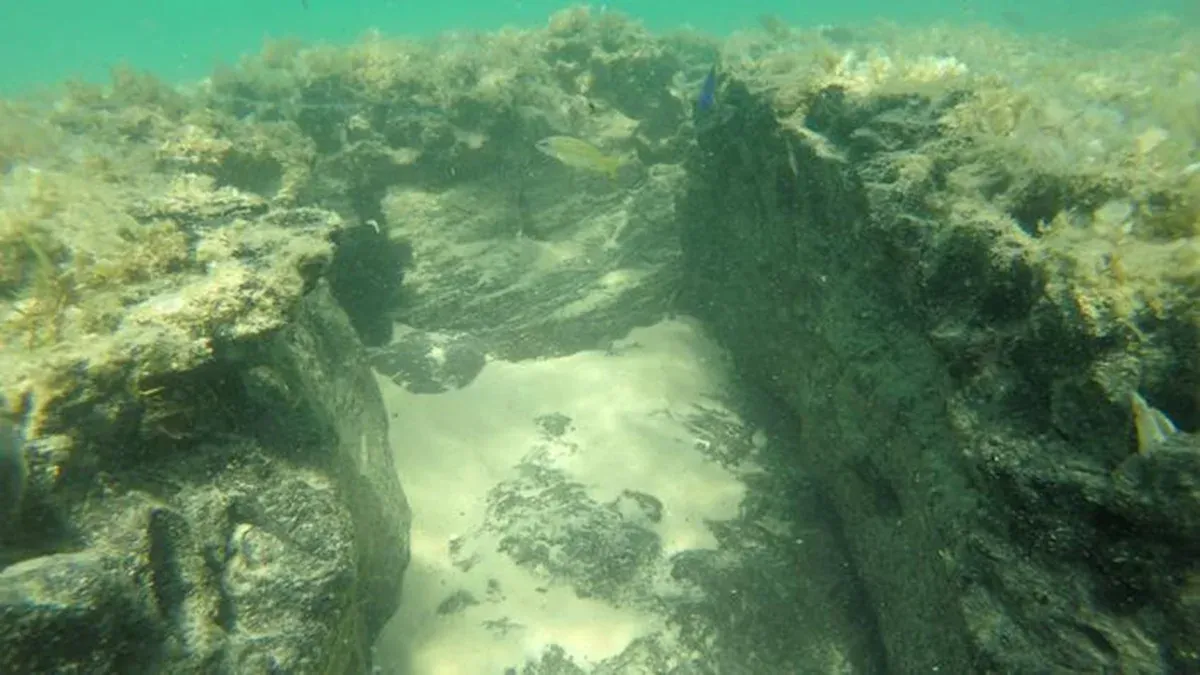
Forests that stood on Mozambique's coast thousands of years ago now lie beneath shallow seas, and they have become fish-filled "peat reefs" with marine life comparable to coral reefs, researchers report in Scientific Reports. A team from the Bazaruto Center for Scientific Studies (BCSS) Ocean Observatory, led by Mario Lebrato, documented the submerged peat in the Bazaruto Archipelago in the Western Indian Ocean. BCSS, founded in 2017, describes itself as Africa's first permanent ocean observatory. Working with universities and institutions in the U. K., U. S. and Canada, the team believes it has carried out the first ecological study of peat reefs anywhere in the tropics. Old forests, new seafloorRadiocarbon dating shows the peat formed between about 300 and 5,000 years ago, and chemical analysis indicates it came mostly from coastal land plants and trees. Some samples contain up to 40% organic carbon by dry weight. Lebrato said the coastline has very little natural hard seabed, mostly shifting sand. As rising seas expose the old peat layers, they create rare solid habitat where marine life can settle, hide and feed.
Ancient Submerged Forests Found to Rival Coral Reefs in Biodiversity Off Mozambique Coast - ATTA® Travel
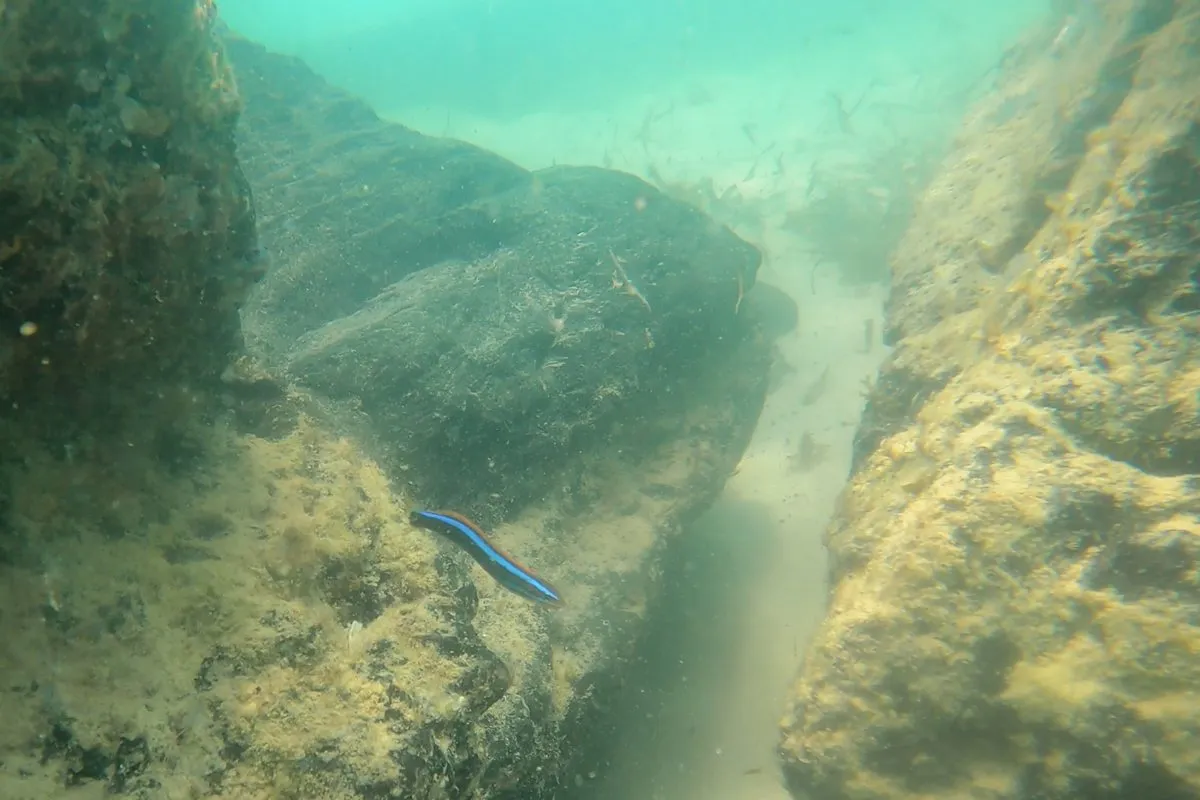
Researchers from the Bazaruto Center for Scientific Studies (BCSS) Ocean Observatory have documented submerged "peat reefs" in the shallow waters of Mozambique's Bazaruto Archipelago, finding that ancient coastal forests - now lying beneath the sea - support marine biodiversity comparable to coral reefs. Published on 12 October in Scientific Reports, the study is believed to be the first ecological research into tropical peat reefs from a biodiversity perspective, with radiocarbon dating placing peat formation between roughly 300 and 5,000 years ago. The reefs, sitting just 2 - 4 metres deep, host no living coral yet shelter dozens of fish species, spiny lobsters, oysters and juvenile reef fish, alongside larger species including sharks, rays and turtles. The findings carry significant implications for coastal conservation and blue economy policy. Some peat samples contain up to 40% organic carbon by dry weight, raising questions about their potential role as legacy carbon stores - though researchers note that the peat reefs' present-day carbon cycling function remains unresolved and requires further dedicated study.
5,000 years ago, these forests drowned. Now they're thriving reefs – home to oysters, sponges, sharks, rays and turtles - BBC Wildlife Magazine
Researchers in Bazaruto, Mozambique, have discovered the underwater remains of forests that were submerged by rising seas thousands of years ago – and they were surprised by the amount of biodiversity living on these so-called ‘peat reefs’. Using radiocarbon dating, the scientists found that the reefs formed between around 300 and 5,000 years ago. Published in the journal Scientific Reports, the paper is believed to be the first ecological study of tropical peat reefs.
Scientists discover ‘D-rex’, a giant fungus from Chinese forests whose unique lineage dates back 65 million years - Frontiers
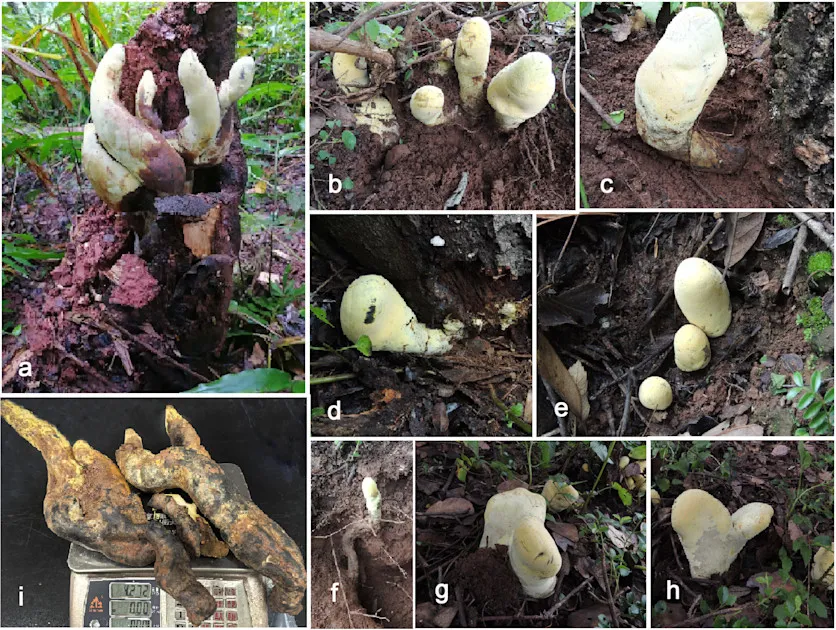
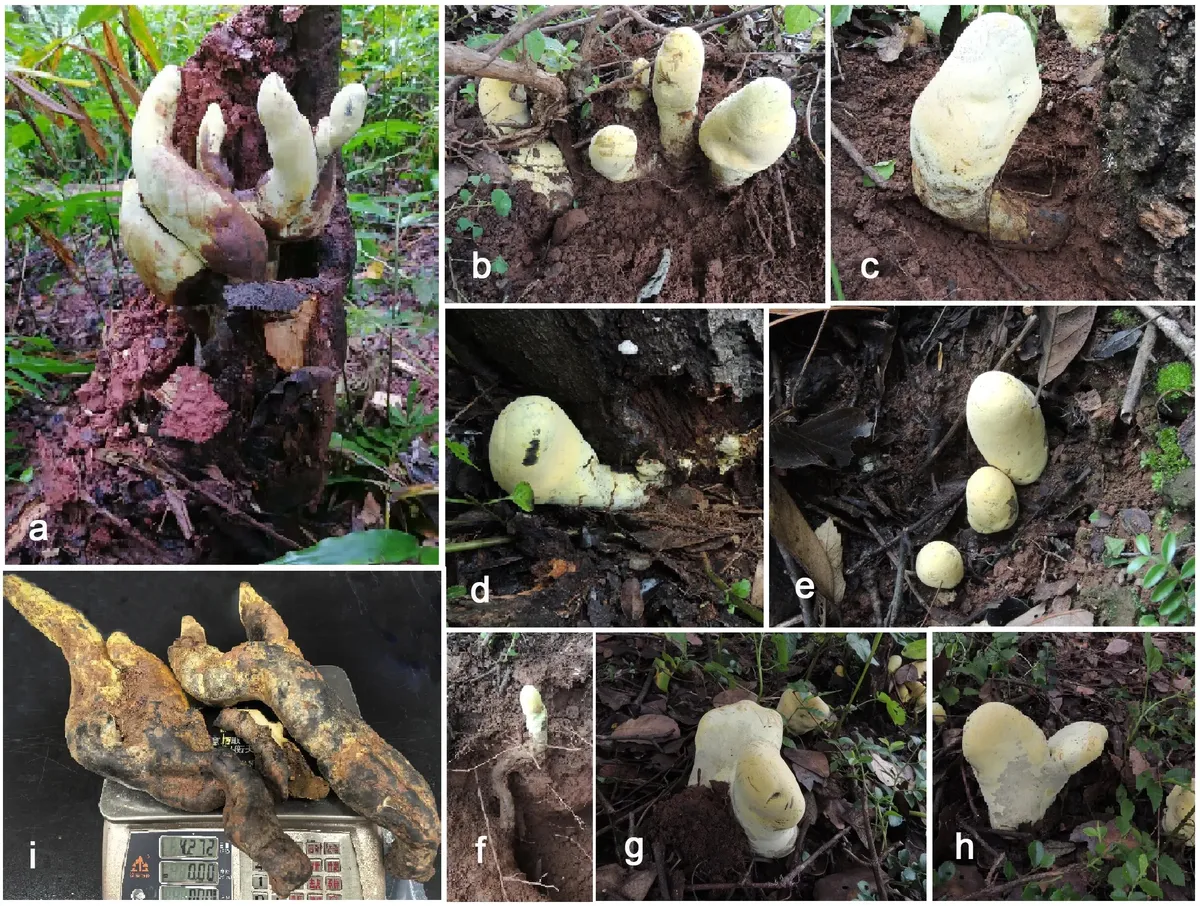
A team of scientists in China, Thailand, and Mexico has discovered a giant among fungi in the forests of Yunnan Province in China. The new species Dianjunus rex, which grows up to 50 cm tall and weighs up to 2.2 kg, constitutes on its own a new genus and new family within the order Xylariales of the Ascomycota. Analysis of its genome suggests that the new family arose approximately 65 million years ago, soon after the Cretaceous-Paleogene mass extinction, when new niches for wood-decomposing fungi may have opened up. The authors speculate that ‘D rex’ record-breaking fruiting bodies may help with spore dispersal in dense forests. Deep in the forests of Yunnan, China, scientists have discovered a ‘fungal giant’ that challenges our understanding of how large fungi can become. The newly described species, Dianjunus rex, produces vertical fruiting bodies up to 50 cm high and weighing up to 2.2 kg – the largest known within the phylum Ascomycota.
Scientists discover 'D-rex', a giant fungus from Chinese forests whose unique lineage dates back 65 million years - Phys.org
Stromata of Dianjunus rex in the field. (a, c, d, f) Stromata attached to host roots. (b, e, g, h) Stromata around host plant. (a) Collectors. (i) Total weight of largest bilobed stromata. Credit: Frontiers in Fungal Biology (2026). Deep in the forests of Yunnan, China, scientists have discovered a "fungal giant" that challenges our understanding of how large fungi can become. The newly described species, Dianjunus rex, produces vertical fruiting bodies up to 50 cm (20 inches) high and weighing up to 2.2 kg (4.9 pounds)—the largest known within the phylum Ascomycota.
0 comments
No comments yet. Be the first to share your thoughts!