'Crystals' of space-time could be the origins of certain rare black holes, theoretical study hints - Live Science
This story deserves to be shared
Send it to someone who'd care, or post it on your networks.
This article is an excerpt. To read the full content, visit the original source. Live Science
Related articles
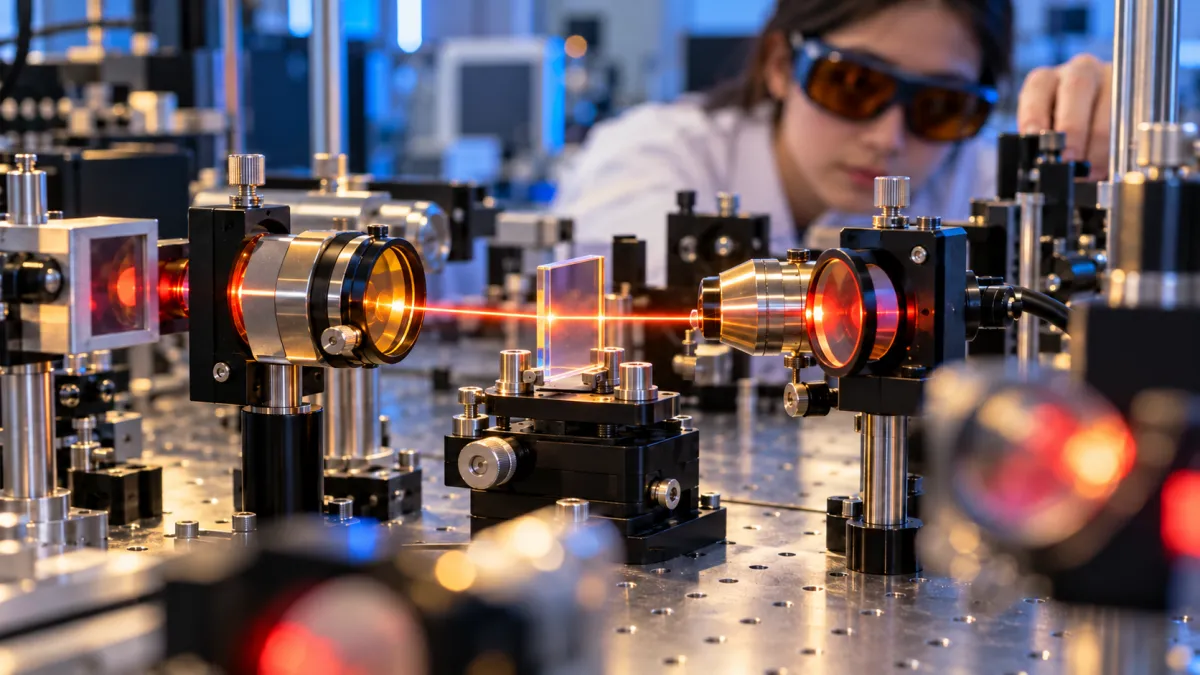
Laser light reveals the hidden quantum properties of crystals - The Brighter Side of News
Two ultrashort laser pulses revealed a difficult-to-measure quantum property in an atomically thin semiconductor. Combining optical measurements with an analytical model yielded a local Berry curvature consistent with theoretical calculations. The approach could help track rapid changes in electronic quantum states, although broader applications require further testing. A crystal can send electrons sideways even without an external magnetic field. Behind that unexpected motion lies Berry curvature, a geometric property of electronic quantum states. Measuring it experimentally, however, has remained considerably harder than calculating it. A collaboration between the universities of Jena and Regensburg has demonstrated an optical approach to that problem. In Nature Photonics, the team describes how ultrashort laser pulses and an analytical model revealed local Berry curvature in tungsten diselenide. The experiment examined a semiconductor layer less than one nanometer thick. Its response to light provided a quantitative estimate that agreed with theoretical predictions.
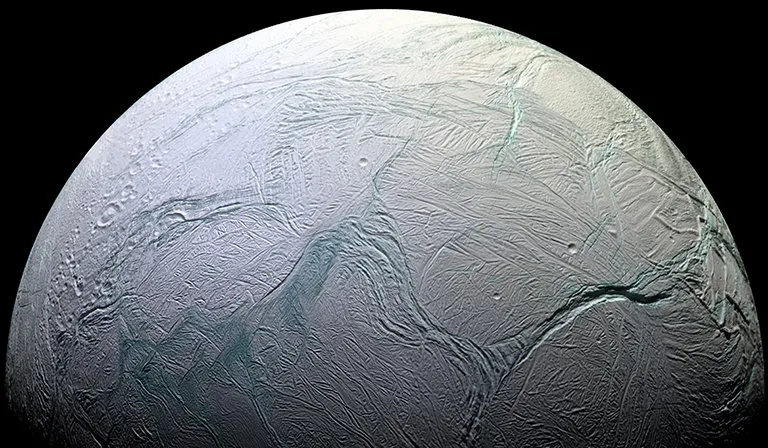
Salt crystals could hold clues to life beneath Enceladus's ice - Phys.org
The ocean beneath Saturn's moon Enceladus lies under kilometers of ice, but some of its contents do reach the surface. Jets near the south pole spray out water vapor and icy particles, offering a way to investigate the hidden ocean without drilling down to it.
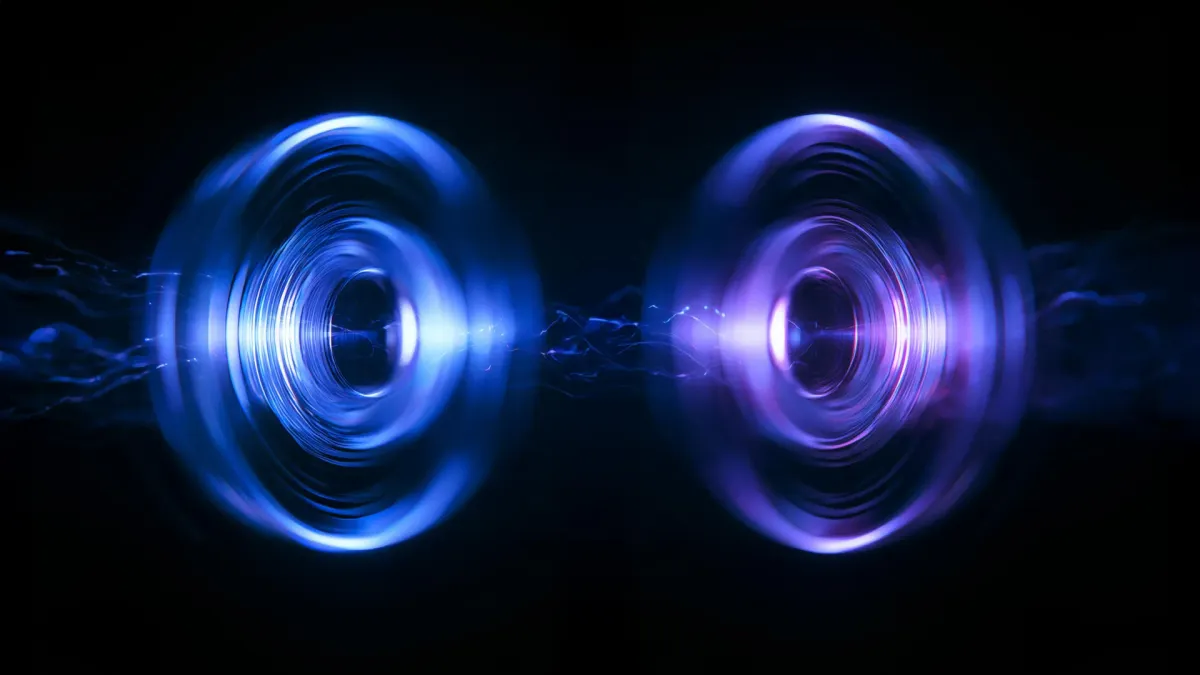
Distant time crystals can somehow fall into the same rhythm - Science Daily
Physicists at TU Dortmund University showed in January 2024 that a continuous time crystal could persist inside a semiconductor, with its oscillations remaining stable for hours. Now, in a new study published inNature Communications, Prof. Alex Greilich and his colleagues have found that multiple time crystals can emerge within the same material and synchronize their electron-nuclear spin oscillations. Time crystals are unusual physical systems whose internal behavior repeats in a regular rhythm over time, even though they are not being driven by a repeating external signal.
0 comments
No comments yet. Be the first to share your thoughts!