Credit Card Collections? Catholic Churches Use Tap Technology to Capture Cashless Donations - National Catholic Register
This story deserves to be shared
Send it to someone who'd care, or post it on your networks.
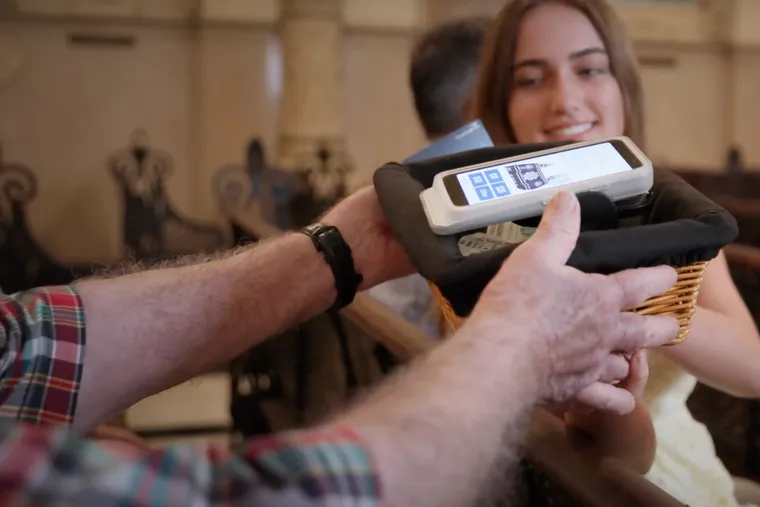
Now available at a handful of Catholic churches in the country, the innovation takes the generations-familiar collection basket and adds a tap-to-pay terminal. For years, Cory Howat pondered a mystery of the age: It’s easier to pay a modern vending machine than a Catholic parish. “So you can get a Coke and a Snickers, but you can’t give to Jesus this way?” Howat, executive director of the Catholic Community Foundation of the Archdiocese of New Orleans, told the Register, referring to making credit card payments on the go. “The Church has to figure this out.” Enter credit-card-tap collection baskets, now available at a handful of Catholic churches in the country. The innovation takes the generations-familiar collection basket and adds a tap-to-pay terminal for donations via credit card and debit card and even cellphone. At Immaculate Conception Jesuit Church in downtown New Orleans, Howat said, collections are up $36,000 since the parish started using the baskets in December 2025. Jesuit Father Anthony McGinn, the pastor, was skeptical at first. “I thought it would be awkward.
This article is an excerpt. To read the full content, visit the original source. National Catholic Register
Related articles

Runway of Rezilience 2026: 4 Indigenous brands share the inspiration behind their collections - CBC
StyleHand-sewn dresses, copper armour and intricate beadwork bring a tribute to Haudenosaunee ironworkers to life. Hand-sewn dresses, copper armour and intricate beadwork bring a tribute to Haudenosaunee ironworkers to lifeD’Loraine Miranda · CBC Life · Posted: Oct 13, 2026 2:25 PM EDT | Last Updated: October 13Listen to this articleEstimated 5 minutesThe audio version of this article is generated by AI-based technology. Mispronunciations can occur. We are working with our partners to continually review and improve the results. From left to right, models wear looks by designers Bineshi Ikwewag, Tisha Thompson x K. Francis, Lesley Hampton and Yana Manta at Runway of Rezilience 2026. (Jack Hathaway)The third annual Runway of Rezilience presentation, hosted by media company Seeing Red, took place on Sept. 26 at Evergreen Brick Works in Toronto. Established in 2024 as a fashion show highlighting Indigenous talent, Runway of Rezilience expanded this year to showcase Indigenous creativity across food, music, art and beyond. The fashion show still remained a major focus of the event, with eight brands presenting new collections centred on this year’s Tales of the Skywalkers theme.

When It Comes to Technology, Catholic Schools Can Lead by Example - Public Discourse
Over the past few years, an overwhelming amount of empirical research has shown the harmful effects of screens on learning, particularly for young children. You can throw a rock in a bookstore and hit a book packed with the evidence. Take Jonathan Haidt’s The Anxious Generation, Jared Cooney Horvath’s The Digital Delusion, or Michel Desmurget’s Screen Damage. While theirs were once fringe views, there is a large and growing awareness among parents and educators that is quite difficult to ignore. Many now know: the iPad is not an ideal medium for reading, note-taking, or completing assessments. Reading on paper tends to yield better comprehension than reading on screens. Writing by hand requires forms of cognitive and motor engagement that typing does not. The presence and use of laptops can distract students and interfere with classroom learning. Completing an analogue essay generates formative friction and enables a more reliable assessment of student competence and command of language. Not to mention, policing iPads and Chromebooks has proven to be an endless and ever-changing classroom management issue with no end in sight.
0 comments
No comments yet. Be the first to share your thoughts!