Chemists develop blueprint for designing powerful fluorescent materials for better disease detection - Phys.org
This story deserves to be shared
Send it to someone who'd care, or post it on your networks.
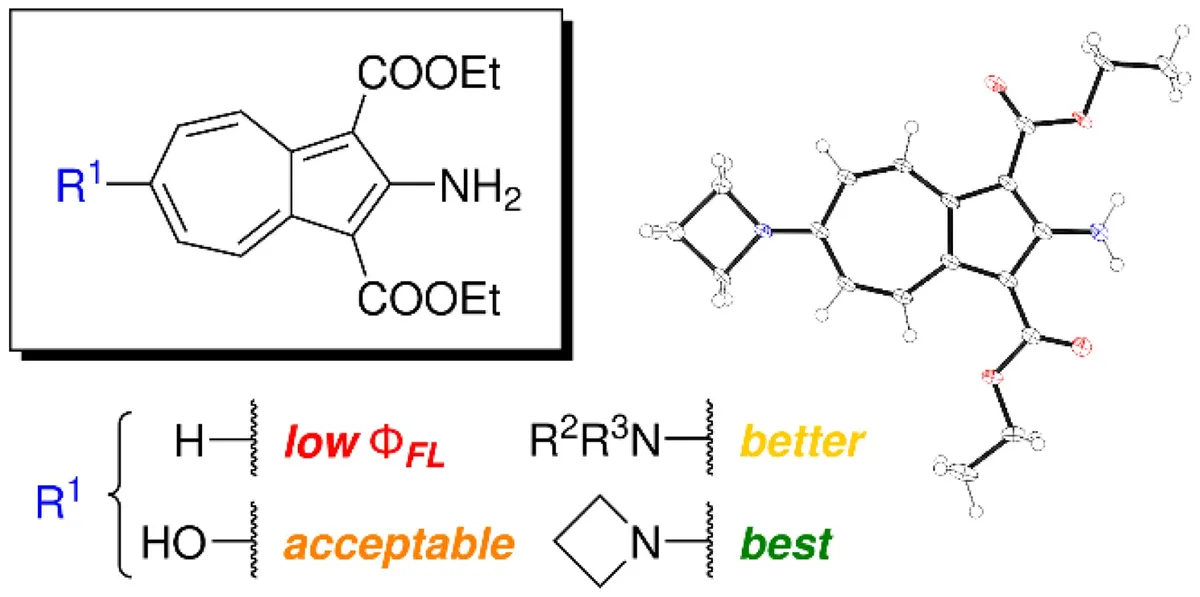
Credit: Organic Chemistry Frontiers (2026). The team, led by professors Simon Lewis and Tony James and Dr. Dan Pantos in the university's Department of Chemistry, has transformed azulene, a naturally occurring blue compound found in certain mushrooms and corals, into a versatile tool for biological imaging and chemical sensing. Scientists use chemical probes that bind to a specific molecule in the cell and glow different colors under a microscope to observe biological processes and monitor disease. Fluorescent probes consist of two parts: a "receptor" (which detects a particular substance) and a "fluorophore" (a molecule with fluorescent properties).
This article is an excerpt. To read the full content, visit the original source. Phys.org
0 comments
No comments yet. Be the first to share your thoughts!