Can't stick to a diet? Intermittent fasting may be easier than counting calories for weight loss - Science Daily
This story deserves to be shared
Send it to someone who'd care, or post it on your networks.
This article is an excerpt. To read the full content, visit the original source. Science Daily
Related articles
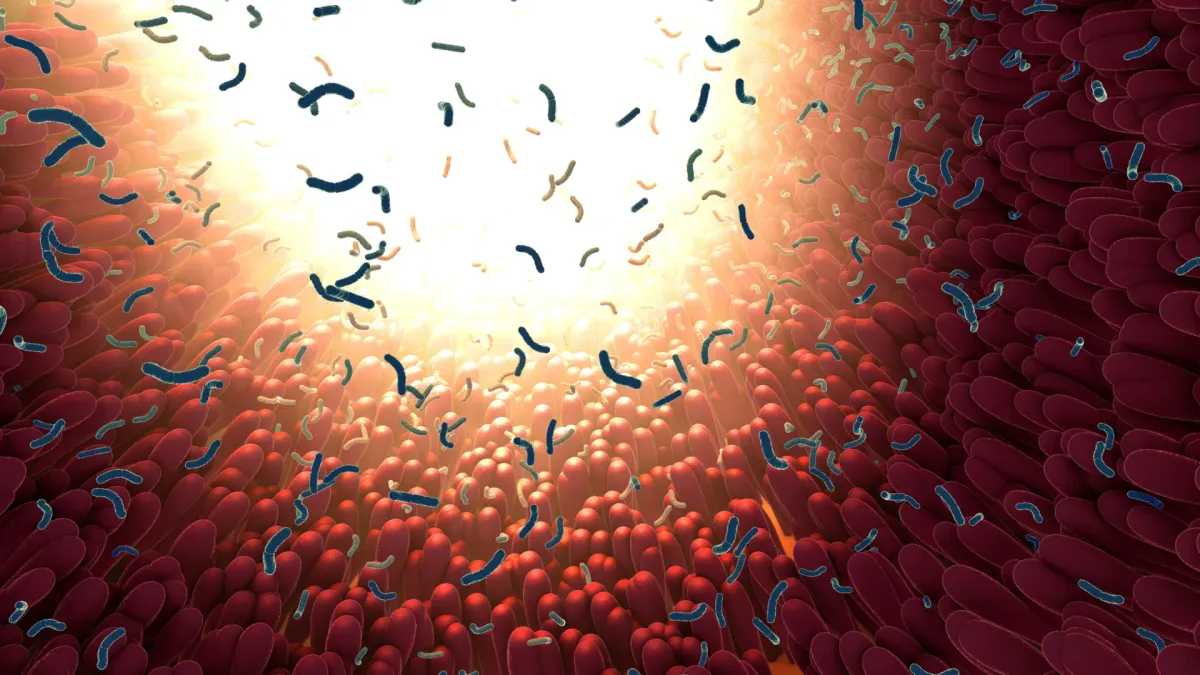
Your gut bacteria could be changing how many calories you absorb - Science Daily
The calorie count printed on a food package might seem like a straightforward measure of how much energy you will get from eating it. But the number on the label does not necessarily match the calories your body actually absorbs. One reason is that digestion involves more than just breaking down food. It also depends on trillions of microorganisms living inside your digestive system. Researchers at Arizona State University have developed a mathematical model that explores this often overlooked part of digestion. Known as DAMM, short for digestion, absorption and microbial metabolism, the model tracks how food moves through the digestive tract, how much energy the body absorbs directly, and how gut microbes process whatever remains. It also estimates which products of digestion are absorbed and which leave the body as waste.

Scientists reveal what seven days of fasting does to the human body - Science Daily
Going without food for several days does far more than force the body to burn stored fat. Research published in 2024 found that prolonged fasting produces widespread and coordinated biological changes across multiple organs, with some of the most notable effects appearing only after about three days without calories. The findings, published in Nature Metabolism, offer an unusually detailed look at how the human body responds during an extended fast. Researchers found evidence of biological effects that went beyond weight loss, although many of the potentially health related changes did not become apparent until participants had gone roughly three days without food.
Does intermittent fasting work? - Harvard Health

SpaceX Sent 6,300 Pounds to the Space Station. The Strangest Cargo Was Grown in a Lab - Inc.com
The spacecraft delivered materials and equipment for new research studies to the station.

Ancient mud reveals a surprising secret about Greenland’s ice - Earth.com
Mud from a fjord shows an Atlantic air pattern brought wetter, colder spells to southern Greenland, a clue to how its ice may fare. Greenland’s ice is shrinking as the planet warms. But in the island’s southwest, rainfall and snowfall have been influenced by the same North Atlantic air-pressure pattern for at least 5,000 years. When that pattern tipped one way, the region turned wetter and colder. The record comes from mud on the floor of a Greenland fjord, and it suggests snowfall, not only temperature, shaped how the area’s ice grew and shrank. It doesn’t yet show how glaciers there will respond to the warming ahead. Johan Faust, a researcher at MARUM, the Center for Marine Environmental Sciences at the University of Bremen in Germany, led the work with colleagues in Germany, Norway, Denmark and Canada. A seesaw in the airThe pattern is called the North Atlantic Oscillation. It’s the difference in air pressure between a low that sits near Iceland and a high near the Azores, and it’s strongest in winter. When that difference is large, the pattern is in its positive phase. Northwestern Europe and southwestern Greenland both get more rain and snow.

Simulations explore nuclear mitigation of asteroid threats - Phys.org
Lawrence Livermore National Laboratory researcher Isaiah Santistevan led the development of three-dimensional simulations exploring how a nuclear device could deflect or disrupt an asteroid threatening Earth. Credit: Blaise Douros/LLNL Lawrence Livermore National Laboratory (LLNL) researchers are developing three-dimensional simulations to examine how a nuclear device could be used to deflect or potentially disrupt an asteroid threatening Earth.
0 comments
No comments yet. Be the first to share your thoughts!