Candida auris copies its entire genome to survive antifungal treatment, research reveals - Phys.org
This story deserves to be shared
Send it to someone who'd care, or post it on your networks.
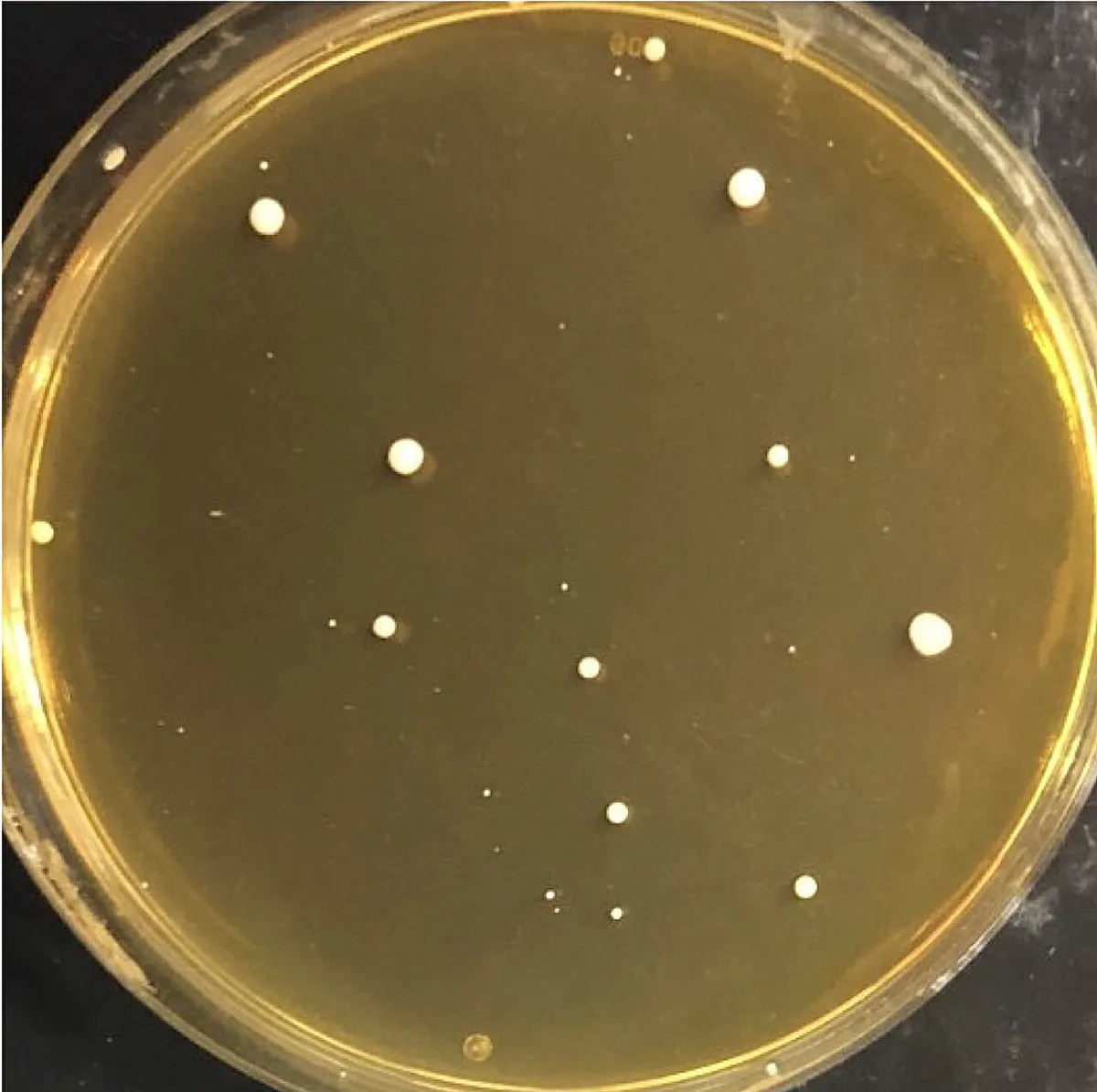
Image of the plate showing different rates of cell growth. New research has revealed an unexpected new mechanism through which the killer fungus Candida auris is resisting antifungal drug treatment. A team led by the University of Exeter and City St George's, University of London, discovered that the fungus creates multiple versions of its entire genome, including mutating a gene that plays a role in cell wall integrity, called "Crazy-one" (CRZ1). The study is set to appear in Nature Communications and is currently available on the bioRxiv preprint server.
This article is an excerpt. To read the full content, visit the original source. Phys.org
Related articles

This Dangerous Fungus Has Become Resistant to Every Major Antifungal Drug We Have... Twice - ScienceAlert
There's a new fungus amongus, and it's raising red flags among health care experts because it resists all the major antifungal treatments. The discovery involves Candidozyma auris (formerly known as Candida auris), an emerging fungal pathogen that has already become a serious problem in hospitals around the world. Since it was first described in 2009, this fungus has spread to more than 60 countries across six continents, causing healthcare-associated outbreaks and invasive infections, with mortality rates of 30–50 percent reported in some situations. The fungus can persist in healthcare environments and spread easily between patients. Because of its combination of antifungal resistance and potential for wider spread, the World Health Organization designated C. auris a critical-priority fungal pathogen in 2022. But the particular strain of this fungus described in a new paper has something especially troubling going for it: laboratory testing found it resistant to all four major classes of antifungal drugs. The isolate was recovered from a 28-year-old woman who developed a hospital-acquired surgical-site infection after elective surgery at a hospital in Nairobi, Kenya.

Continuous glucose monitors help type 2 diabetes patients spend 5 more hours a day in healthy blood sugar range - Medical Xpress
Continuous glucose monitors (CGMs) could transform diabetes management for millions of Americans with type 2 diabetes who don't take insulin, according to findings published in the New England Journal of Medicine. The clinical trial found that adults using CGMs spent approximately five additional hours each day within their target blood sugar range compared with those receiving routine care. Nearly twice as many CGM users also achieved an A1c level below 7%, a common treatment goal for people with diabetes.
Wearing headphones during surgery may reduce nausea and vomiting afterward - Medical Xpress
Patients who wore noise-canceling headphones during minimally invasive gynecological surgery were significantly less likely to experience postoperative nausea and vomiting (PONV), suggest findings from a randomized clinical trial presented at the Anesthesiology 2026 annual meeting.

Kefah Mokbel: Can Whole-Genome Sequencing-Based ctDNA Monitoring Help Personalize Adjuvant Treatment? - Oncodaily
“Beyond Detecting Cancer Recurrence: Can Whole-Genome Sequencing-Based ctDNA Monitoring Help Personalize Adjuvant Treatment? An exciting new study published in The Oncologist highlights the clinical potential of Signatera Genome, a whole-genome sequencing (WGS)-based, tumor-informed circulating tumor DNA (ctDNA) assay, not only for detecting molecular residual disease (MRD), but also for potentially informing adjuvant treatment decisions.
0 comments
No comments yet. Be the first to share your thoughts!