Canadian astronaut Joshua Kutryk says he's 'having a blast' on the International Space Station - CBC
This story deserves to be shared
Send it to someone who'd care, or post it on your networks.
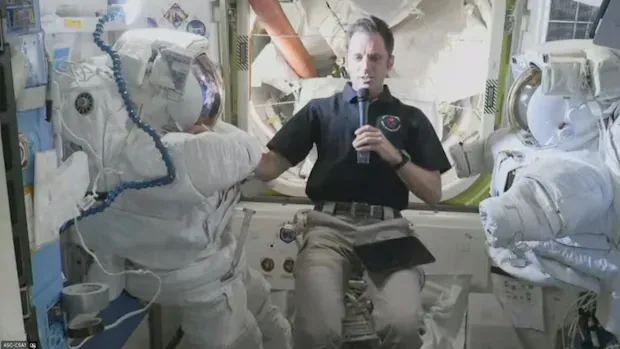
ScienceIn his first Q&A from the International Space Station, Canadian astronaut Joshua Kutryk talks about relearning how to sleep, eat and work in space.'It’s important for Canada to be here,' Kutryk says in first interview aboard ISSNicole Mortillaro · CBC News · Posted: Oct 13, 2026 3:18 PM EDT | Last Updated: October 13Listen to this articleEstimated 3 minutesThe audio version of this article is generated by AI-based technology. Mispronunciations can occur. We are working with our partners to continually review and improve the results. Canadian Space Agency astronaut Joshua Kutryk answers questions from the media while on the International Space Station, on Tuesday. (CSA/NASA)Canadian Space Agency astronaut Joshua Kutryk launched to the International Space Station (ISS) 11 days ago for a six-month mission in space. On Tuesday, in his first Q&A with reporters while in space, he said so far, he's "having a blast. "Kutryk said he's still getting used to living in space, and he's having to relearn common skills, like sleeping ("What do you do with your neck when you're sleeping? What do you do with your hands? "), eating and using tools.
This article is an excerpt. To read the full content, visit the original source. CBC
Related articles
Joshua Kutryk's launch to the ISS highlights Canada's role in space exploration - The Weather Network
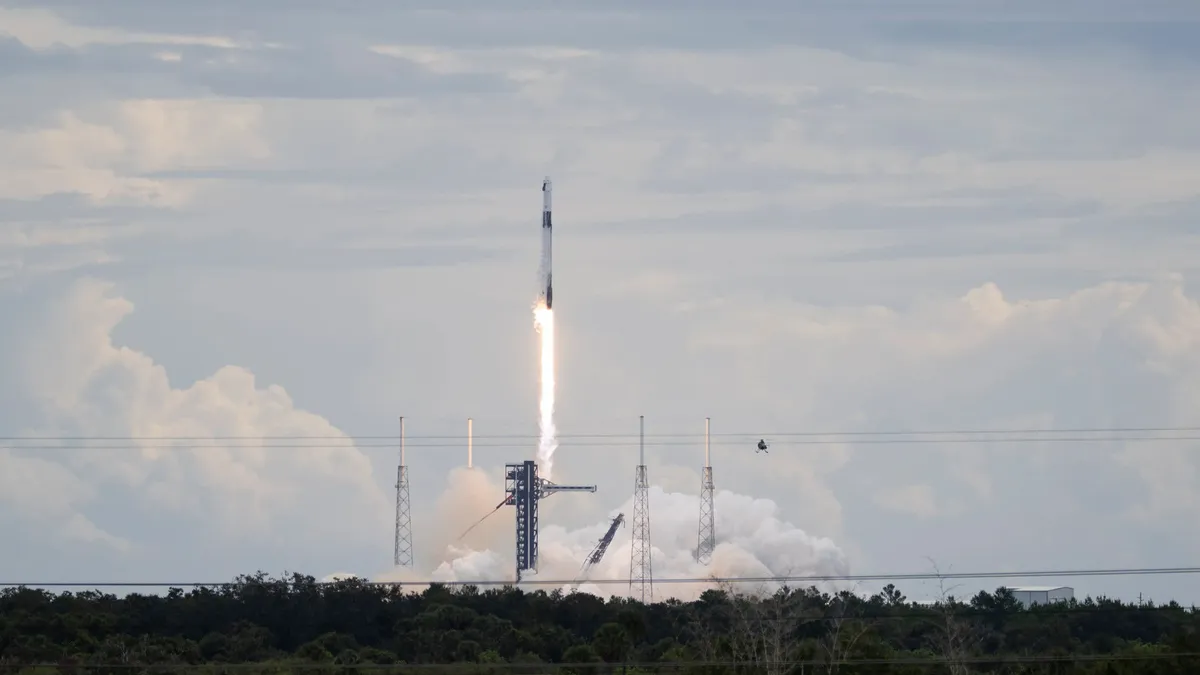
Canadian Joshua Kutryk is in space, on his way to the International Space Station (ISS) after a flawless launch from Cape Canaveral, Fla. The SpaceX Falcon 9 rocket blasted off at 11:10 a.m., right on time. NASA's SpaceX Crew-13 mission lifts off from Launch Complex 40 at Kennedy Space Center in Florida on Oct. 1, 2026, atop a Falcon 9 rocket booster. (NASA/Joel Kowsky)He and his crewmates — NASA astronauts Jessica Watkins and Luke Delaney, and Russian cosmonaut Sergey Teteryatnikov — are slated to dock with the ISS after roughly eight hours in space. The launch is Kutryk's first, and he felt it. "I'm in space. I don't really believe it yet. It does feel weird, though," he said. "It's good to be here. "Joshua Kutryk, dressed in his white SpaceX spacesuit and helmet, holds up his hands displaying support for the Crew 13 mission. (SpaceX via Canadian Space Agency)DON'T MISS: Halley's Comet meteors flash across the sky in OctoberThis is a historic moment for Canada. It's the first time two Canadians have launched into space in such a short time. Jeremy Hansen launched as part of NASA's Artemis II mission for a trip around the moon only six months ago.
Josh Kutryk’s successful flight to the ISS shifts focus to Canada’s next moves in space - The Globe and Mail
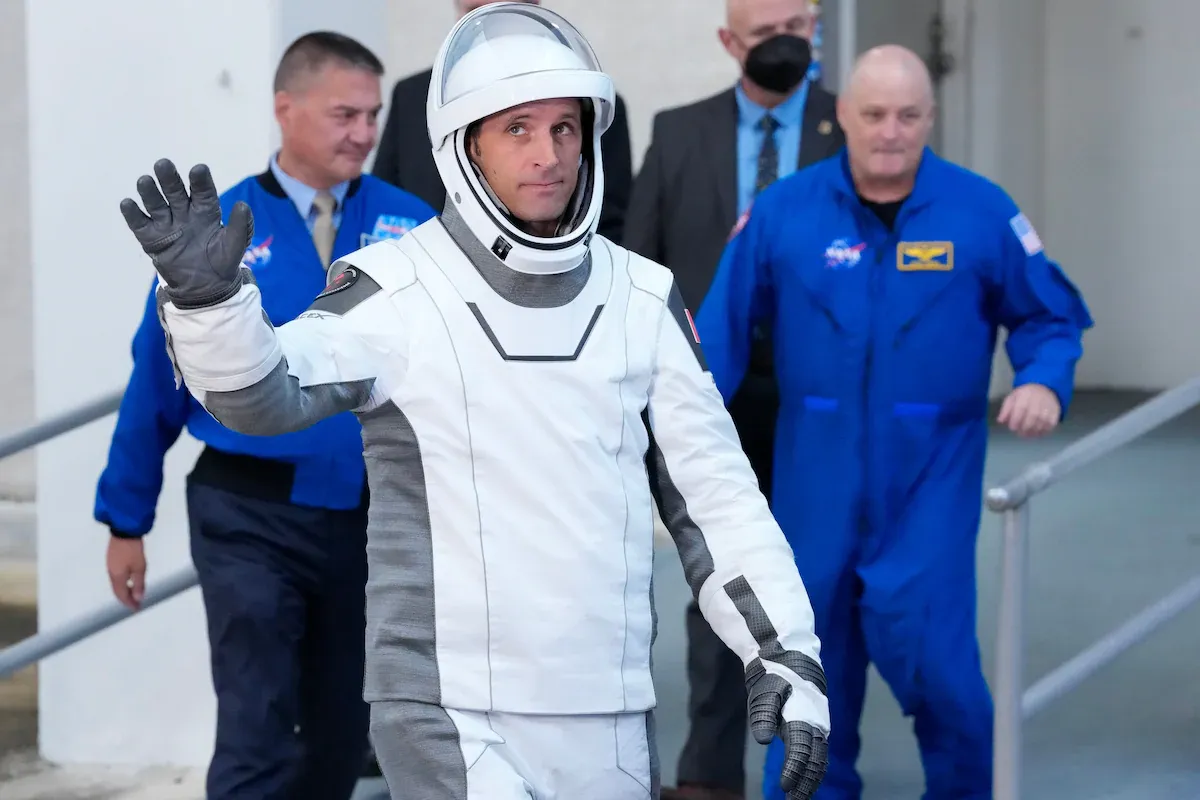
Open this photo in gallery:Canadian Astronaut Joshua Kutryk waves as he leaves the Operations and Checkout Building at the Kennedy Space Center in Cape Canaveral, Fla., on Thursday. John Raoux/The Associated PressThose who followed the news of Joshua Kutryk’s successful flight to the International Space Station this week can be forgiven for wondering if the Canadian astronaut stepped into a time machine rather than a space capsule. Col. Kutryk, who hails from Fort Saskatchewan, Alta., was one of four astronauts who lifted off on Thursday morning from the Kennedy Space Center in Florida and docked with the station later that night. Their arrival marks the start of a busy handoff period during which the population of the station will temporarily be at 11 – four of which will depart some time next week. With astronauts from the United States, Russia, France and Canada currently on board, the image of comity and diversity on the station is certainly what proponents had in mind when construction of the orbiting laboratory began in 1998.

Simulations explore nuclear mitigation of asteroid threats - Phys.org
Lawrence Livermore National Laboratory researcher Isaiah Santistevan led the development of three-dimensional simulations exploring how a nuclear device could deflect or disrupt an asteroid threatening Earth. Credit: Blaise Douros/LLNL Lawrence Livermore National Laboratory (LLNL) researchers are developing three-dimensional simulations to examine how a nuclear device could be used to deflect or potentially disrupt an asteroid threatening Earth.

A Black Hole 12,000 Light-Years Away Is Firing a Plasma Jet Toward Earth - Gadget Review
Milky Way’s first microblazar candidate sits 12,000 light-years away, offering a rare ground-level lab for studying relativistic jetsA black hole 12,000 light-years away is firing a jet of plasma almost directly toward Earth. At that distance, no known or expected danger to Earth has been identified by the researchers or the institutions involved. What astronomers have actually found is rarer and more interesting than a threat. Researchers have identified IRAS 18293-0941 as a compelling candidate for the Milky Way’s first microblazar, a class of object that gives astrophysicists a close-up laboratory for studying some of the most violent physics in the galaxy. What Astronomers FoundThe discovery centers on a binary system whose black hole expels plasma jets at close to three-quarters the speed of light, pointed almost directly toward Earth. The system pairs a hot, massive star with a black hole that completes a full orbit roughly every 11.38 days. Material drawn from the companion star feeds the black hole, and some of that matter gets expelled outward as opposing jets traveling at approximately three-quarters the speed of light. Terminology matters here.
Drowned 5,000-year-old forests off Mozambique now shelter reef fish, no coral needed - Yahoo
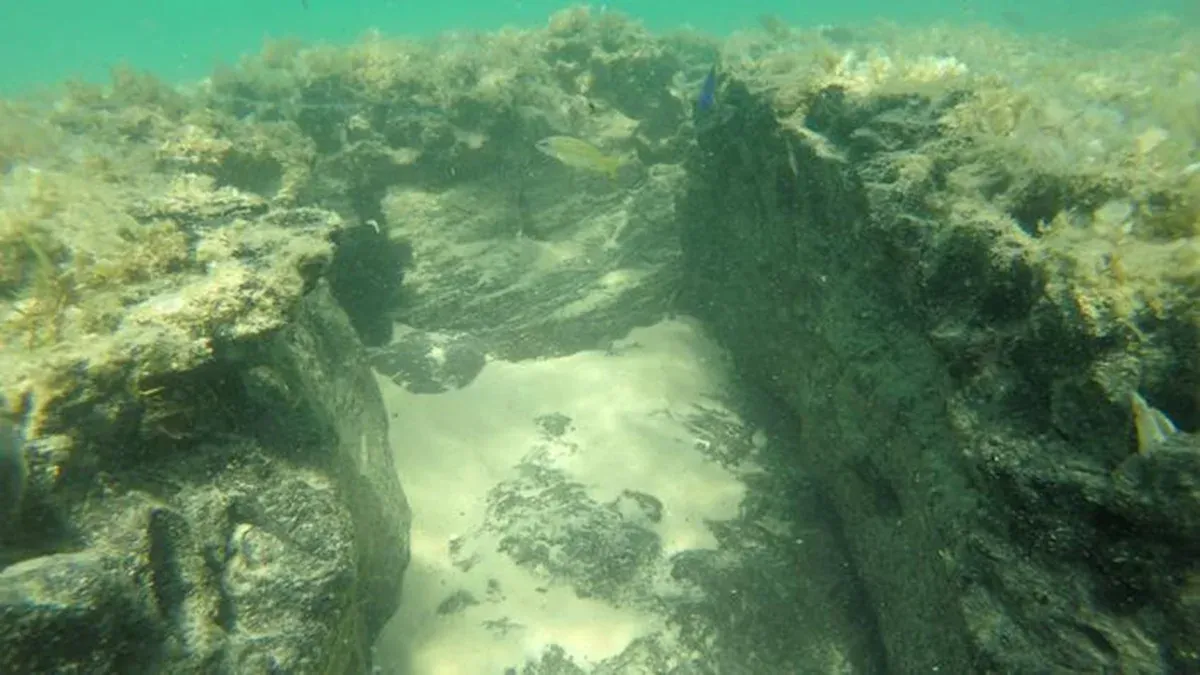
Forests that stood on Mozambique's coast thousands of years ago now lie beneath shallow seas, and they have become fish-filled "peat reefs" with marine life comparable to coral reefs, researchers report in Scientific Reports. A team from the Bazaruto Center for Scientific Studies (BCSS) Ocean Observatory, led by Mario Lebrato, documented the submerged peat in the Bazaruto Archipelago in the Western Indian Ocean. BCSS, founded in 2017, describes itself as Africa's first permanent ocean observatory. Working with universities and institutions in the U. K., U. S. and Canada, the team believes it has carried out the first ecological study of peat reefs anywhere in the tropics. Old forests, new seafloorRadiocarbon dating shows the peat formed between about 300 and 5,000 years ago, and chemical analysis indicates it came mostly from coastal land plants and trees. Some samples contain up to 40% organic carbon by dry weight. Lebrato said the coastline has very little natural hard seabed, mostly shifting sand. As rising seas expose the old peat layers, they create rare solid habitat where marine life can settle, hide and feed.
0 comments
No comments yet. Be the first to share your thoughts!