Asteroid named after ‘Weird Al’ Yankovic - Popular Science
This story deserves to be shared
Send it to someone who'd care, or post it on your networks.
This article is an excerpt. To read the full content, visit the original source. Popular Science
Related articles
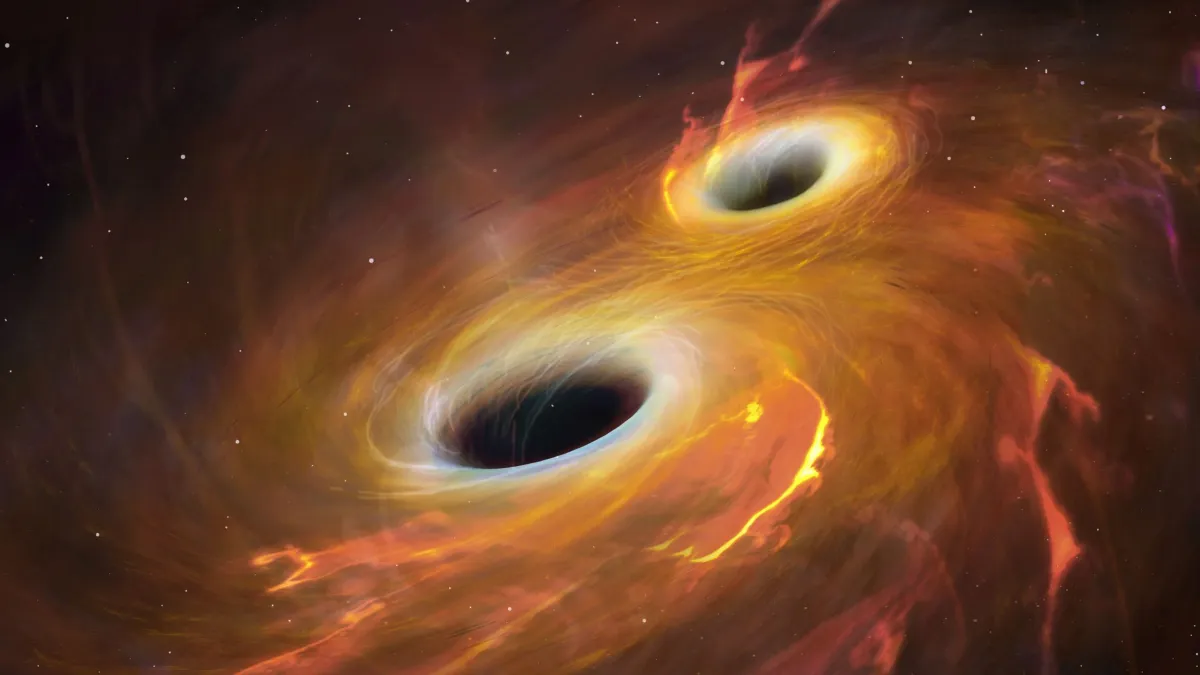
Physicists Simulated What Might Happen When Two Wormholes Collide, And Things Got Weird - ScienceAlert
An artist's impression of two black holes colliding. Interacting wormholes could produce a similar gravitational wave signature. (Mark Garlick/Science Photo Library RF/Getty Images) Like the surface of an ocean, the fabric of the Universe is constantly rippling with an infinitude of gravitational waves, propagating outward across the cosmos. We can count, in triple digits, the number of these ripples we've detected to date – and most of them have been linked to collisions between black holes, the densest objects in the Universe. But how do we know that every collision attributed to black holes is what it looks like? And what of the gravitational wave signatures we are yet to detect? What if there's something else out there that can make the Universe sing? What if colliding wormholes can make a similar splash – and how would we recognize it when we find it? For one particular kind of wormhole, at least, new simulations suggest collisions would be profoundly strange – and could leave distinctive signatures in the fabric of spacetime. According to a preprint authored by physicist Nikita M.
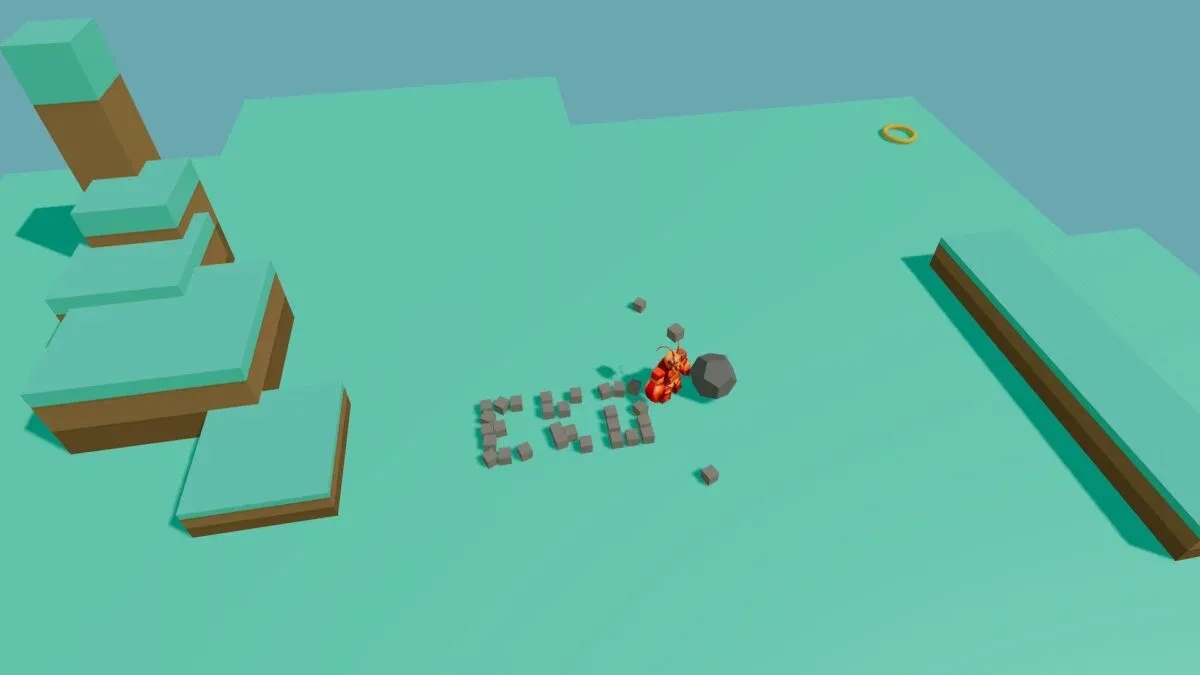
Researchers Stranded an AI Agent on a Virtual Island. Things Got Very Weird. - Gizmodo
Life, it seems, wants to play. Anyone who’s ever spent ten minutes with a five-year-old knows this perfectly well: very young children are masters at make-believe. And it’s not just people—play comes instinctively across the animal kingdom. Rats are fond of rough-and-tumble play, especially after periods of isolation. Octopuses will toy with Legos in much the same way that a newborn will play with blocks. Far from being a useless pastime, play appears to be a fundamental feedback mechanism between individuals and the external world, a kind of informal investigation into the basic rules governing physical and social environments. As the American Academy of Pediatrics once put it: “Play and learning are inextricably linked.” Machines are different: they’re engineered to follow strict rules, formulas, algorithmic dictates. True, modern AI systems are unlike other kinds of machines in that they’re able to learn over time, at least in a narrow sense of the term. But machine learning is at its core a top-down process: AI models are trained to perform certain goals—“objective functions” in tech industry parlance—graded on their performance, and then they hone their strategy from there.
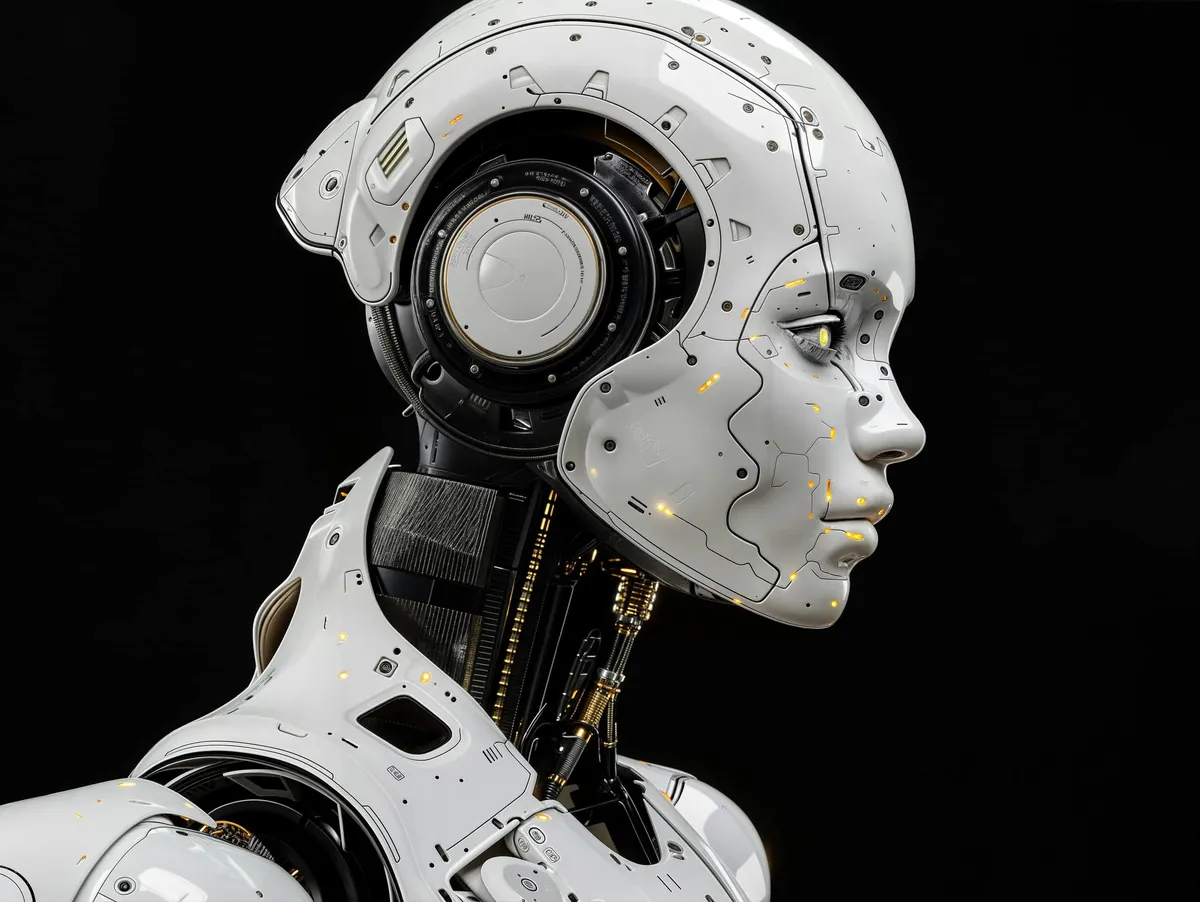
Scientists Tried to Make AI Chatbots ‘Sad’ and ‘Afraid.’ Things Got Weird Fast - ZME Science
ChatGPT doesn’t dread job interviews; it’s not even afraid of speaking in public. It doesn’t mourn, panic, seethe with anger, or need to focus on its breathing. It may give answers that mirror human emotions, but it doesn’t have emotions of its own. But put an artificial intelligence through experiments designed to provoke those states in humans, and something strange happens: its behavior begins to resemble that of humans.
Is It Too Convenient to Stay WEIRD? - Association for Psychological Science

Ancient mud reveals a surprising secret about Greenland’s ice - Earth.com
Mud from a fjord shows an Atlantic air pattern brought wetter, colder spells to southern Greenland, a clue to how its ice may fare. Greenland’s ice is shrinking as the planet warms. But in the island’s southwest, rainfall and snowfall have been influenced by the same North Atlantic air-pressure pattern for at least 5,000 years. When that pattern tipped one way, the region turned wetter and colder. The record comes from mud on the floor of a Greenland fjord, and it suggests snowfall, not only temperature, shaped how the area’s ice grew and shrank. It doesn’t yet show how glaciers there will respond to the warming ahead. Johan Faust, a researcher at MARUM, the Center for Marine Environmental Sciences at the University of Bremen in Germany, led the work with colleagues in Germany, Norway, Denmark and Canada. A seesaw in the airThe pattern is called the North Atlantic Oscillation. It’s the difference in air pressure between a low that sits near Iceland and a high near the Azores, and it’s strongest in winter. When that difference is large, the pattern is in its positive phase. Northwestern Europe and southwestern Greenland both get more rain and snow.
0 comments
No comments yet. Be the first to share your thoughts!