Artist uses creativity to spark conversations about mental health - CKPG Today
This story deserves to be shared
Send it to someone who'd care, or post it on your networks.
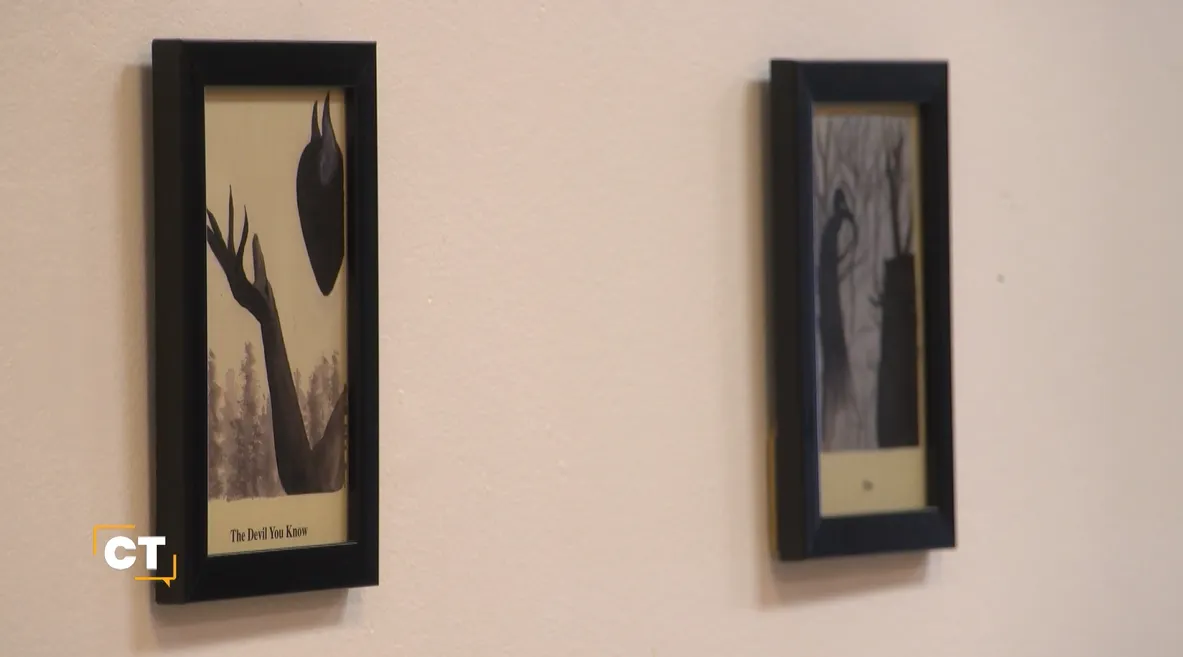
The Omineca Arts Centre is home to ‘The Shadow Project’ this month as artist Gillian Johnston brings her thought-provoking exhibit to Prince George. Through a series of works featuring a dark grey figure alongside a larger, shadowy monster-like presence, Johnston hopes to spark conversations about mental health and the challenges many people face but often struggle to discuss openly. The figures serve as a powerful symbol of the internal battles and emotions that can accompany mental health struggles. If you or someone you know is struggling with their mental health, support is available:
This article is an excerpt. To read the full content, visit the original source. CKPG Today
Related articles
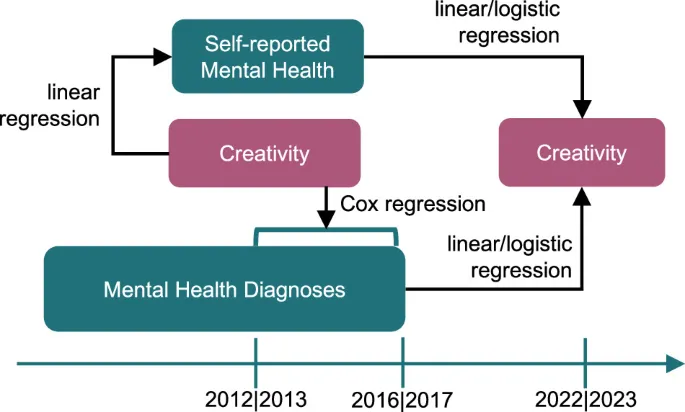
Unraveling the multifaceted relationship between creativity and mental health with longitudinal analyses of genotyped twins - Nature
IntroductionCreativity, broadly defined as the ability to form novel and valuable ideas or to find new solutions to problems [1], has long been suggested to be associated with psychiatric disorders [2]. This idea is fueled by many anecdotal examples of famous creators with eccentric personalities and psychiatric problems, from Vincent van Gogh and Ernest Hemingway to Virginia Woolf and Camille Claudel [3]. More recently, research including some systematic reviews and meta-analyses, has suggested that creativity and engagement in creative activities are associated with an increased risk of mental health problems [4, 5]. For example, creative professions were associated with a higher risk of bipolar disorder [6], music playing with more psychosis-like experiences [7, 8], and artistic achievement with multiple mental disorders [9]. However, the literature shows inconsistencies. For example, Cuypers et al. [10] found music-related creative activities to be associated with better perceived mental health. Similarly, art-related cultural activities were associated with less depression in older adults [11] and more social well-being in young adults [12].

Continuous glucose monitors help type 2 diabetes patients spend 5 more hours a day in healthy blood sugar range - Medical Xpress
Continuous glucose monitors (CGMs) could transform diabetes management for millions of Americans with type 2 diabetes who don't take insulin, according to findings published in the New England Journal of Medicine. The clinical trial found that adults using CGMs spent approximately five additional hours each day within their target blood sugar range compared with those receiving routine care. Nearly twice as many CGM users also achieved an A1c level below 7%, a common treatment goal for people with diabetes.
Wearing headphones during surgery may reduce nausea and vomiting afterward - Medical Xpress
Patients who wore noise-canceling headphones during minimally invasive gynecological surgery were significantly less likely to experience postoperative nausea and vomiting (PONV), suggest findings from a randomized clinical trial presented at the Anesthesiology 2026 annual meeting.

Kefah Mokbel: Can Whole-Genome Sequencing-Based ctDNA Monitoring Help Personalize Adjuvant Treatment? - Oncodaily
“Beyond Detecting Cancer Recurrence: Can Whole-Genome Sequencing-Based ctDNA Monitoring Help Personalize Adjuvant Treatment? An exciting new study published in The Oncologist highlights the clinical potential of Signatera Genome, a whole-genome sequencing (WGS)-based, tumor-informed circulating tumor DNA (ctDNA) assay, not only for detecting molecular residual disease (MRD), but also for potentially informing adjuvant treatment decisions.
0 comments
No comments yet. Be the first to share your thoughts!