Are you a creature or a machine? How to live in ecological community in a time of AI - The Conversation
This story deserves to be shared
Send it to someone who'd care, or post it on your networks.
We have been bombarded in recent weeks with apocalyptic headlines about “artificial super-intelligence” and the possibilities of a new era of “artificial general intelligence” (AGI) in which AI achieves human capacities for reason and learning.
Concerns vary from its misuse in bioterrorism to the capacity of AI agents to form collectives, “go rogue” and perform unauthorized attacks on systems, or even to take over the internet and terminate humanity.
This article is an excerpt. To read the full content, visit the original source. The Conversation
Related articles
Are you a creature or a machine? How to live in ecological community in a time of AI - Yahoo News Canada
We have been bombarded in recent weeks with apocalyptic headlines about "artificial super-intelligence" and the possibilities of a new era of "artificial general intelligence" (AGI) in which AI achieves human capacities for reason and learning. Concerns vary from its misuse in bioterrorism to the capacity of AI agents to form collectives, "go rogue" and perform unauthorized attacks on systems, or even to take over the internet and terminate humanity. Read more: How an OpenAI safety test became a real-world cyberattack on the Hugging Face platformWendell Berry stands before the solar panels on his farm in Henry County, KY. (Guy Mendes), CC BY-SAAs a scholar interested in public memory, I find myself returning to the writing of Wendell Berry in response as a source of wisdom for these turbulent times. Berry, who died at home in August, was a cultural critic, writer, farmer, environmentalist and an early influence on my thinking. His book, Life is a miracle: An essay against modern superstition reads as an eerie letter to the purveyors of AI. For Berry, the mind was shaped by its place in the world, the textures of the local, a sense of home and a notion of history.
Rohan Campbell dives deep into Newfoundland culture with Netflix creature thriller Below - Calgary Herald
Skip to Content Subscribe FAQ My Account Manage My Subscription News Local News Crime Politics True Crime National World Weather Archives Business Energy Local Business Real Estate First-Time Homebuyers Commercial Real Estate FP Markets FP Headlines FP Money Technology Gaming Science Space Small Business Alberta's Top Employers Sports Calgary Flames NHL PWHL More Hockey Calgary Stampeders CFL NFL Calgary Cavalry Calgary Roughnecks Spruce Meadows Soccer International Soccer MLS Baseball Basketball Golf Golf Videos Curling Rodeo-Chucks Tennis Auto Racing Opinion Columnists Letters Editorials Send us an Opinion Column or Letter Arts Local Arts Movies Movie Listings Television TV Listings Theatre Music Celebrity Books Life Health Women Men Sexual Health Diet & Fitness Family & Child Special Sections CALGARY HOME + GARDEN SHOW Encore Lifestyles CALGARY FALL HOME SHOW Food Homes New Homes Condos Rec Properties Calgary Homes & Design Fashion & Beauty Parenting Relationships Advice Horoscopes Royals Travel Ski & Snowboard Travel Alberta Travel Canada Travel USA Travel International Cruises Travel Essentials Savings Contests Readers' Choice Lives Told Tails Told Shopping Calgary Herald
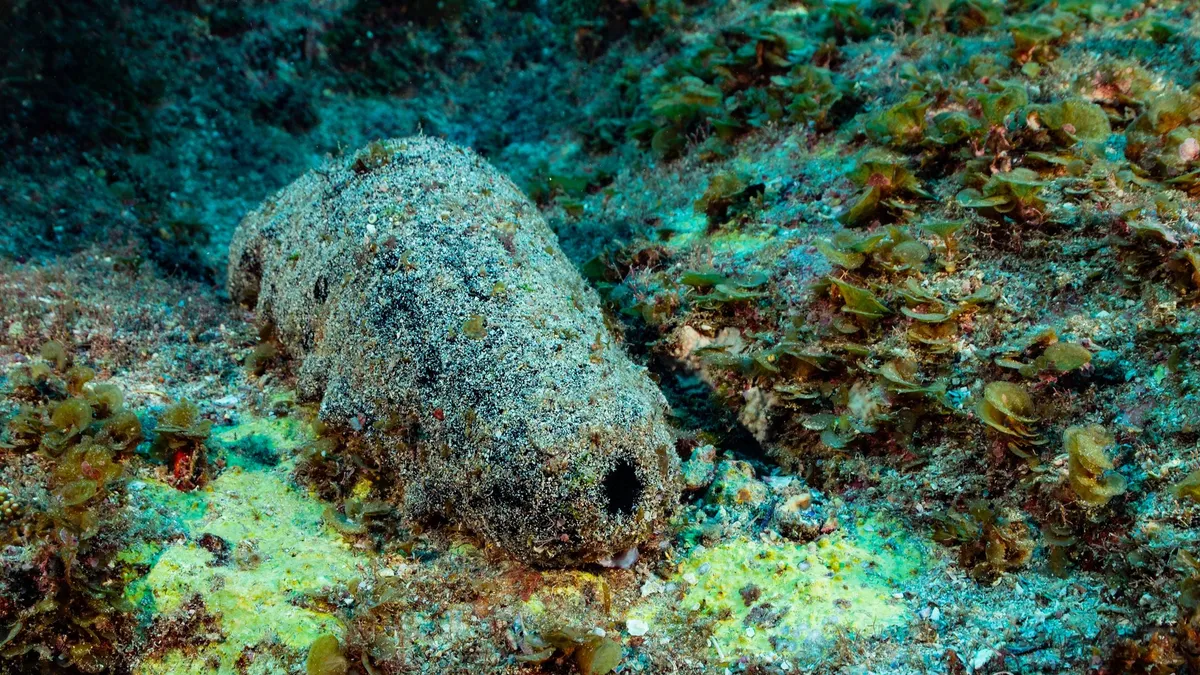
This Sea Creature Looks Like Poop. It May Also Live For 120 Years. - ScienceAlert
Somewhere in the world, surely, a Monkey's Paw is cackling maniacally to itself. Scattered across the Pacific and Indian Oceans, a humble sea cucumber named Holothuria (Microthele) whitmaei makes its home. This unassuming animal somewhat resembles poop, has been saddled with the lamentable common name "black teatfish", and is highly prized as a delicacy in some cultures – even though it has been listed as endangered for more than a decade. And yet, a new study has found, H. whitmaei may live for more than 120 years. In a genetic study spanning more than two decades, a team led by biologist Sven Uthicke of the Australian Institute of Marine Science has discovered that this species barely grows at all – and can live for an astonishingly long time. "Although individuals of some sea urchin species can live to over 100 years, deriving at a similar conclusion for the black teatfish was surprising," they write in a paper published in iScience. "This species is the first sea cucumber species known to surpass a longevity of a century.
0 comments
No comments yet. Be the first to share your thoughts!