Animal life may be far older than its most ancient fossils – here’s how we uncovered its hidden history - Tolerance.ca
This story deserves to be shared
Send it to someone who'd care, or post it on your networks.

By Ross Anderson, Associate Professor of Natural History, University of OxfordOrin Lole Durbin, PhD Student, Geosciences, Virginia Tech
The question of when animals first evolved is one that has confounded scientists since the time of Charles Darwin. Studying rocks in north Wales in the mid-18th century, Darwin found the sudden first appearance of animal shells and skeletons in layers dating back over 500 million years perplexing. He had predicted a long history of evolution, with animals slowly gaining complexity through time, rather than this apparent instantaneous appearance of complex animals. The sudden appearance of complex animals has led scientists to argue that animals must have a “hidden history”, a period… Read complete article© The Conversation
This article is an excerpt. To read the full content, visit the original source. Tolerance.ca
Related articles
Animal life may be far older than its most ancient fossils – here’s how we uncovered its hidden history - The Conversation
The question of when animals first evolved is one that has confounded scientists since the time of Charles Darwin. Studying rocks in north Wales in the mid-19th century, Darwin found the sudden first appearance of animal shells and skeletons in layers dating back over 500 million years perplexing. He had predicted a long history of evolution, with animals slowly gaining complexity through time, rather than this apparent instantaneous appearance of complex animals. The sudden appearance of complex animals has led scientists to argue that animals must have a “hidden history”, a period in Earth’s past prior to their fossil record where they existed but have left no trace of their presence in the rocks. Our new study may help scientists understand how long this hidden history may have lasted.
Ancient fossils and tools offer first glimpse into Denisovan daily life - Ynetnews
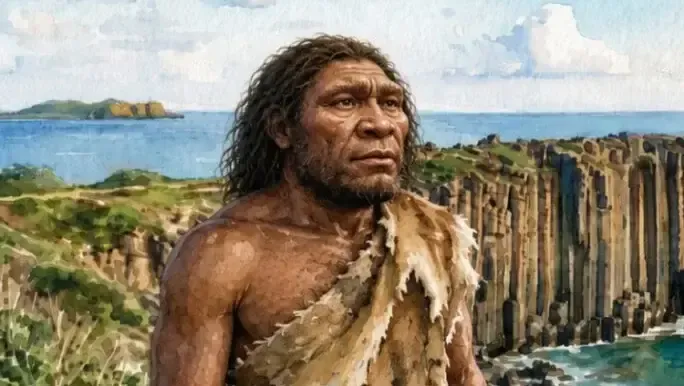
New research reveals Denisovan fossils in southwestern China alongside stone tools and animal bones, offering the first glimpse into how these mysterious ancient humans lived, hunted and used their environmentDr. Yonat Eshchar, Davidson Institute of Science Education|In 2019, a reforestation project was underway in southwestern China, aimed at restoring an area where trees had been cut down. During the work, one of the workers came across an abandoned quarry and discovered a "suspiciously large number" of animal bones. He alerted the authorities, and researchers who arrived to investigate discovered a cave containing more than 60,000 fossils and fossil fragments. Most of the finds were animal bones, as the worker had suspected, but among them were stone tools and human bones. GalleryDenisovan holding a stone tool (Illustration: Liat Peli, using ChatGPT)The layers containing the human bones were dated to approximately 134,000 to 167,000 years ago, but it was unclear which human species they belonged to. At the time, several different human populations lived in East Asia, including Neanderthals, Denisovans and the earlier Homo erectus.
Archaeologists have uncovered ancient stone circles at a Norwegian burial site - ScienceNorway
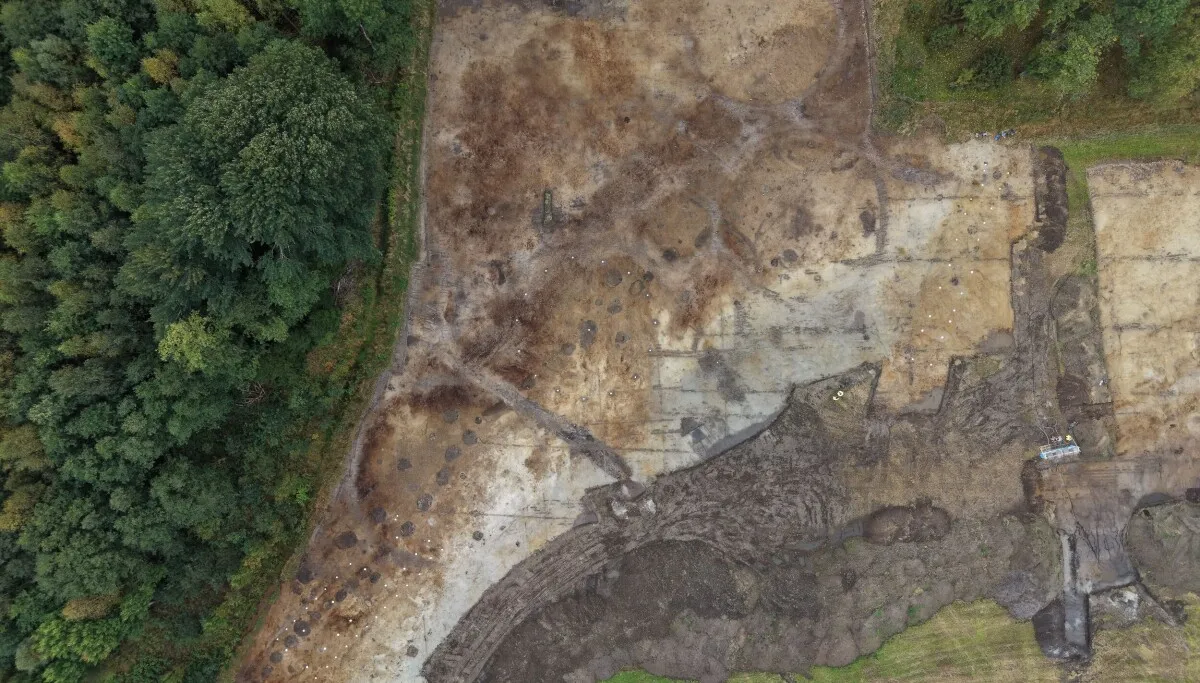
Archaeologists are currently excavating a large area at one of Norway’s most spectacular burial sites: the Hunn burial ground in eastern Norway. On what is known as the South Field, there are many well-known circles of standing stones. Archaeologist Anne Lene Melheim points out the stone circles that have stood here for more than 2,000 years. Alongside the already known stone circles, archaeologists have now uncovered what they believe to be additional stone circles that had remained hidden beneath the topsoil. The discovery was made in a new area near what is known as the West Field. Anne Lene Melheim on her way out to the South Field at Hunn.
0 comments
No comments yet. Be the first to share your thoughts!