Almost All The Viruses Found in a Vast Deep-Sea Mining Zone Were New to Science - ScienceAlert
This story deserves to be shared
Send it to someone who'd care, or post it on your networks.
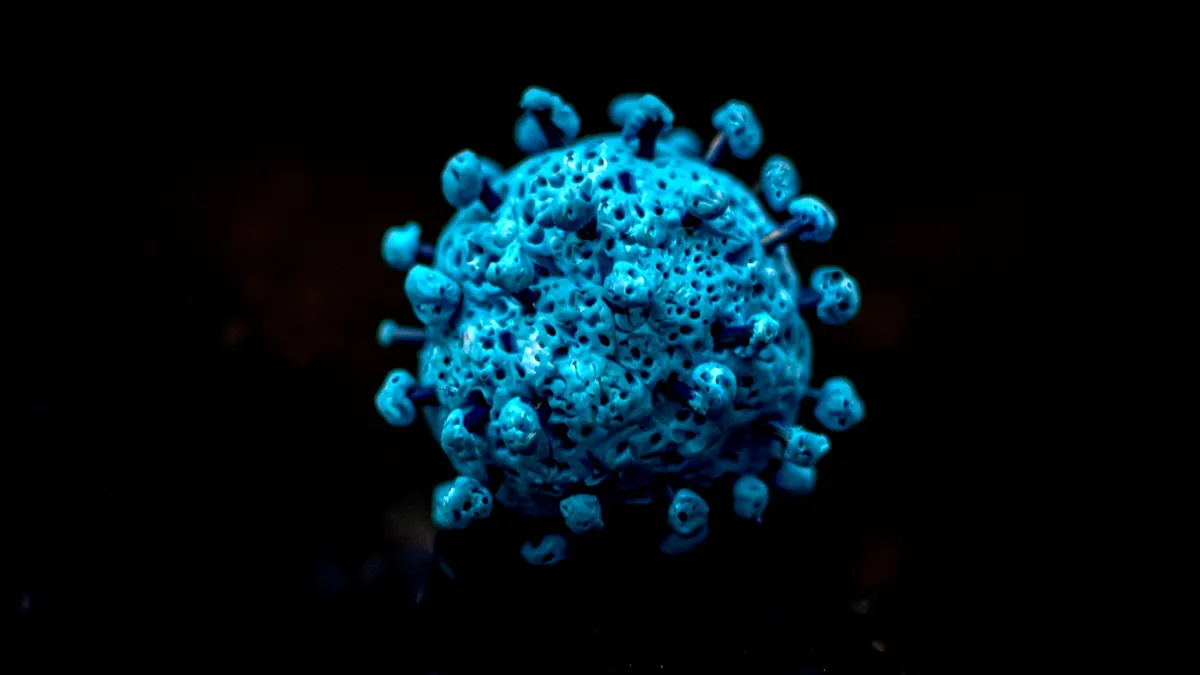
Deep in the abyss of the Pacific Ocean, the Clarion-Clipperton Fracture Zone is home to the world's largest accumulation of polymetallic nodules. Several countries are exploring it intensively because of the potential of its mineral wealth, but it's also an incredibly unique habitat, with many recent scientific expeditions bringing back reports of never-before-seen lifeforms. A new study adds a huge array of viruses to the biodiversity of this contested region, 99 percent of which have never been documented before. The researchers – Bowen Hou and Lilan Zhang, of Chongqing University, and Dong Sung, of China's Second Institute of Oceanography – investigated the 'virome' of the Clarion-Clipperton to establish what they call a "vital pre-mining baseline of microbial ecosystem for future environmental impact assessments. "They've published their results in Nature Communications. Polymetallic nodules are at the center of a race to mine the deep sea, because they're full of metals that can be used to make electronics. The International Seaboard Authority has granted 31 deep-sea mineral mining exploration contracts.
This article is an excerpt. To read the full content, visit the original source. ScienceAlert
Related articles
Nearly 12,000 viruses previously unknown to science have been discovered in the Pacific Ocean - UA.NEWS
In the Clarion-Clipperton Zone in the Pacific Ocean, scientists have discovered 11,742 viruses, about 99% of which had not been previously described. The researchers believe these viruses may play an important role in the functioning of the deep-sea ecosystem. Scientists collected samples of seafloor sediments in 2023 and 2024, after which they analyzed the viruses’ genetic material. The results of the study were published in the journal *Nature Communications*. The Clarion-Clipperton Zone is known for its large deposits of polymetallic nodules containing manganese, cobalt, nickel, lithium, and zinc. These resources have industrial value, which is why the region is being considered for future deep-sea mining. At the same time, the nodules are an important part of the local ecosystem. Various organisms live on them, and many of the viruses identified likely infect bacteria and archaea involved in the cycles of carbon, nitrogen, phosphorus, sulfur, and metals. Scientists suggest that the viruses found may influence chemical processes in seafloor sediments. However, their exact role in the ecosystem remains poorly understood.
This A.I. Just Created Viruses Not Found in Nature - The New York Times

Simulations explore nuclear mitigation of asteroid threats - Phys.org
Lawrence Livermore National Laboratory researcher Isaiah Santistevan led the development of three-dimensional simulations exploring how a nuclear device could deflect or disrupt an asteroid threatening Earth. Credit: Blaise Douros/LLNL Lawrence Livermore National Laboratory (LLNL) researchers are developing three-dimensional simulations to examine how a nuclear device could be used to deflect or potentially disrupt an asteroid threatening Earth.
0 comments
No comments yet. Be the first to share your thoughts!