Africa Is Breaking Apart Faster Than We Thought, Forming a New Ocean - ScienceAlert
This story deserves to be shared
Send it to someone who'd care, or post it on your networks.
This article is an excerpt. To read the full content, visit the original source. ScienceAlert
Related articles
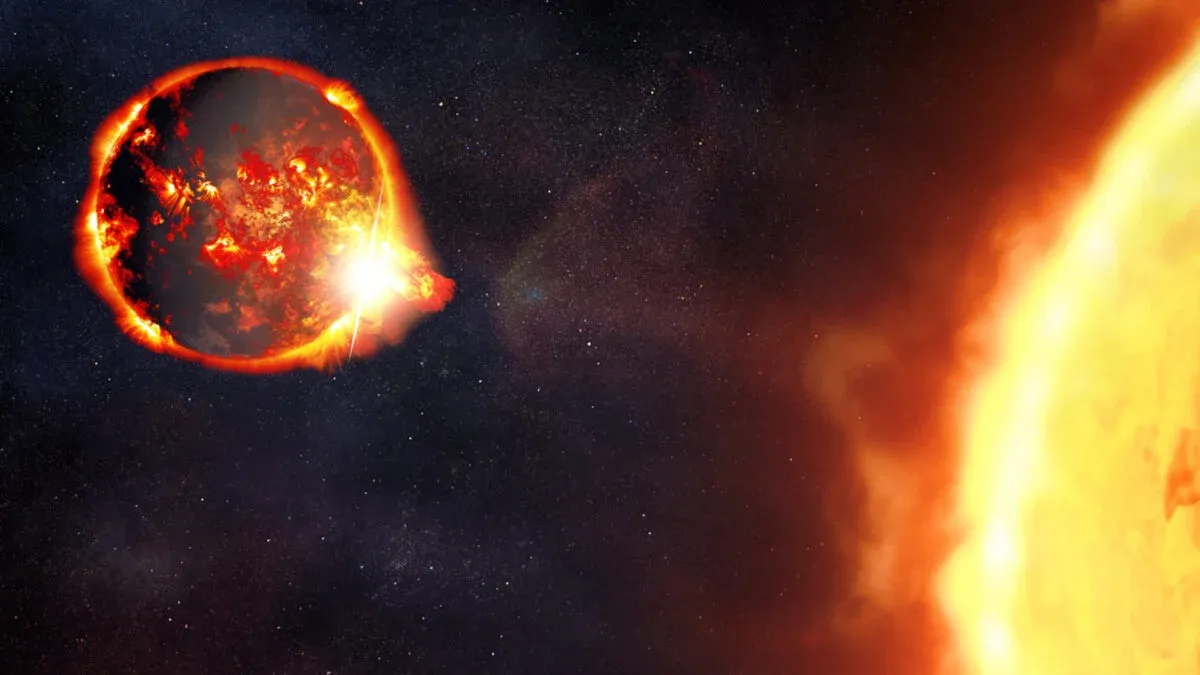
The Sun’s Death Could Tear Apart the Outer Solar System Much Sooner Than Thought - Gizmodo
Our Sun is just like any other star. That is, eventually the Sun will run out of fuel and effectively collapse—taking out, presumably, most things in our neighborhood. That won’t pose a problem for those of us alive right now, but for those of you who still care: Scientists think the doomsday for outer planets might come earlier than expected. New calculations indicate that, once the Sun transforms into a white dwarf some 7 to 8 billion years from now, the outer solar system has roughly 1 billion years left—much lower than previous estimates ranging from 100 billion to a whopping 1 quintillion years, according to a recent study published in The Astrophysical Journal Letters. The latter number was so large as it assumed the Sun would lose its mass in a relatively smooth manner, Konstantin Batygin, the study’s first author, explained to Gizmodo. In reality, the Sun’s death will likely be bumpier, which introduces more chaos to the equation. “What we’ve shown is that this timeline [of 1 quintillion years] gets front-run by the Sun’s own death,” said Batygin, an astrophyscist at the California Institute of Technology.

Ancient mud reveals a surprising secret about Greenland’s ice - Earth.com
Mud from a fjord shows an Atlantic air pattern brought wetter, colder spells to southern Greenland, a clue to how its ice may fare. Greenland’s ice is shrinking as the planet warms. But in the island’s southwest, rainfall and snowfall have been influenced by the same North Atlantic air-pressure pattern for at least 5,000 years. When that pattern tipped one way, the region turned wetter and colder. The record comes from mud on the floor of a Greenland fjord, and it suggests snowfall, not only temperature, shaped how the area’s ice grew and shrank. It doesn’t yet show how glaciers there will respond to the warming ahead. Johan Faust, a researcher at MARUM, the Center for Marine Environmental Sciences at the University of Bremen in Germany, led the work with colleagues in Germany, Norway, Denmark and Canada. A seesaw in the airThe pattern is called the North Atlantic Oscillation. It’s the difference in air pressure between a low that sits near Iceland and a high near the Azores, and it’s strongest in winter. When that difference is large, the pattern is in its positive phase. Northwestern Europe and southwestern Greenland both get more rain and snow.
0 comments
No comments yet. Be the first to share your thoughts!